Space Elevator Concept LiftPort Group

There's only one it's-the-future-why-don't-we-have-x trope that rivals the flying car, and that's the space elevator. (First proposed in 1895, it might even predate it.) The idea of a giant tower that can carry us from Earth to outer space is legend, and it probably will be for a long time. But a company has successfully Kickstarted what they say is their first step to building one on the Moon.

At $8,000, the project from LiftPort Group wasn't going to get us an elevator right away, even if as of writing the team has raised more than $15,000. Instead it's funding an early, related project: sending a robot two kilometers up via a cable and building a test platform of high-altitude balloons that are tethered to the ground. It's not a stretch to think they'll able to reach that goal, since they pretty much already have. LiftPort Group went out of business in 2007, but before that the team made it only a quarter of a mile shy of that distance. This is more of a team rebuilding exercise.

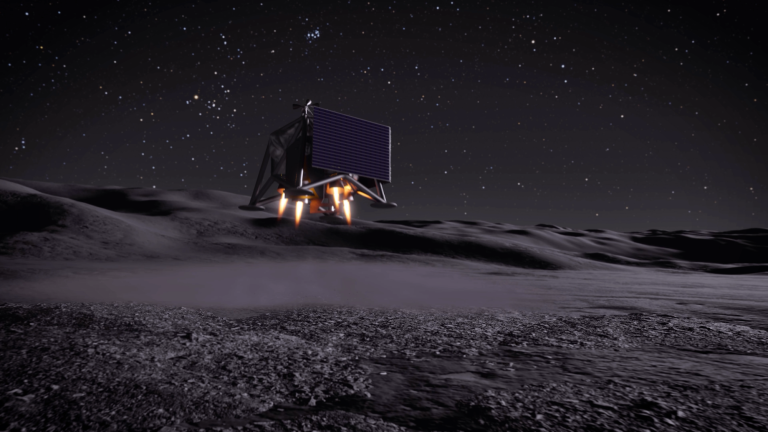
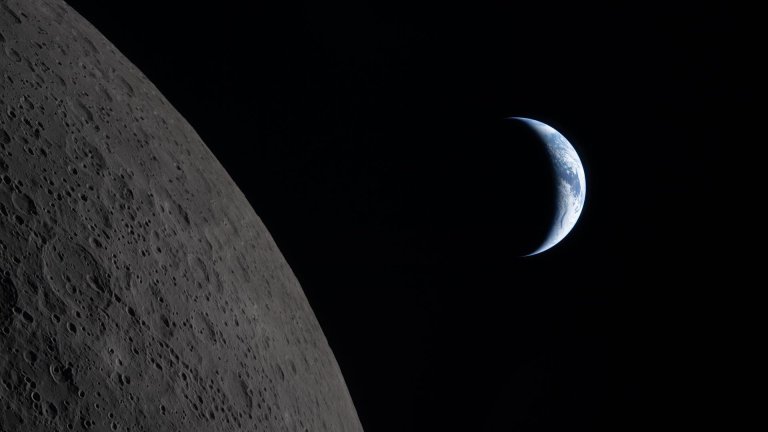
The robot launch is sort of the precursor to the precursor: this could help with the Lunar Elevator, which in turn could help with the Earth Elevator. In the lunar version, a base component--a space capsule, basically--would be attached to a rocket and sent toward the Moon. When it got close enough, a cable would eject from the capsule and attach to the surface of the moon, allowing for transport between the surface and the capsule. Since a full connection between the Earth and the Moon is still decades away, it would work as a checkpoint: A rocket could be sent to the orbiting station and people or objects could be lowered to the Moon, similar to how the robot in the test project would travel.

LiftPort has offered a list of "stretch goals," additional projects to be completed if they raise more money. They go all the way up to $3 million, helping to fund their "feasibility study," which they're hoping to launch next year. After that gets done they can give a certain yes/no on whether the project is possible.

[Kickstarter]

47 Comments

Just lower down our robots and base landing accessories to Mars. I wonder if this would work better on Mars, verse Earth?

@Robot I would assume since Mars has less gravity that it would easier to do than on earth. It also has minimal atmosphere so a space elevator could possibly travel up and down faster.

It would make sending rovers to Mars easier since landing is what claims so many of them.

And I quote, "Since a full connection between the Earth and the Moon is still decades away..." Last I checked the moon orbits the earth, unless decades from now the moons orbit is going to slow to a halt. I do not see this as being feasible without getting tangled up in the nano carbon ribbon tethering us together. Maybe the ribbon is going to hang in our upper atmosphere drifting around the planet with the moons orbit... There should be a solid plan before sinking billions into a project such as this. Remember what "we" did to the moon in the time machine.

Beam me up Scotty!

(don't wanna be around when that cable falls back!)

instead of a strait line from the earth to past geostationary orbit we should build checkpoint structures! basically at the halfway point between the earth and geostationary we'd put a big huge electric fan that would conduct electricity from either the ground or from space and turn it directly into thrust, then between the halfway point of geostationary to the big huge weight we put another way point that does the same only in reverse! this way the weight that the actual cable has to hold is less than what it would be if it was just a strait run.

we do this however many times we need to to keep the line from snapping, put a nuclear reactor right next to it and hey presto we have a space elevator! the operational price would go up, yes, but it'd still be much cheaper than sending a rocket.

to mars or bust!

They could only put the elevator on the far side of the moons orbital axis since the moon is tidally locked, correct? Or would earths gravity hold it in place dead centr on the side facing the earth?

The second, and more useful scenario for space faring humans, would likey require a much longer tether.

A space elevator on the Moon could get us all the way to Mars, because the moon has water-fuel. If this was placed in a water rich spot on the Moon, a small reactor could turn that water into all the fuel we need to get to Mars. It would also create a base to inflate and build our Mars space ship. The reactor could be used to power the trip to Mars and back. A double inflated hull would fill with steam to protect the occupants during the long trip from solar radiation. It could also massively reduce the cost by sending fuel to just outside the atmosphere for high flying space craft, like space ship one, to rendezvous with and fly to the Moon. Now if we could expel moon dust for propulsion instead of hydrogen fuel we could recycle the water for long manned trips throughout our solar system.

Already forsaw this, already knew how they were making it. National Geographic stole your thunder a few months back, PopSci.
Now onto the matter at hand. I have an idea to go with the space elevator concept, one that most likely will work (engineers, help me out if you please). Why not a ring, almost like one of Saturns, with a monorail going along the orbit of the elevator. Doing this will provide a large area to work with, to do everything from space craft dry-dock to, brace yourselves, M-type asteroid mining.
Like I said, engineers, I have a lot of the problems fixed, but I need feedback.

Between two evils, I always pick the one I never tried before.
Mae West

Get your facts first, then you can distort them as you please.
Mark Twain

I really expected more from the Popsci comments on this than the yahoo news comments.. Let’s start here.. Why do we need a space elevator on the moon? Anything that we are going to send up from the moon’s surface we first have to send to the moon via a rocket which we could then put in any orbit we choose.. But these people want to rocket things to the moon.. Land them.. Drive them to the space elevator and then put them up into an orbit.. Which then we would have to fire a rocket on the satellite to get it into a different orbit than the top of the space elevator.. This sounds like a colossally dumb idea.. So then eventually they want to attach this thing to earth? if we had something strong enough to attach this thing to earth (which we don't) then we would just build the space elevator here on earth.. Forget about the orbits of everything as well.. Anyone who sends money to this company should just send it to me and I will put it to good use..

I am curious to see what kind of Earth-Moon system they are proposing. I'm guessing it involves at least one skyhook.

Personally, I am not convinced the cost of a moon based space elevator is worth what little we will get out of it. The major expense is getting into Earth orbit. I think our efforts would be better spent investing in improving our carbon nano-tube tech for eventual use on an orbital tether for Earth.

But I wish them success all the same. A moon based tether is better than no tether.

rcringwall, The big benefit of a space elevator on the moon would be that you could launch a cargo shipment from Earth to the top of the elevator, and then the elevator would land it softly on the moon's surface without the necessity of big landing thrusters and lots of fuel that would have needed to be carried all the way from Earth. Once you have a significant presence on the moon, the elevator would make it easier to launch stuff back to Earth. Now whether or not the benefit exceeds the cost is an open question.

I don't believe the lunar elevator could ever be attached to Earth because the Earth's daily rotation is so much faster than the speed of the moon's orbit. However, if you had both a lunar and an Earth elevator, the trip between them would be very simple and low-energy (compared to launching from the ground).

The lunar elevator is a much easier endevour, since lower gravity means a shorter cable (reducing strength requirements drastically).

The benefits of the evelator are in reducing energy requirements for gravitational escape - so a lunar elevoter makes resoure aquisition from the moon more cost effective. Since the greatest cost of space travel is putting things in space, the more material sourced in space the cheaper it becomes.

Thus, the lunar elevator serve the same purpose as the space elevator, only on a smaller scale and shorter time frame (which would also benefit the construction of the space elevator).

The benefit of a lunar space elevator is it's proof of concept. The ribbon could be quite short compared to what would be required for earth. We may even have materials that and processes that can produce a ribbon of that length now. Since we don't know if it will actually work until we build one, let's build a small one at a fraction of the cost first.

Plus, we'd get to land some more robots on the moon, and that has to be all kinds of fun.

Ring.... Ring.... a Hello, Pizza Hut, here!
Hi, this is the ISS and we heard you could deliever
in 20 minutes or its free.

We like to place a order please!

Ring.... Ring.... a Hello, Pizza Hut, here!
Hi, this is the ISS and we heard you could deliever
in 20 minutes or its free.

We like to place a order please!

there are so many problems with a space elevator

extremechiton,
YES! Where or where do they put all the buttons for so many floors?;)

suddenmischief,

A moon tether would have to be much longer than an Earth tether, almost twice as long.

An Earth tether has to be longer than 35,800 km (distance to geostationary orbit).
A moon tether has to be longer than 67,000 km (distance to the L2 Lagrange point).

HBillyRufus,

Just for fun I calculated how fast a tether attached to the moon would travel across the earth's surface. 1,000 mph or Mach 1.3.

The amount of material required to create a tether that could support itself makes a space elevator so impractical. We haven't even commercialized anything made of carbon nano rods/tubes because of cost and we're talking about needing thousands of miles worth of it for a geosynchronous orbit and thick enough so that it didn't snap under it's own weight. I'm not talking about 50 feet thick, I'm talking hundreds of meters thick at best.

Then there's terror, weather, meteor, and a number of other issues that would make it a nightmare to do this. That's why I laugh a little at these articles.

and I was speaking mostly about an Earth-based space elevator, but a lunar elevator comes with similar issues.

collinE83,

"...thick enough so that it didn't snap under it's own weight"

I hate to break it to you, but a material of any given length either will or will not support its own weight regardless of its thickness. That is to say if one 1,000 mile long carbon nano tube can't support it's own weight (tensile force) neither can 10,000 or a million. Because even though you are adding more strength to the ribbon, you also adding more weight. What matters is the strength to weight ratio, which will remain the same regardless of width or thickness.

That's why I face palm a little when I read your comment.

Noo. It wouldn't be the same thickness the entire way. That would be ridiculous and unnecessary. Most models for the tether would require it to be tapered exponentially, thickest at geostationary orbit, and thinnest at the ground and at the end. The most force would be right at 22,236 miles from the earth because both ends would be pulling on that spot. You could make the tether as thin as a finger at ground level, but it would need to be exponentially thicker at GEO. And 22,000 miles of tether would require a mind boggling thickness for much of the way.

If it still doesn't make sense, then maybe wait several years when the conversation turns to this aspect of a space elevator's feasibility and you can start paying attention.

Lets just go with a 'magic assumption' that one day we do establish a Earth\outer space elevator. The next thing that will come after, will builing a gigantic size outerspace home\spaceship! Now that would be very cool!

We may never build a space elevator, but the attempt is what drives innovation. The SE reduces the cost of putting material into orbit - but it is not necessary for any of the factors in space habitation or travel.

Rather, those things require (1) matter, which can be aquired from space, (2) fabrication, which requires advances in robotics, matter aquisition, refinement, and production (like 3dprinting), and (3) time.

We are not there yet, but the technology to put a large asteroid into orbit is feasible today. The technology to break it down into base materials and reconsitute them into usuable components is only decades off.

The greatest hurdles are those of time. Time to identify, reach, and gather the asteroid, time to move that asteroid to Earth's orbit, time to break it down and turn it into components, and time to assemble those components into such a ship in orbit.

It will be time and costs, not technology, that keeps those ships out of our lifetimes.

Barring global travesty, however, we are likely only 200-300 years from being able to put people permanently into space, 500-600 years from humanity having a self-sustainable extra-planet population, and 601 years from that society breaking away from Earth.

The idea of a space elevator sounds great as the topic of a PopSci article, but once you dig into the details of what it really requires you understand just what a pipe-dream it is.

Think about the space shuttle program. While it actually flew many successful missions, if you recall the original claims NASA made for it, it was supposed to be launched 50 times per year at a fraction of the cost of existing launchers. The sad reality was that each shuttle launch cost over $400 million, or about 3 times the cost of an expendable launcher.

Here's my blog all about future technology of anyone is interested.

http://forbiddentechnology.blogspot.com/

www.forbidentechnology.blogspot.com

I try to make 3-4 posts per day so go check it out I have a few article on the space elevator.

Go ahead and keep studying material limitation though. We need to be able to pump jets of aligned nanofiber string to make cable A multiport jet with a coherent string targeting.

Also, every speck must be held in polarity, until complete. That's critical. Or you break cohesion.

I wish I had a job. I could figger out how to make silly string. Ph D's don't typically have the hands on experience I do.

Planting this popscicle, with all our atmospheric electricals behind the magnetosphere. Now that is interesting.

Gotta be a rapid EMP discharge, right? Solar powered from space? Permanent magnet on bottom of cable...Polarity shift at this stage would be the Great Wirm of Ragnarok scenario, not pretty at all.

One person with a laser pointer or something could ruin everyone's day. Radiowaves...

Does Thor Odinson get to kill the Great Wirm? Or do we all go down together? Damnit. It's been too long since Odin or Freya or someone told me this story.

Loki tricked me into telling a lie, though I thought I could not, and Fenris Wolf could therefore eat my hand; who am I?

So, back to planting time. A wide ring pulse generated earthside shields popsicle exterior environment while solar EMP's keep the cable coherent. Magnetic sleeved exterior. Of one polarity or other, whichever has the least chance of popping the cable on ground contact. This thing slides offbase and we dead.

This entire thing tends to be a confinement exercise on a planetary level any way I can figger to do it so far.

Scattering field instead of ground EMP's?

Pulses from ground seem wrong somehow. Maybe I'm overthinkin a popsicle.

No, pulses from ground won't work due to approaching supermagnet, which would cause random scattering, right.

Anyone consider impact of these two supermagnets with our atmosphere and electricals there? Titanic force, with hard magnets. Air compressed beyond explosive. Actually, at proximity, no electric problems between. Hmmm.

So then what, plant it in water? Put a supersized titanium cone on the ground mag, designed to be crushed to powder as it comes down? Seems weak by orders of magnitude.

But maybe not...if it's there to be crushed, wouldn't it liquify at contact?

If I still had usable hands, could I be an electrician? Answer, no. Not in my town.

If I had an easy tested trick for PC security sans weakass firewall bs, what would that be worth? If I'd thought up even key disabling? Port access denial? Keep in mind, this is just talk. I don't want to tell my trick. Haven't even tested it, because it is illegal, although in America, keys are no longer required with good microwave.

quasi44,

Refer to the descriptions and info on your medications. Take 2-3 daily with a full glass of water. Please and thank you.

Sincerly,

Everyone


140 years of Popular Science at your fingertips.


Popular Science+ For iPad

Each issue has been completely reimagined for your iPad. See our amazing new vision for magazines that goes far beyond the printed page


Download Our App

Stay up to date on the latest news of the future of science and technology from your iPhone or Android phone with full articles, images and offline viewing


Follow Us On Twitter

Featuring every article from the magazine and website, plus links from around the Web. Also see our PopSci DIY feed


February 2013: How To Build A Hero

Engineers are racing to build robots that can take the place of rescuers. That story, plus a city that storms can't break and how having fun could lead to breakthrough science.

Also! A leech detective, the solution to America's train-crash problems, the world's fastest baby carriage, and more.


Online Content Director: Suzanne LaBarre | Email
Senior Editor: Paul Adams | Email
Associate Editor: Dan Nosowitz | Email

Contributing Writers:
Clay Dillow | Email
Rebecca Boyle | Email
Colin Lecher | Email
Emily Elert | Email

Intern:
Shaunacy Ferro | Email

circ-top-header.gif
circ-cover.gif
bmxmag-ps