Looking Down on Farmland in the UK Jim Bain via Wikimedia

When European farmers turn their eyes skyward, they soon may have more than the weather to worry about. The more progressive aviation framework in Europe means that government monitors potentially have a new weapon in their arsenals--unmanned aerial drones--to enforce regulations, and they’re starting with agriculture. EU regulators are exploring potential aerial systems that can help them spot farm subsidy cheats and violators of Common Agricultural Policy rules.

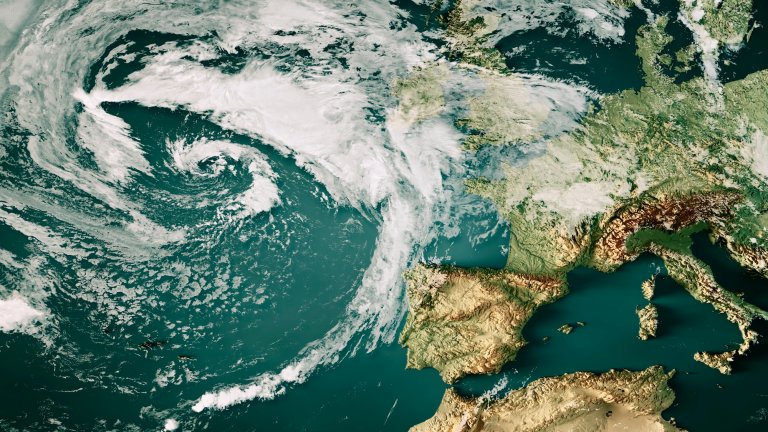
Farm subsidies in the EU cost taxpayers billions of euros each year, and so it’s naturally in the best interests of regulators to maintain tight oversight over who gets how much. For years now, regulators have relied on satellite imagery to help them keep an eye on those claiming subsidies, photographing farmland from above and looking for the telltale signs of subsidy cheats or breaches of environmental rules. But satellite images are unreliable. In some places, mountainous terrain makes for long shadows that obscure features on the ground. In places like Scotland, it’s overcast all the time.

Enter the drones. Flying under cloud cover, their cameras can get detailed imagery of the ground below, snapping angled views that complement the straight-down imagery gathered by orbiting satellites. They are quick to deploy and can be used to investigate specific cases rather than huge swaths of countryside. And they could help the EU keep from bleeding millions of euros to subsidy fraud.

Of course, to be truly effective the EU will need to develop it’s next-gen strategy for unmanned systems in the larger airspace, a strategy that is currently being hurried toward approval. That would let drones off the leash they are currently on--right now they must remain in line of sight of the operator at no more than about 550 yards distance--and let them fly free, allowing them to inspect acres and acres of agricultural land in a day. And of course there is the inevitable privacy discussion, which is bound to come to a head as government regulators seek a more invasive role in monitoring private property.

But the fact that drone auditors are on the agenda lends further credibility to the notion that drones aren’t just for shadow wars anymore. Unmanned systems are poised to enter all kinds of roles, from combat fighter jock to law enforcement officer to the more mundane bureaucrat-with-a-clipboard.

[BBC]

7 Comments

All the time? Really? All of Scotland has cloud cover 35 days per year? This is a science magazine, it should be a little more accurate.

On a completely different note, I don't like this. It is another example of a government run amok. The U.S. is trying to get a similar situation started. First by making legal to fly drones in the U.S. Makes me think of 1984 (the book not the year).

God I can't type sometimes. Scotland has cloud cover 365 days per year?

@popsci
Can we please have some journalistic integrity here? Very one-sided view of the situation "Isn't it great that the government can now send robots to spy on our homes, our neighborhoods and our farms"?

How is this in any way a step forward in human progress? Do you want to live in that sort of a society?

I'm horrified at the new things the government wants to blow money on to justify itself.

How about this, how about you offer "X" number of grants for X+y number of applicants. Have them compete for inspections, and whomever best adheres to the spirit of the regulations gets the grants.

I don't know if this is really a problem that needs to be solved or not, but creating "SKYNET" is a step in the wrong direction.

@shinkaze

Everything you just said is political...like you said this is a SCIENCE website...why would they feed into political crap like pretty much everything you stated...maybe go to a diff site?

The problem isn't the imagery, the problem is the subsidies. Get rid of the subsidies, and then nobody will care about the overhead imagery.

Ken Mitchell
Citrus Heights, CA

The innocent are being watch by their government, on the premise they 'might' do something wrong!
Now that is a clear illustration of BIG BROTHER!

.............................
Science sees no further than what it can sense.
Religion sees beyond the senses.

I wouldn't consider this a case of Big Brother. Many institutions have a lot of information about us already. It's what they're allowed to do with the information that counts. The farmers want a subsidy, so in exchange they've got to be honest, and they're not always doing that. So it seems like a fair trade to get money in exchange for verification of their honesty. Especially when the money comes from taxpayers.

I only hope that the EU doesn't waste their money on airplanes, when an airship would be far more cost-effective!

Brady Soule
Head of Community Relations
Helios Airships
www.heliosairships.com


June 2013: American Energy Independence

Five amazing, clean technologies that will set us free, in this month's energy-focused issue. Also: how to build a better bomb detector, the robotic toys that are raising your children, a human catapult, the world's smallest arcade, and much more.


Online Content Director: Suzanne LaBarre | Email
Senior Editor: Paul Adams | Email
Associate Editor: Dan Nosowitz | Email
Assistant Editor: Colin Lecher | Email
Assistant Editor: Rose Pastore | Email

Contributing Writers:

Kelsey D. Atherton | Email
Francie Diep | Email
Shaunacy Ferro | Email

circ-top-header.gif
circ-cover.gif