Saarland University's Holger Hermanns and the Wireless Bike Brake Saarland University

As the world goes increasingly wireless, we’ve learned to tolerate a certain degree of failure in our wireless systems--like when your computer just won’t sync up with the wireless internet at the cafe, or when our phones drop a call. But what about situations when wireless systems simply cannot fail? A failure rate of zero is tough to achieve in any system, but computer scientists at Saarland University in Germany have demonstrated a wireless bicycle brake that works 99.999999999997 percent of the time.

That means in a trillion braking attempts, it fails three times on average. It’s not perfect, mathematically speaking, but for practical purposes it’s pretty close.

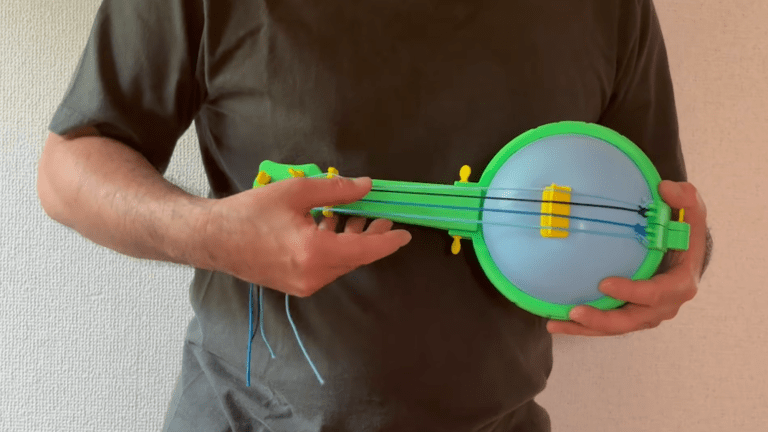
The brake isn’t the usual handlebar brake lever customary on most bikes, and because it is wireless it naturally dispenses with the usual brake cable snaking down the frame of the bicycle to the front or rear wheel. To brake with the wireless system, the rider simply squeezes the rubber grip on the handlebar, which is fitted with pressure sensors. The harder the rider grips, the more pressure is applied to the front wheel brake. The signal sender is about the size of a cigarette pack and fixed to the handlebar. The receiver sits at the end of the bicycles fork and turns wireless radio signals from the grip into mechanical pressure on the front wheel.

That all sounds simple enough for a wireless bicycle brake, but the idea is to create a testbed for wireless technologies that absolutely cannot fail, like those envisioned for future train systems or for commercial jetliners. Starting with a simple handbrake, the Saarland team hopes to build the complex technologies necessary to ensure safety in wireless systems.

After all, brake failure on a bicycle is dangerous. But brake failure on a train could be catastrophic. Three failures in a trillion is a pretty good mark to start improving upon.

31 Comments

They could make those brakes on trains just like in trucks. They are pneumatic, and for braking pressure is relieved. If there is some malfunction or loss of pressure, there is nothing holding back brakes and you just brake.

with a bike break cable, i feel a sense of confidence that my breaks are going to work when i need them

although this is advertised as a 'fail proof' system, it's electronic - and wireless. can radio interference cause this thing to fail? i don't really like the idea of an external source being able to control/disable the breaks to my vehicle

Q

Wonderful! If I can buy it for $20 bucks great!
Now, what are the odds of that, really.

So can it be jammed? just wondering.....

I really am curious of this scientist testing method. The article makes a large point of it and then we are left with nothing. Seems like a interesting to speak about.

What automated test did he do a trillion times that it would only fail 3 times?

Mmm, I do not believe he push the brake button a trillion times, while riding the bike? So yes, his testing had to be automated. So what gadgets and automation did he use?

Besides the new breaking system being of interest; I sure wish to learn more of his testing methods!

How long would it take a person to sit and count up to a trillion?

Trillion... only 3 fails. Somebody observed this.

great idea. hows it gonna stand up to real world use? water safe? impact safe? would general radio signal interfere with its operations? include battery meters also. bikes fall over and also go thru puddles. would take me a while to trust it without a manual back up

@bfouts: "with a bike break (sic) cable, i feel a sense of confidence that my breaks (sic) are going to work when i need them"

When your brake cable breaks, your sense of confidence won't help you much. (BTW, look for the "Shift" button on your keyboard. You should also learn where the "period" button is located. Your sloppy typing is suitable for personal correspondence, but you shouldn't expect strangers to struggle to read it.)

First of all to all of you who made comments on this...
The article was describing a research project which investigates how consecutive failures in message transfer may affect the correct functioning. The application of braking a bicycle was selected as an example, however the modeling and statistical analysis can be applied to really any system that has a hard real-time requirement and no obvious fail-safe state.

yetihehe - You are correct that one could conceive a system where the braking system was fail-safe. The point of the article though was to apply this to a system and examine the probabilities in a rigorous physical and mathematical system comparing them.

Sprite - Your comment on "How long would it take a person to sit and count up to a trillion?
Trillion... only 3 fails. Somebody observed this." There are two main types of models made here: deterministic (what you observe) and probabilistic (what you predict). When the article says "99.99999997 probability and that means in a trillion braking attempts, it fails three times on average," the author is actually explaining in lay-terms how this can be perceived. It is not literal, however it is approximate. You can learn more about statistics in school if you are interested in this. To me it is rather boring. As far as the article goes and your remark "Besides the new breaking system being of interest; I sure wish to learn more of his testing methods!" the article is published online at http://www.mpi-sws.org/~vahldiek/papers/wowmom.pdf so you can read all about the testing methods and the data taken.

Kartman - To answer your question of whether it can be jammed...
Yes, most wireless systems can be jammed if there is sufficient RF energy directed at the receiver. In the development of military hardware MIL-STD 462 defines this is as Radiated Susceptibility (RS). Jamming requires a frequency tuning, an object capable of developing enough RF energy, and a transmitter that is directional such that the lobes (areas of concentration) sufficiently exceed the threshold of the receivers signal path. I would not consider a mischievous person being able to build such items only to shut down your braking momentarily while you drive by. It would cost entirely too much time and energy. You could design the system to be robust enough to withstand any latent or ambient RF noise which is more likely of a case.

The grips sense pressure to break, but what happens if you ride over a pothole and you instantly squeeze the handles to keep control of the bike; wouldn't that make the system brake unintentionally?

Well, as long as RIM is not the one building/managing the breaks we should be fine.

The article did not say the technology was ready-for -marketplace. Y'all have pointed out several reasons WHY it isn't. Take the article for what its worth - it brings attention to situation where 'No failure' is the only acceptable mode of operation.

Think about it, Tygrys. how does your hand lay on the handlebars when you are braking rather that trying to just keeping a grip on your handlebars on rough terrain? Look to your computer and the touchpad.

So if you put two of the bikes side by side and you brake and the bike next to you........oh boy I can imagine a race with 100 bikes close together when racing all the different frequencies and then the teams trying to mess each other up by sending false signals from the sidelines......

I do like the advances made in wireless control of actuators and the pressure sensitive breaking strength. This has applications in simplifying the linkage in remote operated equipment.

I guess it comes back to the market you selling to really. There are those in life with extreme amounts of money, who want gold and platinum bikes and well just to be exotic. They peddle about to be seen. Their bike maybe all decked out with exotic electronic gadgets, bling, bing! So, ok, I can see this being sold.

Then there is the race bicyclist. I just do not see it happening for them. It looks like it makes the bike a lot heavier and complicated, even though the writer and thor_l33t dazzle me with their higher education and vocabulary, but in a way of an excellent used car sales men. Your sales talk is really good, but the Peter Pan principle did not kick in for me, I do not believe. Least not for any sincerely focus speed race biker. I know several things from working with electronics, outside radio frequencies can interfere with you one electronic, batteries do die eventually and electronics do not like a lot of vibration.

And to the average Target, Wal-Mart bicycle, I do not think you gadget could be sold for an extra item on a bike at a cost the general consumer would want.

But hey, what we see in the picture could just be bulky R&D electronics, sure. But later it can be all micro small and encase in water proof plastic, to finally end with being made in South Korea or China and sold back to the USA cheap and then good for the Wal-Mart, Target folk or if the cost is high, put a lot of bling bling on it and sell it to the rich narsstistic folk..

I guess time will tell. I am not sold yet. So for now it’s just interesting R&D gadgetry.

The range between the transmitter and receiver being so small in a bicycle, they were able to achieve such an unimaginable failsafe result of thrice in a trillion. But in a practical long distant application with interference from other radio frequency sources, is the same result possible? Would be great if found

doitbetternow, I do not like touchpads; sometimes they 'click' when I don't want them to click. Or when I type, the bottom of my palm touches the touchpad and activates a click. I prefer to use a mouse.

I'm not dissing the technology. Like others have pointed out, this technology can be used in some situations but not in all.

video? or it never happened....

_________________
The people of the world only divide into two kinds, One sort with brains who hold no religion, The other with religion and no brain.

- Abu-al-Ala al-Marri

Q

Mr. Holger Hermanns, I ride your bicycle, just so you know.

I give them less than 8 hours before the wireless signal gets jammed hacked, an app to do this automatically gets put on the internet, and bicyclists and trains everywhere get trolled.

Seriously, just jump off the bike.

@yetihehe...you are correct that trucks have a fail safe built into their pneumatic brake systems; however, the service brakes are operated by increasing the air presure stored in air tanks; the parking breaks are steel springs held back by air presure (the driver opens a valve in the cab to dump the air presure out of the system when parked): the loss of air presure (caused by a mallfunnction of some sort) allows the parking brakes to activate and stop the truck, thus not allowing the truck to be operated without adequate air presure, cheers

This is awesome progress!!!! Listen I bought a gadget made by Giant for my bike. It tells me my MPH and the distance I've traveled (which is really nice). Ok so the gadget goes on the the handlebars and the sensor is on the spokes. Well there is a wire which connects the gadget and the sensor. Ok well the wire broke!!!! I screamed and I yelled I was so mad!!!! So yes get rid of the wires!!!!! Please go wireless!!!! I cant wait cause I think by 2020 wireless will have worked its way into everything!!!! Wires will disappear eventually making our lives convenient. Conveniency. I can't tell you how many pairs of head phones I've gone through cause of shorted wires!!! GET RID OF THE WIRES!!! LETS GO WIRELESS!!!! WIRELESS!!!! WIRELESS!!!! NO MORE WIRES!!! SAY NO TO THE WIRES!!!!

Q

In the future when the augment and enhance our brain with a computer access port and wireless antenna for communication, we will be able to talk to each other via wireless, drive our car, turn on and off our home security system, adjust the home thermostat, watch movies in our mind and of course mentally we can stop the bike wirelessly with our minds too.

@Tundrasea

"When your brake cable breaks, your sense of confidence won't help you much. (BTW, look for the "Shift" button on your keyboard. You should also learn where the "period" button is located. Your sloppy typing is suitable for personal correspondence, but you shouldn't expect strangers to struggle to read it.)"

You're honestly insulting him for no reason. You must be pretty dim if you struggled to read that due to lack of (maybe) two periods and a couple of capital letters.

I've been riding mountain bikes for over 10 years now, and I can tell you from experience that break cables don't just cut. You would have to really neglect your bike or have some poor components installed for that to happen. When your break cables are borderline unsafe, you would generally feel a huge decline in performance WAY before they actually break. Electronic components tend to fail more often than mechanical working parts.

Don't be so damn pretentious... you won't make any friends that way.

overthehills: I'm sure you're a fine fellow. You ride mountain bikes, so that's a big point in your favour. However, I'll probably get by just fine, without you as a friend.

As for my comment about the missing punctuation -- bfouts comment was just the latest of a great many sloppy posts I've seen on the Internet. Some people seem to think that non-standard punctuation makes their missives appear more creative (I've had people tell me that). In most cases, it seems to be just ignorance or carelessness. In any of those cases, I usually simply don't bother to read the post. If you value style over substance -- and I'm looking for substance -- why should I read you? If you're ignorant -- what have I got to learn from you? If you're just lazy and careless -- why do you expect me to take the time to wade through your tripe?

Popular Science has several million readers. Posts here could be read by several thousand people. If you can't take a few seconds to use something approaching standard punctuation, you're simply dissing all of your readers. Even if it only takes a reader an additional half second to decode your sloppy writing, that could add up to over an hour of wasted time for your readers.

If you want to have people read what you write, take a bit of time to make it readable. If you think your time is too valuable for that, fine -- my time is also too valuable to waste on reading your stuff.

Give me a brake! put the breaks on this off topic, poorly conjugated tripe.

Nice brakes though.

My bicycle brakes would now need batteries?

And how did they come up with 3 fails in 1 trillions tries? Just pressing the brakes a trillion time at a rate of 10 times per second would take 3,154 years! So, I guess they pressed them 1/3 trillion times at a rate of 1000 times per second (who wants to wait 3 thousand years?) for about 10 years to at lease get one failure.

It is a good thing though that some folks try to make something as fool-proof as possible. You have to let the fools try it though. Out of the lab - into the public please!

Karsten

We learned, that even in cases where people seriously try to estimate probability of failure, they are often wrong - like for nuclear plants or Space shuttle.
In this case, I think that author simply wrote 13 9 digits without any more efforts to prove reliability of his construction.
His construction has several parts - handlebar switch, wireless contact, battery, brake itself - each of which isn't remotely as reliable as he claims. So these reliability estimations are just silly joke.

Is it just me or does it seem like it would be 3 fails in 100 trillion?

In the account of a trillion tests, at what point did you notice you batteries getting weak and felt the need to recharge them to further continue your testing? As you batteries did get weak, did you remove this from your testing results and not count it as part of the test?

Well for me as I go down a hill and suddenly to my own surprise find my batteries weak, I would find that truly important and at that moment of heading fast down the hill. I wish I had the ability to discount the crash that is about to happen as I head for curve down the hill gaining speed!

Oh, the trillion part was just a calculated estimate, I see. But in the real world, batteries still do loose power and what about the down hill and its curve?

tygrys, MY point is that comparing two completely different applications using dissimilar technologies benefits neither.
A touchpad used with a laptop computer is tracking position as governed by software. The false-click by palm contact is addressed in the driver software hence my NOT using a mouse.
The touchpad of the bicycle brake is reacting to the amount of pressure applied and could be tailored to the individual riders grip when braking and when riding through the software governing the hardware. What are the differences in the pattern of how one grips the handlebar when one is braking and when one is bracing themselves to maintain control on rough terrain and doing both at the same time?

They should add this technology to gaming controllers. Sure they would have to alter it, but it would be worth it. It would me faster game play to games like COD. Also it would help prevent bullet-lag on videos games for faster reactions, so i wouldn't have to be shot behind walls!!! haha

I'm sorry, but I can't take seriously any comments from armchair engineers who don't know the difference between "break" and "brake" or "peddle" and "pedal."


June 2013: American Energy Independence

Five amazing, clean technologies that will set us free, in this month's energy-focused issue. Also: how to build a better bomb detector, the robotic toys that are raising your children, a human catapult, the world's smallest arcade, and much more.


Online Content Director: Suzanne LaBarre | Email
Senior Editor: Paul Adams | Email
Associate Editor: Dan Nosowitz | Email
Assistant Editor: Colin Lecher | Email
Assistant Editor: Rose Pastore | Email

Contributing Writers:
Rebecca Boyle | Email
Kelsey D. Atherton | Email
Francie Diep | Email
Shaunacy Ferro | Email

circ-top-header.gif
circ-cover.gif
bmxmag-ps