Bioreactor for Cell Cultures M. Janicki

A Dutch project that launched in 2005 has finally borne fruit: cells from a delicious pig have been cultured in the laboratory to grow the first successful filet of in vitro pork, The Times reports.

The prospect of vat-grown meat has been the stuff of science fiction for quite a while, and the subject of serious study for over a decade. A number of groups, including odd bedfellows NASA and PETA, see it as the answer to feeding a hungry world, without all the unpleasant externalities of large-scale meat production. And many vegetarians say they would not have an ethical dilemma eating meat if no animal was killed to produce it.

The team at Holland's Eindhoven University extracted muscle cells from a living pig and incubated them in an appetizing nutrient broth "derived from the blood products of animal foetuses," according to The Times. Future lab meat will be grown in a synthetic medium instead.

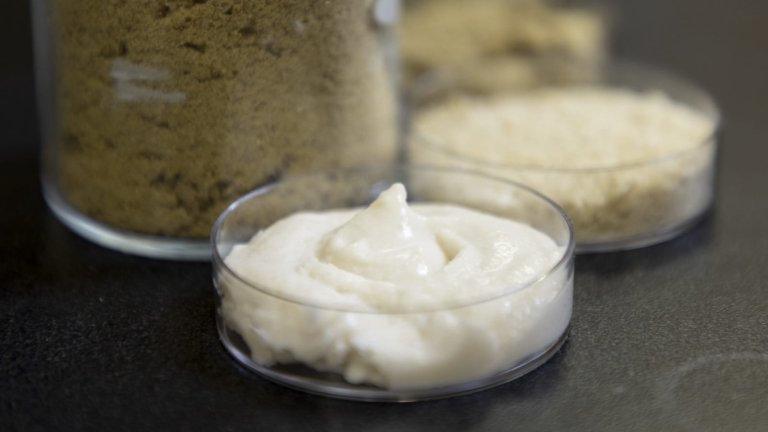
An actual lab-grown pork chop is still a ways away, though. Meat suitable for the plate has to be more than a simple petri-dish-grown wad of muscle tissue. Without blood flow, bones, connective tissue, and a modest amount of exercise, the flavor and texture of the muscle will be far from palatable. The culture achieved by the Dutch scientists is reportedly a "soggy form of pork" that its creators have not yet ventured to taste.

For now, though, before the technology for a beautiful synthetic steak has been perfected, lab-grown meat may still be suitable for feeding to other animals, where its impact on environmental and economic issues would still be beneficial. At present, for instance, 25 percent of the world's fish catch is fed back to farmed fish each year, a ratio that's hugely detrimental to the sustainability of the seafood industry.

The lab-grown meat might be edible as a component of sausage as well; and indeed one of the primary funding sources of the Dutch study is Stegeman, a sausage manufacturer owned by Sara Lee.

13 Comments

that picture doesnt make it look tasty.

The picture makes me think of Repo: The Genetic Opera.

would a picture of a slaughterhouse make the meat look any more appetizing

ya I agree the slaughterhouse is pretty unappetizing with all that murder going on . Id happily eat a lab grown steak . but I eat alot of chicken so Im waiting for lab grown chicken .

ya I agree the slaughterhouse is pretty unappetizing with all that murder going on . Id happily eat a lab grown steak . but I eat alot of chicken so Im waiting for lab grown chicken .

Most of us have eaten Spam, so eating food that is even more highly processed shouldn't be a problem.

Think about it; once the taste/texture issues are resolved, not having to kill an actual animal means we wouldn't have to limit ourselves to the traditional meats. We could be eating cheetah, polar bear, wildebeest, orca, you name it, all guilt-free. And if you extend the logic even along, consumption of human tissue would also be technically, if not morally possible. That would be a whole new ethical debate altogether.

Designer meats made from tissue that comes from diverse genetic sources (or engineered ones) that would not exist as real animals might also be a possibility. That's a whole new world for the likes of ConAgra and Hormel to explore...

Once this process starts working the first thing the big food conglomerates will do is produce a genetically engineered steak with all the sugar and twice the caffeine and probably nicotine thrown in as well.

I shall name it Spork!

So, take cells from a living pig (which is likely bacon by now), abort a bunch of porky fetuses (since they are not "alive" yet), drain their blood, and grow the cells in that (like a test tube baby).

Couldn't you just inseminate harvested eggs, grow baby pigs in jars, and serve them up at term without ever "birthing" them. Soft and tender, like a veal steak or suckling pig. Since the whole animal is growing and moving (somewhat), you get some texture to the meat.

For that matter, it seems like a small matter to grow the animal larger in vats, Matrix style, until harvest.

Meanwhile, I'll go back to shooting critters in the back yard - I got some chili to make.

Run some electricity through the flesh and it will probably tighten up.

Like Eric Drexler quoted in his book "Engines of Creation" 25 years ago this type of meat will be our future source of sustainable and cheap food.

And through 3D live tissue printing it will be available through raw materials!

The problem of flavour because of lack of vessels is also the problem of tissue engineering of organs. We can create scaffold for cells to grow but a complete organ needs vascular tissue which can not yet be embedded.

Organ tissue engineering and flavoured tissue engineered meat will come about the same time in the near (I hope) future.

PS: I liked the comment on Spork... :-)

So which will come first, the lab grown chicken meat or the lab grown egg?

@evry1
Asimov wrote about this a couple of times, he suggested people would eat it because it would be cheaper than normal
though im guessing anything grown in a lab would exceed even $50 per kilo...
then again, its like petrol and electric, petrol cars have been around for yonks but electric beat them in some aspects and have the capacity to outperform in every other within the next 10 years
obvious the main concern is the taste, butwe could see a perfect engineered stake in the next 20 or if we`re lucky 10 years


June 2013: American Energy Independence

Five amazing, clean technologies that will set us free, in this month's energy-focused issue. Also: how to build a better bomb detector, the robotic toys that are raising your children, a human catapult, the world's smallest arcade, and much more.


Online Content Director: Suzanne LaBarre | Email
Senior Editor: Paul Adams | Email
Associate Editor: Dan Nosowitz | Email
Assistant Editor: Colin Lecher | Email
Assistant Editor: Rose Pastore | Email

Contributing Writers:
Rebecca Boyle | Email
Kelsey D. Atherton | Email
Francie Diep | Email
Shaunacy Ferro | Email

circ-top-header.gif
circ-cover.gif