The Sex Files
New research suggests transsexualism is indeed a genetic trait. But how conclusive is the study?

Is Transsexualism Genetic? New research suggests transsexualism is likely biological. iStockphoto

A few weeks ago, Hanna Rosin's wrenching and well-researched article about young transsexuals—including a girl named Bridget (née Brandon), whose first words were "I like your high heels"—zipped around the blogosphere. In it, Rosin discusses the unsettling work of a psychiatrist who questions the scientific basis for allowing children to "transition" to the gender of their choice, citing several kids who emerged from their gender dysphoria after a rigorous course of therapy. "If a 5-year-old black kid came into the clinic and said he wanted to be white, would we endorse that?" he asks. The prospect of letting pre-pubescent pipsqueaks take hormone-blockers that might have far-reaching effects on their health and future fertility is indeed a little nerve-wracking.

But just on the heels of Rosin's piece, researchers based at Australia's Prince Henry's Institute this month released the results of the largest ever study of transsexual genetics, which compared the length of the androgen receptor (AR) gene in 112 male-to-female transsexuals and a control group of 250 "normal" men. The gene—which is known to make circulating testosterone less effective at signaling, circulating, and just generally doing its thing—turned out to be longer in transsexuals. Less-potent testosterone could, in turn, affect the development of the brain in the womb, "under-masculinizing" it and making it more structurally similar to a female brain. So when America's Next Top Model's resident transsexual, Isis, says: "I was born physically male, but mentally and everything else, I was born female," she might be onto something. Someone measure her AR gene, stat!

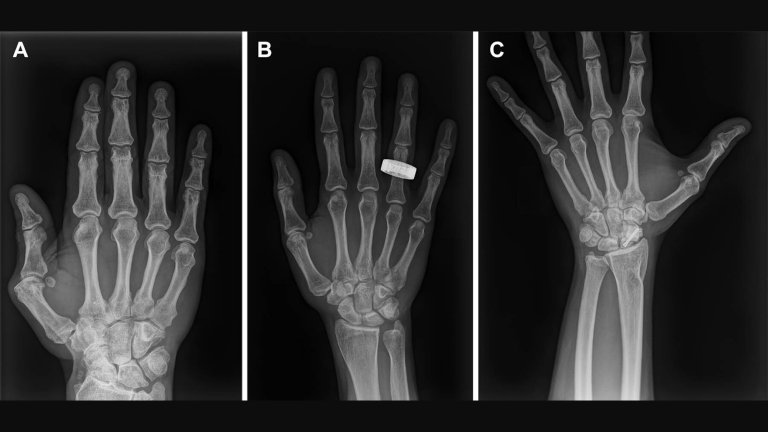
This new evidence is supported by a few previous studies that have found that male-to-female transsexuals have other biological similarities to women; they tended to have fewer somatostatin (growth regulating) neurons than the average man, for example, and the ratio of their index and ring fingers (also known as 2D:4D, a common proxy for androgen exposure in utero) was higher than it usually is in men, closer to the average female ratio.

Still, not all of the transsexuals in the Prince Henry's study possessed a longer AR gene, and not all men with a longer AR gene have gender identity issues, suggesting that multiple distinct genes as well as certain key psychosocial factors are involved in determining whether a boy becomes a man or a woman. Meanwhile, the DSM-IV still lists transsexualism as a psychiatric disorder; transsexual advocacy groups are lobbying to get it removed before the DSM-V is released in 2012, much in the same way that gay rights activists tried to take homosexuality out of the manual (and succeeded) in the '70s.

What do you think: is transsexualism primarily biological or psychological? Is it a disorder, or simply an unusual but equally valid way of expressing gender in relation to sex? And if doctors could find a way to expose at-risk fetuses to sex hormones at crucial stages of development, would we feel comfortable making this a standard part of prenatal care?

Want to learn more about breakthroughs in electronics, medicine, nanotech, and more?
Subscribe to Popular Science today, for less than $1 per issue!

4 Comments

Personally I think that there only is the biological. It's my belief that any "psychological disorders" we have are a result of a biological change. The human body is a dynamic structure that tries to adapt itself to its surroundings. It's been proven that the connections in the brain can rewire themselves to work in different ways when a limb has been amputated. Perhaps these other issues are a side-effect of certain connections being broken? Perhaps the body is just trying to adapt?

I'm not saying I'm right or that this even makes complete sense from a scientific stand, but it's a belief.

As for whether screening should be part of prenatal care, it depends. Will that be the only time at which this could be "corrected?"

"...there's no promise of safety with these second hand wings..." - The Melting Point Of Wax by Thrice

While I applaud you for broaching a diminishingly taboo subject, I think it fails in it's attempt to accurately inform. There have in fact been scientifically accredited and repeatable studies that have identified actual brain incongruencies in 100% of the cadavers studied. 100%. These studies have been the foundation for the increasing changes and accommodations in the legal and medical fields, and the cause for public education.

Transsexualism is not related to sexual orientation as your article loosely implies. In fact the same ratio of heterosexual to homosexual individuals in the general population, relates to the transsexual population. And similarly, most male to female transsexuals are not "feminine" in physical attributes. Just as many "male to female" transgendered people have physically masculine or physically feminine characteristics as in the general population. A discussion of primary vs secondary transsexuals would be helpful here, as the long term effects of testosterone are far more apparent in secondaries.

While I have never heard of the article's claim regarding "growth regulating neurons" I doubt this is creditable. The first actual evidence of a-typical brain regions was the BSTc region of the hypothalamus in 1985, followed by conclusive studies in 1995 and 2000.

I have heard of the research on finger length. As I remember, the results were not statistically significant to substantiate any of the hypothesises, or to lend credit to any wives-tales. Listing your sources for including this in your article would be helpful here.

Genetic research is promising and warranted. But far too often transsexualism has born the brunt of misleading, incorrect, and even malicious reporting. I believe that because of this history, more effort should be provided to document information and tie claims and speculation to actual studies and verifiable results. In this regard, you did accurately portray the DSM-IV classification, and the effort to characterize the outdated basis for its current state.

IMO I would like to see the discussion moved forward to begin the disclosure of how this condition came to be excluded from insurance coverage in the USA, but is now included in the public health care system of both large and small countries around the world. Again the US lags behind while we tell ourselves we are the leader of the world.

dopplerthesexybeast

from Cartersville, Georgia

I agree with both of you. While I do believe that there is only the biological and that "psychological" issues are biologically based, you still cannot deny that "studies" on the biological basis of things like homosexuality, ADHD, transgender identities, etc. leave a lot to be desired.

Alice Reilly
Department of Biology
Mercer University

As for whether screening should be part of prenatal care, it depends. Will that be the only time at which this could be "corrected?"

"...there's no promise of safety with these second hand wings..." - The Melting Point Of Wax by Thrice

www.cirurgia-plastica.com


138 years of Popular Science at your fingertips.

Innovation Challenges


Popular Science+ For iPad

Each issue has been completely reimagined for your iPad. See our amazing new vision for magazines that goes far beyond the printed page


Download Our App

Stay up to date on the latest news of the future of science and technology from your iPhone or Android phone with full articles, images and offline viewing


Follow Us On Twitter

Featuring every article from the magazine and website, plus links from around the Web. Also see our PopSci DIY feed


February 2012: The Future of Fun

Science is reinventing play, from extreme sports to gamification to ridiculous roller coasters to the playgrounds of tomorrow, and this issue is chock full of fun. Also, on a less fun note: Did global warming destroy my hometown?


circ-top-header.gif
circ-cover.gif
bmxmag-ps