Or at least keep your teeth cavity-free. A growing chorus of medical researchers say our bacteria-killing zealotry is misguided. Instead of fighting bugs, they argue, we should train them to do our bidding and then set them loose in our bodies. The trouble is keeping them there

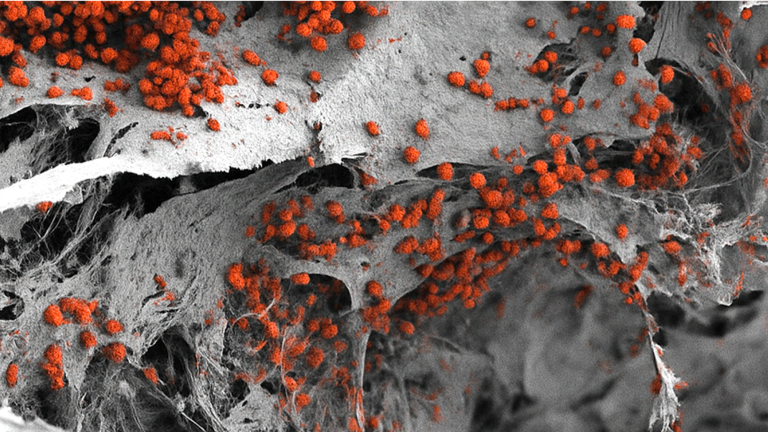
Streptococcus mutans: Hillman's specialized strain of S. mutans tooth bacteria doesn’t produce enamel-eroding acid.  Eye of Science/Photo Researchers

THE CAVITY KILLER

Jeffrey Hillman, an oral biologist for-merly of the University of Florida, is a poster child for the kind of biotherapeutic future that Thaler envisions. Hillman has spent a decade lobbying the FDA to let him test a transgenic tooth bug in volunteers. “Fortunately, we had no idea what was ahead,” says Hillman of the gantlet of regulatory requirements he has had to tackle since 1996. That was the year Hillman founded Oragenics, a biotech firm dedicated to commercializing his patented cavity-preventing Streptococcus mutans, a genetically modified organism (GMO) that’s the product of nearly 30 years of research.

Inside the mouth of most every person on the planet, colonies of S. mutans bacteria thrive on leftover sugars. The by-product of their digestion is the acid that eats away at tooth enamel and causes cavities. But there are many different strains of S. mutans, and some cause more trouble than others. In the summer of 1976, Hillman was trying to replace cavity-prone strains with those that secrete less enamel-eroding acid. Unfortunately, it seemed almost impossible to permanently eradicate a person’s “native” S. mutans once his or her teeth became colonized in early childhood.

“We were trying all sorts of crazy things,” Hillman recalls. “One time, we were painting volunteers’ teeth with iodine. Then we tried fitting their teeth with trays filled with antibiotics.” Yet no matter how thoroughly Hillman banished his volunteers’ native S. mutans or how quickly he re-colonized their teeth with a benign strain, the switch-out never stuck. “Slowly but surely, a person’s indigenous strain always came back,” Hillman says.

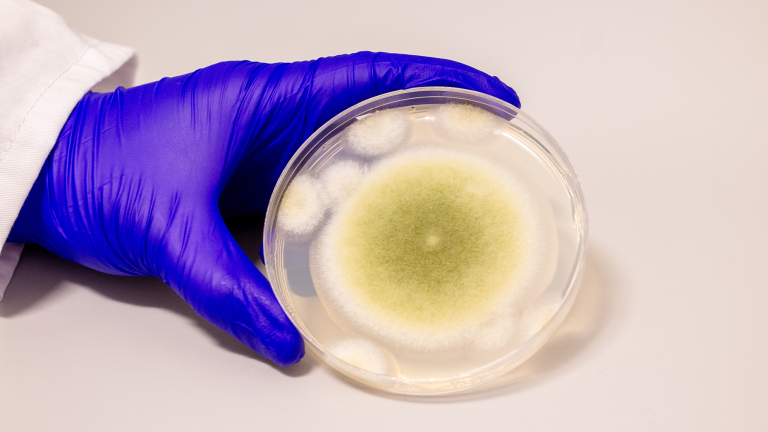
In 1982 Hillman hit on the idea of first finding a strain aggressive enough to elbow out a person’s native tooth tenants and then knocking out its genes for acid production. He conducted the microbial equivalent of cockfights, setting various strains of S. mutans against each other in crowded petri dishes. He knew he had found his ideal candidate when he saw that one “pinprick” colony had cleared a perfect circle in the lawn of other bacteria around it. When Hillman and two of his labmates introduced the strain into their own mouths, it quickly took over, banishing their native S. mutans in the process.

Next, Hillman deleted the microbe’s gene for acid production, but the superbugs didn’t survive the genetic tinkering. Most strains of S. mutans, including this one, use lactic acid to dispose of metabolic waste. Without acid excretion, the waste builds to toxic levels, killing the microbe.

Hillman solved the problem by making his bug produce alcohol instead of acid. To do so, he borrowed a gene for alcohol production from Zymomonas mobilis, which is used to make pulque, or Mexican beer. The resulting bug didn’t produce enough alcohol to make its host at all tipsy. But in studies with lab rats, it replaced the animals’ existing S. mutans and kept the rats mostly cavity-free on a high-sugar diet that would normally destroy their teeth.

Want to learn more about breakthroughs in electronics, medicine, nanotech, and more?
Subscribe to Popular Science and enter to win $5,000!

10 Comments

“I honestly think people are more comfortable with the idea of nano-robots scurrying through their bodies than they are of deploying bacteria,” Thaler muses. “But when you think about it, you cultivate your lawn. You’d probably like to cultivate your internal landscape.”

Well said. After we can overcome the hurdles of human timidness toward the implementation of modified bacteria in our bodies, there seems to be an entirely open and new scope of research in terms of productive bacteria. Instead of trying to create new cures and treatments for age old problems, why not manipulate something already in existence and change harmful bacteria into helpful bacteria?

i think people are more willing to adapt than you think i my self think this is a very posible option for the future.

Once we understand the bacteria or virus genome, we could even reprogram them to hunt down other bacteria or viruses such as Flesh eating bacteria and HIV viruses. they can have a set lifetime of only a few days and have their reproductive genes removed or replaced.

The solution to all of humankind's problems is undoubtedly a natural one. Sunlight, modified bacteria, and algae are our friends. I know it sounds utopian, but seriously, we just need to make nature work for us in a symbiotic way. True, it may mean altering nature through genetic manipulation; but the point is that it can be done.

berne04

from Aviston, IL

We have been talking in my Microbiology class about using viruses to carry the (gene manipulated) cure for diabetes; make the body produce it's own insulin again. This is the wave of the future for treatments. There is a huge potential benefit to gene therapy.

svseigel

from APO, AE

I was an AP biology teacher In 1993. Back then I asked a friend who was a doctor if some gut microbe couldn't be engineered to deliver insulin. He laughed. He said the naturally occuring bacteria are too well adapted to share space with a suboptimal organism. I countered that we could start with a patient's own flora, but he said simply adding or deleting anything would render it suboptimal.

In 1997 we attended a lecture on genetic medicine at the Exploratorium in San Francisco, the doctor was very sharp and forward-thinking. He said these avenues are "interesting but beyond our reach at present."

In 1999 my wife graduated with a B.A. in microbiology and almost every honor her university confers. Her signature position was that we view microorganisms the wrong way--a very small percentage are pathogens, while a large number are symbiotes--that we need to learn to work with them. Anyway, I asked her to mention my idea to her faculty. When she did, she was ridiculed by the full professors, tolerated by the more recent Ph.D.s, and taken quite seriously by the M.S. level instructors and graduate students. I'm gratified that she stuck with it long enough for us to learn that tenure often seems to impair the mind!

Fast forward to 2008. People are actually talking about my idea; while her idea is far more important. This plethora of Antimicrobial products not only threatens our personal micro-biomes, but it also accelerates resistance. These products should be tightly controlled lest we really do produce superbugs: PATHOGENS!

It's great if we can get friendly bacteria to do good things for us; it's terrible if we end up killing them off every time we use soap, toothpaste, lotion or even drink water!

Well, we do have one that eats oil spills then dies of hunger when the source is depleted... Sometimes there are some pretty cool successes.

Naturally our own bodies have bacteria that were not part of our makeup before that do all kinds of things symbiotically - not the least of which is digestion.

The concern is more like the problem in nature when a bacteria or virus gets in a mutated state that causes it to breed fast in a crowded environment and start causing disabilities and death. Don't think for an instant that a genetic 'bug' for good or ill will be the same for everyone, just like some people have large reactions to things like chicken pox and some people get killed by simple diseases on a wide scale.

Just some thoughts :)

kardelen133 (not verified)

Hi all
in the words of homer simpson.... holy crap! or maybe just, crap. you work for popsci, folks... what in the *#@* was that? to begin with, how long did it take you to make the two custom length leather straps? more than five minutes, to be sure. how long did you have to look for a belt with a buckle that size? i have never seen a belt like that in my life. wait, i'm sorry, let's start with who in the *&^% would want to do this in the first place? let's assume that you are actually trying to come up with 5 minute projects that someone might want to attempt, and using that assumption lets assume that even one of you has a little pride in what they do. if either of those statements are true, the video i jsut whatched is either the result of complete indifference, or complete ignorance. if this is where my subscription dollars are going, please do a five minute project teaching me how to unsubscribe.
forum plastik cerrahi saç ekimi lazer epilasyon tüp bebek burun estetigi
thanks.

The concept of using what should kill to relieve sickining people by minor modification to the basics of such is very interresting. although it is very hard to understand by many people, but it is the basic truth.
العاب-العاب بنات-العاب تلبيس-العاب طبخ-صور-صور بنات-صور مضحكة
Thanks

I think we have a natural, existing, means to to fight tooth decay. I am 73 years old and I have no cavities. I am curious has anyone thought to find out why some people donot have cavities? I eat far too much sugar. I am not being treated with any anticavity agents, including flourides, which I think will be banned someday.


Download Our iPhone App

Stay up to date on the latest news of the future of science and technology from your iPhone with full articles, images and offline viewing


Follow Us On Twitter

Featuring every article from the magazine and website, plus links from around the Web. Also see our PopSci DIY feed


Become a Fan On Facebook

Share links with friends, comment on stories and more


December 2009: Best of What's New

In our December issue, Popular Science names the 100 best innovations of the year: bombproof wallpaper, self-parking cars, the fastest helicopter, and 97 more. Plus inventor profiles and videos.

Check out the best of what's new here.

Popular Science Photo Pool


Share your photos in the Pop Sci pool at www.flickr.com!
tags_sprite.png
POP_embeddedForm_cover_May09.jpg