Vortex
Vortex Robert Kozloff/University of Chicago

Two physicists at the University of Chicago have created a knotted vortex in fluid for the first time ever. They describe their findings in a paper in Nature Physics this week.

Vortices form in liquids, gases and plasmas, occurring naturally in everything from water to weather systems to galaxies. Theory has suggested that knotted vortices exist for almost a hundred years, but scientists haven't been able to observe their existence until now. They may exist in the cores of neutron stars and in the plasma on the sun.

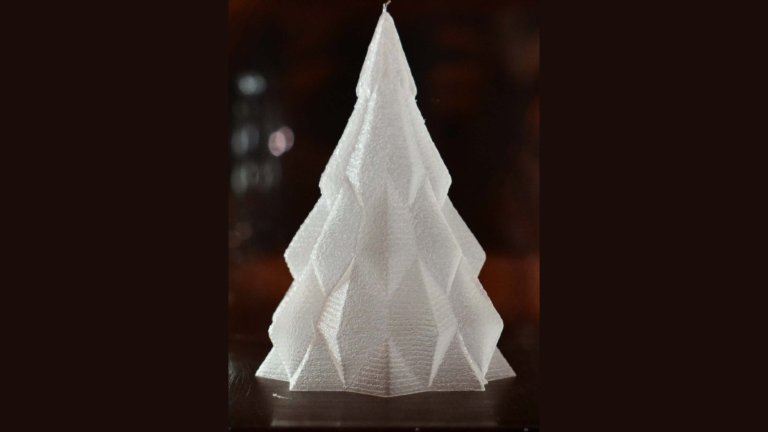
The researchers 3-D printed twisted hydrofoils, or wings designed for water, that when accelerated would create vortices in the shape of the wing. Gas bubbles made with electricity in the water moved toward the center of the vortex, allowing the researchers to observe the core clearly and record them with a high-speed camera.

The vortex loops elongated and circulated, colliding with each other and changing configuration. At some point they look like they untie themselves, although that could be due to the knots getting too small to see.

Now that they've created a knotted vortex they can observe, the researchers hope to further study how knotted vortices evolve and behave in the lab.

The University of Chicago has more video of the research setup at work:

5 Comments

I love knot theory.

I've been wondering about a knot providing a way around deflection. Sooner or later, if you have a good knot of surrounding material, you will find electrical parity happening, small scale; which we know can be built on. It might be a way to get to the ability to manufacture supermassive materials.

So the important question is, how to design a tax base around supermassive materials and artificial isotopes and enriched elements, now; before everyone is doing it everywhere.

The plasma shears in a sun seem easily simulated with a knot that gets ramped up in energy, provided you have established a good core potential locale. Flourine might make an interesting knot, as we like it for gamma containment already.

I wonder if they can get two of these knot vorticies to merge if they will form a composite knot, or just take some unintelligible shape.

Very cool research.

Note to PopSci: This, ladies and gentlemen, is what's called "science". It's degree of popularity may be somewhat lower than the whacked-out conjectures about arresting people for crimes they might commit in the future (what???) present elsewhere in this newsletter, but it is indeed science. As opposed to mindless babble. Stick to the science.

The whirls of water forms the vortex only because the binding capacity of hydrogen(1) to the oxygen(8) in covalency can be demonstrated in contrast dye manner.


June 2013: American Energy Independence

Five amazing, clean technologies that will set us free, in this month's energy-focused issue. Also: how to build a better bomb detector, the robotic toys that are raising your children, a human catapult, the world's smallest arcade, and much more.


Online Content Director: Suzanne LaBarre | Email
Senior Editor: Paul Adams | Email
Associate Editor: Dan Nosowitz | Email
Assistant Editor: Colin Lecher | Email
Assistant Editor: Rose Pastore | Email

Contributing Writers:

Kelsey D. Atherton | Email
Francie Diep | Email
Shaunacy Ferro | Email

circ-top-header.gif
circ-cover.gif
bmxmag-ps