Aside from ancient Mars, the moons of Saturn might be one of the best places to look for life outside this planet. The methane lakes of Titan are promising places, but so are the spewing plumes of ice on Enceladus — and the latter would be an easy one to check, as it turns out. The Cassini orbiter just flew through them, and Cassini scientists want to go back and take a longer look.
Cassini has been examining Enceladus‘ ghostly, icy plumes for several years now, tasting the water, ice and organic material flying out of them. (Organic meaning carbon-based compounds, not necessarily living material.) The plumes are also piping hot, at least in distant solar system terms — about -120 degrees F, which equates to lots of thermal energy. And perhaps the most tantalizing part? The icy particles are salty, possessing the same salinity as Earth’s oceans.
Enceladus might have a vast interior sea, and it also has an energy source in the form of massive tidal forces courtesy of its planet. Saturn’s wrenching gravitational pull flexes Enceladus’ interior, generating heat. Heat and salty water sounds a lot like environments on Earth — like subterranean microbe communities in places like Yellowstone, or perhaps the thriving ecosystems that exist in hydrothermal vents in the absence of sunlight. Could Enceladus host any such life forms?It would be fairly simple to find out, according to Carolyn Porco, a renowned Cassini scientist and leader of the spacecraft’s imaging science team. All you’d need to do is fly by and take a whiff.
“It sounds crazy, but it could be snowing microbes on the surface of this little world,” she says in an interview with NASA’s science news portal. “It’s the most promising place I know of for an astrobiology search. We don't even need to go scratching around on the surface. We can fly through the plume and sample it. Or we can land on the surface, look up and stick our tongues out. And voilà…we have what we came for.”
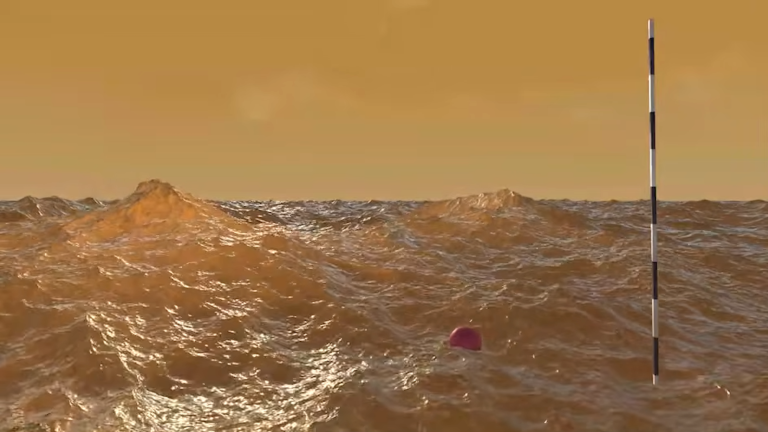
Simply flying through the plume would be easier than designing an interplanetary boat, at least.

Five amazing, clean technologies that will set us free, in this month's energy-focused issue. Also: how to build a better bomb detector, the robotic toys that are raising your children, a human catapult, the world's smallest arcade, and much more.


Online Content Director: Suzanne LaBarre | Email
Senior Editor: Paul Adams | Email
Associate Editor: Dan Nosowitz | Email
Assistant Editor: Colin Lecher | Email
Assistant Editor: Rose Pastore | Email
Contributing Writers:
Rebecca Boyle | Email
Kelsey D. Atherton | Email
Francie Diep | Email
Shaunacy Ferro | Email
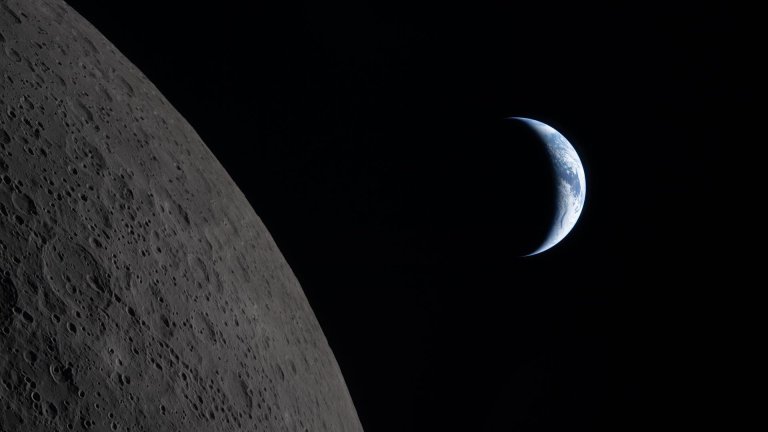
Once upon a time, when the moon was new, researchers say that when it was formed, the Moon was about 14,000 miles (22,530 kilometers) from Earth. I wonder if it is conceivable that the our moon too, could rain down on Earth and with crashing asteroids on the moon and earth and crashing comets on earth and the moon produce a similar water type mist onto Earth being the Earth has the strongest gravity of the two?
.............................
Science sees no further than what it can sense, i.e. facts.
Religion sees beyond the senses, i.e. faith.
Open your mind and see!
@ Rebecca... Any idea on the size of the plumes?
How in the world does Ms. Boyle know that those plumes are salty? That is a speculation and here is my speculation: Those are salt comets that came from Earth and got stuck on that moon and don't know how to get around it since they don't have a reverse gear built in. Now doesn't that sounds just as intelligent?
How is the term "Piping hot equal to minus -120 F?
Isn't that just frozen and yes by contrast the coldness of outer space much warmer, but still in fact
FROZEN!
Then when this article speaks in vague terms of heat, with the previous number of -120F, I am not really sure what they are proposing or fantasizing about.
..........................................
See life in all its beautiful colors, and
from different perspectives too!
just because she doesn't explain how we know they are salty is a mute point, it is a brief article, get over it or find out for yourself...-120F is warm compared to 0 Kelvin, you also need to get over yourself, probably much warmer on the inside of Enceladus, negative cheers
Rather use random weak terminalogy, how about scientific facts, cold, warm, hot, it's all realitive. And you posting to be a doctor, sheesh. But you do adore yourself, hey #1.
..........................................
See life in all its beautiful colors, and
from different perspectives too!
yes, and you are actually space...it is a screen name, are any of them real? mine is a joke with a friend, i used #1 because drchuck was already taken, but i guess common sense doesn't occur in space
I get it, cute, lol. Drunk Chuck is number one, yes funny! Thank you for your contributions to this article, not. At this point, were both trolling. I am moving on. Take care.
..........................................
See life in all its beautiful colors, and
from different perspectives too!
I really like to ask commenters like yourself. If you do not believe, why read a science mag and then make a comment? Are you just looking for validation or attention from others?
By the way, unless you yourself are a highly educated planetary scientist, let's leave the critique to their equally well-trained colleagues.
Scepticism is good, but some people on here pick entirely stupid things to be skeptical about; for instance, why would they make up the statement that this ice is salty?
While "piping hot" may not be a scientific term, and may seem ridiculous to us in reference to -120F, this is an entertainment magazine, geared towards giving laman like us a glimpse at what higher minds are working on. if you really want to get tchnical go read a peer review publication like "science" and see how they like your unfounded and uneducated criticism. There's a reason none of us are part of the peer review board.
Also, +1 Doctor, thank you for calling people on their crap.
From previous speeches of Ms. Porco, the surface temperature of Enceladus is -330 degrees. A plume escaping from the inside of the planet is 220 degrees warmer than the surface, showing how warm the planet's core is.
Have you ever watched snow making equipment at ski resorts? Here, they spray water that is above freezing temperature into the air and it turns to snow. Imagine if instead of the air being let's say 20 degrees outside it was -330 degrees. Don't you think that possibly the interior temperature is downright toasty?
It's called logic. Last I checked, Ms. Porco helped to successfully send a probe to one of Saturn's moons. What have any of you mouth breathing critics done?