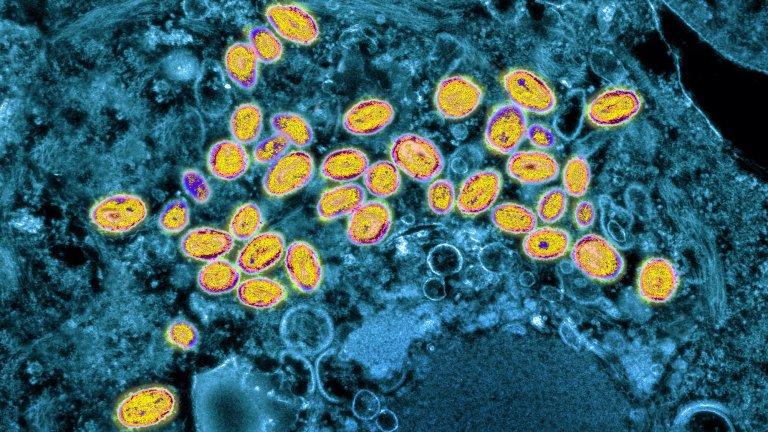
After more than a decade of work, scientists have completed a 3-D atomic-scale map of a virus that causes the common cold. It's the largest virus ever mapped. The map could help scientists re-engineer the virus for gene therapy, as well as to create possible treatments for cancer and other ailments. Robotic systems, an advanced x-ray, and years of patience made it possible.
The human adenovirus family, which is responsible for a host of ailments ranging from colds to gastrointestinal disorders, is quite good at making us sick because adenoviruses can infect many types of cells. For several years, scientists have tried to use adenoviruses as a vector to carry therapeutic genes into cells, mostly for treating cancer and cardiovascular disease. Understanding its structure, including how it disassembles when it enters a cell, could help scientists design better vectors.
The new structure illuminates one virus’s weakest links as well as its structural strengths, according to Glen Nemerow, a research professor at the Scripps Research Institute and co-author of a paper on the virus to be published this week in the journal Science.
It’s not the first virus to have its structure mapped with x-ray crystallography; scientists have been doing that for some time now. But it’s by far the biggest one, containing about 1 million amino acids, twice the size of the next-biggest virus ever studied in this way. Its size and unique design presented a particular challenge, the researchers say. Nemerow and co-author Vijay Reddy started their work in 1998.In x-ray crystallography, scientists turn large quantities of a protein or virus into crystal form, placing it in front of an x-ray beam. The atoms in the crystal diffract the x-ray light, and the diffraction pattern allows scientists to reconstruct the arrangement of atoms in the crystal.
The adenovirus presented a problem, however. It has spindly fibers that protrude from the atomic vertices like spokes, and they interfere with crystallization. When the researchers made a version without these spindles, it crystallized, but it wasn’t stable. Then they made a version with really short spindles, but the crystallized form did not diffract x-rays.
They needed a stronger crystal, but the process of trial and error takes a long time. They decided to enlist help from a robotic system, which can make much smaller, 50-nanoliter samples. Crystals grow faster in small drops anyway. The robotic crystallization process made plenty of crystals, but they did not diffract very well. In 2005, however, the Argonne National Laboratory installed a powerful new x-ray beam, so the researchers took their samples to Chicago. The crystals diffracted the light, but they also fell apart, which limited the amount of data they could get from one crystal.
It took several more years to build a crystal virus that was built to last and diffracted well. In the end, the scientists bounced x-rays off about 100 crystals — that’s 20 million refractions — to come up with their map.
Along with improved gene therapies, Nemerow says it might be possible to use this information to develop anti-adenovirus drugs, such as compounds that would prevent the virus from disassembling and therefore from infecting cells.
“Like an electrical engineer who wants to go into a house and put in new wiring, [a genetic engineer] doesn't want to put something where there is another important contact,” he says. “Knowing where these important regions are in the virus is crucial.”
The incredible innovations, like drone swarms and perpetual flight, bringing aviation into the world of tomorrow. Plus: today's greatest sci-fi writers predict the future, the science behind the summer's biggest blockbusters, a Doctor Who-themed DIY 'bot, the organs you can do without, and much more.


Online Content Director: Suzanne LaBarre | Email
Senior Editor: Paul Adams | Email
Associate Editor: Dan Nosowitz | Email
Assistant Editor: Colin Lecher | Email
Assistant Editor: Rose Pastore | Email
Contributing Writers:
Kelsey D. Atherton | Email
Francie Diep | Email
Shaunacy Ferro | Email
What's the big, round, multi-colored thing on the right?
There are two items in the picture. Presumably one is the virus, but which one? And what is the other thing?
www.pergelator.blogspot.com
The bottom part of the image each different colored part is copy of that top part of the image just at a different magnification level, from what i understand of looking at a crystallography of a hiv capsid http://pubs.acs.org/cen/news/87/i25/8725notw1.html http://viperdb.scripps.edu/
The mean looking old man at the bottom left with the big nose and purple hair looks like my old boss.
The bottom left part is probably the structure of the capsid - the outer protective shell of the virus. The upper right part likely shows the structure of the interior of the virus - what you see when you take the capsid off - and it contains a protein backbone and genetic material (probably marked in red here).
Was this published in the pop sci magazine?