Future of the Environment
Willem van Cotthem’s super-soil harnesses the power of Pampers to turn dirt into lush gardens

Willem van Cotthem's Diaper-Powered Soil Kevin Hand

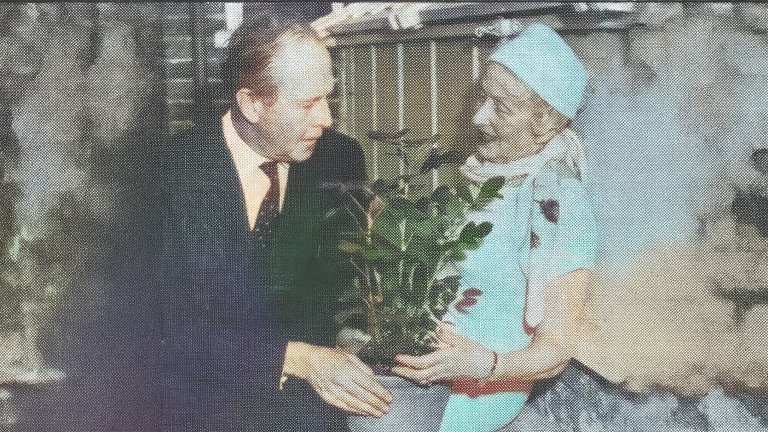
When asked to imagine the Earth in 2040, many scientists describe a grim scenario, a landscape so bare and dry, it’s almost uninhabitable. But that’s not what Willem van Cotthem sees. “It will be a green world,” says van Cotthem, a Belgian scientist turned social entrepreneur. “Tropical fruit can grow wherever it’s warm.” You still need water, but not much. A brief splash of rain every once in a while is enough. And voilà—from sandy soil, lush gardens grow.

The secret is hydrogels, powerfully absorbent polymers that can suck up hundreds of times their weight in water.

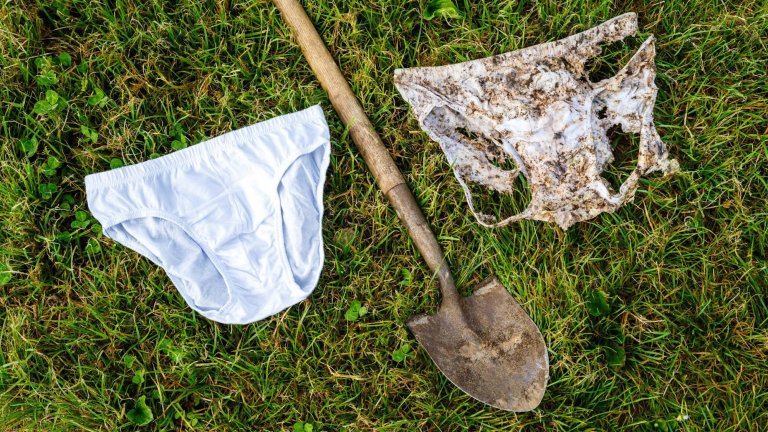
Hydrogels have many applications today, from food processing to mopping up oil spills, but they are most familiar as the magic ingredient in disposable diapers. The difference with agricultural hydrogels is that they don’t just trap moisture; they let it go again, very slowly, almost like time-release medication, into the root system of plants. That continuity of moisture is what brittle landscapes like deserts need to become fertile again. Water activates a mineralization process, setting free nutrients in the soil so that life can grow.

But water alone won’t make gardens flourish in sand. So van Cotthem, an honorary professor of botany at Ghent University in Belgium who has helmed several international scientific panels studying desertification, invented a “soil conditioner” called Terracottem. It’s an 8- to 12-inch layer of dirt impregnated with hydrogels, along with organic agents that nourish the natural bacteria in the soil.

Van Cotthem’s early experiments with his soil are now literally bearing fruit on every continent except Antarctica. Where Terracottem sits, barren plots of land are now fertile, and have already changed lives. In 2005, UNICEF invited van Cotthem to oversee the construction of “family gardens” in the Sahawari refugee camps in Algeria. Since 1975, thousands of Africans in the camps have lived in tents and shacks, dependent on the World Food Program to provide them with dry and canned goods—a diet that left them vulnerable to disease. Today more than 2,000 pocket gardens there provide healthy food.

If this technology is so miraculous, you might wonder, why wasn’t it developed earlier? After all, disposable diapers have been around since the 1940s. Until only recently, though, hydrogels were toxic, and skeptics doubted that they could ever be made safe for consumption. There was no bigger skeptic than van Cotthem himself—so much so that the day a research engineer from a German diaper company walked into his lab and told him he’d cracked the nut, van Cotthem said to his face, “I don’t believe you.”

“OK,” the engineer said. And he took out a spoon and ate the hydrogel. Van Cotthem was shocked. Then he said to his visitor, “Please come back in a couple of months so that I know you’re still alive.” Meanwhile, van Cotthem tested the samples, got promising results, and began researching the agricultural uses of hundreds of kinds of hydrogels. When the engineer returned alive, van Cotthem was convinced.

But new soil isn’t enough—people still need something to grow in it. Realizing that half the world routinely throws out seeds that the other half needs, van Cotthem also launched a nonprofit organization called Seeds for Food that asks people to mail in their unwanted seeds. “My office right now is full of pumpkin seeds people sent in after Halloween,” he says.

Scientists are exploring different uses for hydrogels. Enhanced soils, they believe, could be the key to farms in space. The recipe is simple: a few drops of water and glass-like marbles to provide a kind of scaffolding for roots in the soil. “Suddenly,” van Cotthem explains, “you have a rich soil that can support almost anything.” But his sights are set firmly on this star system. “I do see the possibility of achieving wonderful things in space,” he says. “But let us first solve the problems here on Earth, starting with offering everyone the chance to produce their own food. And we are certainly in a position to do so.”

14 Comments

I assume there has been more research into this than the anecdote that one German engineer swallowed some and lived at least a couple of months. I usually respect SA's science writing but this is not one of your best efforts. An idea like this deserves a better write up.

I found lots more information on the company's website. It's www dot terracottem dot com (just fix the "dot" part with "." and eliminate spaces.)

Wasn't this article posted a few weeks ago? Hmm. It might have been on Science Daily. Either way it's still an intriguing idea.

De-desertification is one of two extremely important things we should be doing. The other is developing hydrogen for transportation. These two developments would really add to the independence for us all.

Why should we be turning the deserts into farmland? We're so concerned about offsetting the balance of nature in so many ways. Something like this might be good for us but detrimental for some other part of the ecosystem.

..... One day sitting on the toilet I read, this paper is made from recycle paper. I pondered the idea for moment and suddenly I said, " EW! "
..... now as I gleam at a beautiful ripe tomato and read made from soil from hydrogel, I picture in my mind old used diapers in the soil.... another , " EW! " come to mind.

I am just joking. I really hope this idea\product pans out and helps grows healthy food for consumption.

Feed a man, you feed him for a day. Teach him to grow his own food and he will thrive!

The horror, oh the horror. If only I were young enough I could make Mad Max a reality, shame I'll be almost dead...kinda like the earth. Cmon people. REALLY? You really think we will live on a dirt ball? Sheesh...

BTW most nurseries already put these micro water absorbing balls into plant food. What is new / news about this?

I want to hear about something kewl! Like putting the micro balls into our food to make it moist and tasty. Yum yum!

I could be wrong, but doesn't that desert sand out of africa blow all the way to the americas? I'm pretty sure it also feeds marine life in the atlantic along the way. Just because we can do something doesn't necessarily mean we should. Sure we start with a harmless village or two now, but it won't take long before we decide to expand and eat up more and more of the previously "uninhabitable" areas. We really need to figure out a different way to do this. We might also need to face the fact that some places are not meant to be changed and if our planet was indeed all green areas then it likely wouldn't last long. Fact is...some ares will inevitably get the "short end of the stick" environment wise.

There are companies that sell this for lawns. Not sure how safe the stuff is. I guess it is better than starving no matter how dangerous it might be.

@geawiel I agree with you but something must be done. We may be able to counteract the loss of nutrients to the ocean via desert sands blowing in by building hydro-powered pumps that suck up nutrients from the sea floor. In fact, if done right it could produce an even more productive sea environment that we could also harvest. You could also make deserts like the Gobi more hospitable without effecting the oceans. I mean 1/3 of all the land on Earth is desert right?

Gobi sand winds up in San Francisco, this is good for undesertification, North Africa used to be fertile (The Breadbasket of Rome) and maybe once more will be

Yeah, the automatic response to "Just because we can doesn't mean we should" is "Just because it's natural doesn't mean it's good." And out of all the plans out there for combating world hunger, it's nice to see one with little chance of this or that strain or chemical getting out of control and getting all disaster movie on us.

Of course there's been more testing on the hydrogels than the anecdote - the point is that the engineer was confident in said testing and wanted to get an anonymous bit part in a history book somewhere. Hopefully, he will.

what a stupid anecdote. kind of ruins the whole article

We forget the famine and desperation that a large quantity of the world's population is forced to endure. If we can lay out farmland to feed otherwise helpless and destitute people then we should. Just because you can go to Ingle's and stock up on groceries any time you want to don't forget the ones who are soley dependent on this our Mother Earth.


138 years of Popular Science at your fingertips.

Innovation Challenges


Popular Science+ For iPad

Each issue has been completely reimagined for your iPad. See our amazing new vision for magazines that goes far beyond the printed page


Download Our App

Stay up to date on the latest news of the future of science and technology from your iPhone or Android phone with full articles, images and offline viewing


Follow Us On Twitter

Featuring every article from the magazine and website, plus links from around the Web. Also see our PopSci DIY feed


February 2012: The Future of Fun

Science is reinventing play, from extreme sports to gamification to ridiculous roller coasters to the playgrounds of tomorrow, and this issue is chock full of fun. Also, on a less fun note: Did global warming destroy my hometown?


circ-top-header.gif
circ-cover.gif