For Jari Kuosma and Robert Pecnik, skydiving wasn't enough-they wanted to strap on wings and fly. So what if 96 percent of their predecessors had died in the attempt?

Normal jumpers can free-fall for 11 seconds off the Arco cliff before they need to pull their chutes. But as they stood looking out over the Dolomites, Kuosma and Pecnik had a more ambitious model in mind. They were thinking of Patrick de Gayardon, who, wearing a winged jumpsuit of his own design, had in 1997 flown for a record 27 seconds off Arco. "A BASE jump is an incredible thing," Kuosma says. "But to fly off a cliff like this, now that's something!"


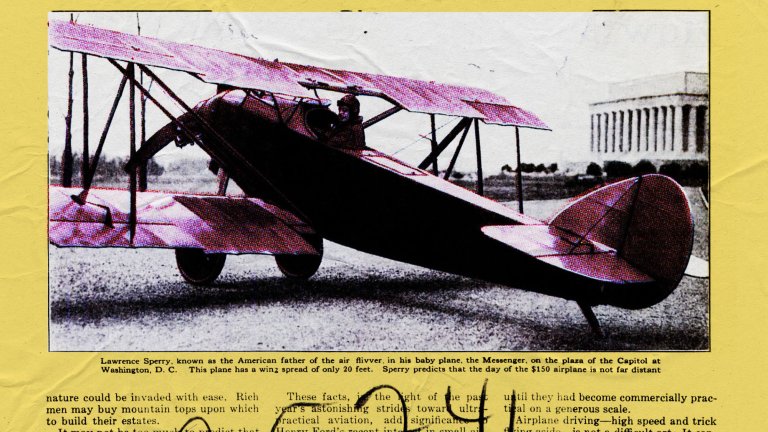
This dream—to fly, utterly on one's own power—is of course an ancient one, a human urge that was barely scratched by the advent of the parachute in the 1780s, the hang glider in the 1880s, the airplane in 1903. These are all still mediated experiences: It's the parachute or plane that's flying; the human's just along for the ride. Then, in 1914, Georgia "Tiny" Broadwick, who a year earlier became the first woman to parachute from an airplane, made the first-ever free-fall jump, plummeting for several seconds before pulling her chute. At last the human body was tumbling free high above Earth.


Still, you could hardly call it flying. Next step: wings. The first wings to arrive on the skydiving scene were actually designed not so much to fly as to make it safer to fall. Before Broadwick's jump, people assumed free-fall would kill you—how could one breathe while moving at 120 miles per hour? The idea that you could control your body under such extraordinary conditions seemed so absurd that no one even tried. People just tumbled out of planes, spinning chaotically and counting seconds until they opened their parachutes. If they pulled while in a warped, upside-down position that snagged the chute, they would "Roman candle" into the earth. The main goal of early birdman wings was to flatten out the tumble.


In the 1940s, Frenchman Leo Valentin solved the free-fall problem without wings. In a few short years, he invented the techniques of advanced free-fall that skydivers still use today: the stable belly-down frog position, the shooting forward arrow position, turns, barrel rolls, and, most important, the life-saving moves used to recover from spins.


Valentin's discoveries, though, did nothing to squelch the urge to fly. In fact, Valentin himself was a master birdman, who worked on dozens of wings throughout his adult life. He even wrote a book (called, naturally enough, Bird Man) about his efforts. Kuosma and Pecnik later took the "BirdMan" name for their suits and company to honor him. Valentin's greatest design was a pair of rigid wings so large that he needed a cargo plane to carry him to altitude. In 1956, the huge wings pulled him back into the plane's ramp as he exited during a jump over England. He knocked his head and fell into a tight spin, the massive wings overpowering his well-practiced attempts to recover stability. When he pulled, the wings' rigid structure entangled both his main and reserve parachutes. He tumbled to his death in a snarl of wings and cords and parachutes.

0 Comments


Download Our iPhone App

Stay up to date on the latest news of the future of science and technology from your iPhone with full articles, images and offline viewing


Follow Us On Twitter

Featuring every article from the magazine and website, plus links from around the Web. Also see our PopSci DIY feed


Become a Fan On Facebook

Share links with friends, comment on stories and more


December 2009: Best of What's New

In our December issue, Popular Science names the 100 best innovations of the year: bombproof wallpaper, self-parking cars, the fastest helicopter, and 97 more. Plus inventor profiles and videos.

Check out the best of what's new here.

Popular Science Photo Pool


Share your photos in the Pop Sci pool at www.flickr.com!
tags_sprite.png
POP_embeddedForm_cover_May09.jpg