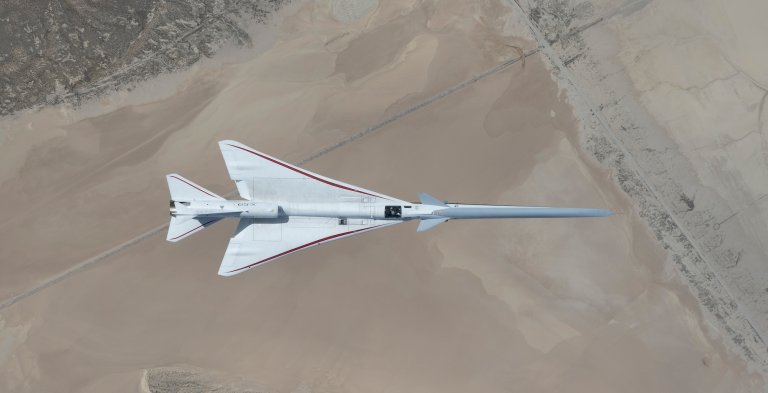
The Navy's new little SWARM drones will survey, report, even possibly attack-working as an intelligent group.

Illustration by Garry Marshall SCENARIO 1: SEEK AND DESTROY

SWARM could provide advanced reconnaissance for military operations. After being launched from the belly of a Black Hawk helicopter (1), a group of SWARM planes searches hostile territory for signs of enemy forces. The first plane, equipped with a miniature video camera, spots a suspicious object (2) and instructs a companion to take a closer look. The second plane's high-resolution infrared camera snaps a clear photo of the enemy tank (3), and a third plane (4) sends both images to an offshore Navy destroyer. All three planes continue to track the tank and relay its position to the ship. The destroyer confirms the sighting (5) and attacks the tank with a GPS-guided extended-range munition.
Illustration by Garry Marshall

Something about the way the brown pelicans flew in formation over the waves transfixed Vince Castelli. He was on vacation at the Outer Banks of North Carolina, but the movement of the birds took him back to discussions he and his engineering colleagues at the Naval Surface Warfare Center in West Bethesda, Maryland, had had in a brainstorming session. The team had hatched the idea of small, inexpensive, unmanned aircraft that would fly in formation, cooperatively conducting surveillance, reconnaissance, and other operations against an enemy. It was a vague notion at the time, yielding no concrete design plans.


Then Castelli saw the pelicans. Every so often one of the birds spotted a fish and dove into the water to grab it. Within seconds, the rest of the flock closed the gap left by the missing member. When the fishing pelican rejoined the group, it simply inserted itself at the end of the line.


"I realized that was the perfect model for our aircraft," Castelli says. "If one (plane) got lost, because maybe the enemy jammed its communications, the remaining planes (would) compensate." A flock of miniature planes, as imagined by Castelli and his team, would also be able to alter plans in mid-flight based on shared information, intelligently responding to unexpected events. "Like the pelicans," Castelli says, "all members of the group (would have) to be able to assume any role depending on what occurred during the mission."


Now, two years later, Castelli's inspiration on the beach-christened SWARM, for Smart Warfighting Array of Reconfigurable Modules-has become an ambitious Navy project, a UAV (unmanned aerial vehicle) concept on the fast track toward a 2004 production date. Each "module" is a 4-foot-long, 20-pound plane with a 4-foot wingspan and a 4-pound payload-enough capacity for any type of camera, microphones for eavesdropping, mini chemical and biological detectors, or even, potentially, a small weapon. SWARM planes are expected to cost just $2,000 apiece. Compare that to the UAV that was much-celebrated during the Afghan conflict, the Predator. Armed with Hellfire missiles, the Predator is a 27-foot machine with a price tag of $3 million and a payload of more than 700 pounds. Castelli's SWARM is an entirely different class of UAV.


But size isn't the only difference. A remote pilot, two sensor operators, support staff, along with a ground control station carried by a C-130 transport plane, are required to operate a Predator. A group of SWARM planes will be managed by a single person using equipment as commonplace as a PDA.


A handful of SWARM prototypes are already being tested. The plan is for the Navy to start launching SWARM planes from ships in September to conduct advanced patrols or gather intelligence. Ultimately the equipment could be adopted by other government agencies or even private industry for a variety of purposes: weather research, traffic control, monitoring national borders for illegal immigrants, scouting forest fires, spotting stranded boaters or hikers. "At $2,000 apiece, the commercial applications are much bigger than the military applications," says Tony Mulligan, CEO of Advanced Ceramics Research, which has a contract to manufacture SWARM planes based on Navy designs.


single page
Page 1 of 3 123next ›last »

0 Comments


June 2013: American Energy Independence

Five amazing, clean technologies that will set us free, in this month's energy-focused issue. Also: how to build a better bomb detector, the robotic toys that are raising your children, a human catapult, the world's smallest arcade, and much more.


Online Content Director: Suzanne LaBarre | Email
Senior Editor: Paul Adams | Email
Associate Editor: Dan Nosowitz | Email
Assistant Editor: Colin Lecher | Email
Assistant Editor: Rose Pastore | Email

Contributing Writers:

Kelsey D. Atherton | Email
Francie Diep | Email
Shaunacy Ferro | Email

circ-top-header.gif
circ-cover.gif