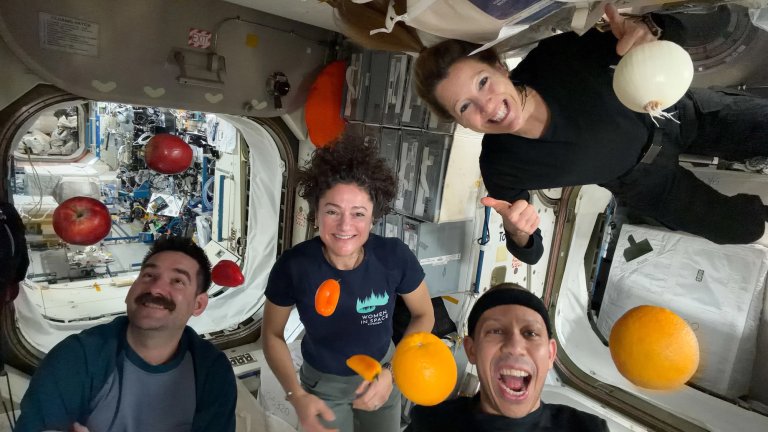
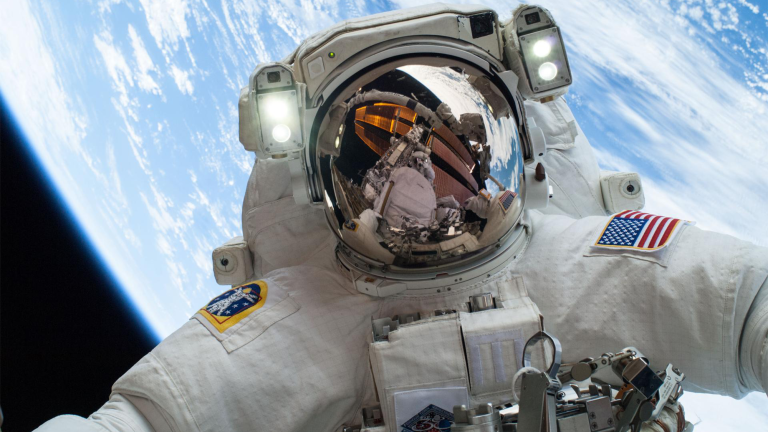
There's nothing like washing down some freeze-dried space grub with a gulp of what you and your crewmates excreted just days prior. NASA announced yesterday that the recently installed urine and sweat recycling system on the International Space Station (ISS) has begun to churn out good, potable water, fit for consumption in orbit and terrestrially (though don't expect it to compete with Evian). To celebrate, ISS crewmembers and NASA folk on Earth raised a toast Wednesday and took a drink.
The conversion of waste fluids to sweet agua comes courtesy of a $250 million water recovery system, which the space shuttle Endeavour delivered to the ISS last November. Before Houston gave the order to "chug!," samples of the treated fluids were returned to Earth this spring aboard Discovery for final testing at the Johnson Space Flight Center in Houston. Contaminant levels came in below set limits, says NASA, so administrators signaled that it was time to drink up.This closed-loop system involving water reclamation from urine, sweat, and the vapor in exhaled air should reduce by nearly two-thirds the amount of water that needs to be ferried to the ISS, says NASA. This will help cut down on costs, while nudging the station closer to self-sustainability -- a key prerequisite for establishing a moon base or venturing to Mars. So yesterday's toast was not just one small sip for a man; it may prove a giant draught for mankind.
Stay up to date on the latest news of the future of science and technology from your iPhone with full articles, images and offline viewing
Featuring every article from the magazine and website, plus links from around the Web. Also see our PopSci DIY feed
Share links with friends, comment on stories and more
Inside NASA's astronaut bootcamp and the grueling new training regimen for deep space. Plus, ten young geniuses shaking up science today, one writer's quest to analyze every man-made chemical in her body and more.
Check out the issue's full contents online here
from Ann Arbor, Michigan
This is a great product for the advancement of sustainability worldwide and wherever else we may go. It would be great if this project got enough backing for mass production in the next 5-10 years! It could easily help save our planet.
from Gulfport, MS
Does anybody remember "Bladder buddy"?