
EarthTalk
Can plastic food-storage containers leach hormone-disrupting chemicals into your leftovers?

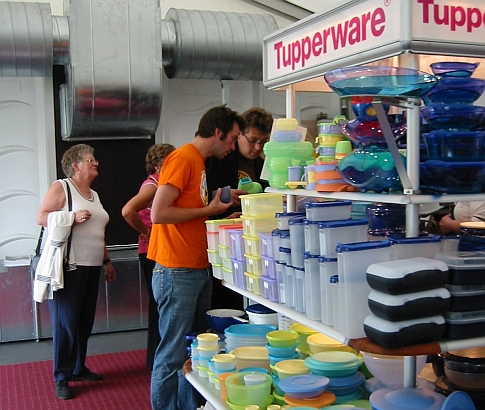
Tupperware Jerrroen, courtesy Flickr


Dear EarthTalk: I've read that plastic bottles are not always safe to reuse over and over as harmful chemicals can leach out into the contents. I'm wondering if the same issues plague Tupperware and other similar plastic food storage containers. -- Sylvie, Dawson City, Yukon, Canada

The recent hubbub over plastic containers leaching chemicals into food and drinks has cast a pall over all kinds of plastics that come into contact with what we ingest, whether deserved or not. Some conscientious consumers are forsaking all plastics entirely out of health concerns. But while it is true that exposure to certain chemicals found in some plastics has been linked to various human health problems (especially certain types of cancer and reproductive disorders), only a small percentage of plastics contain them.

According to The Green Guide, a website and magazine devoted to greener living and owned by the National Geographic Society, the safest plastics for repeated use in storing food are made from high-density polyethylene (HDPE, or plastic #2), low-density polyethylene (LDPE, or plastic #4) and polypropylene (PP, or plastic #5). Most Tupperware products are made of LDPE or PP, and as such are considered safe for repeated use storing food items and cycling through the dishwasher. Most food storage products from Glad, Hefty, Ziploc and Saran also pass The Green Guide's muster for health safety.

But consumers should be aware of more than just a few "safe" brands, as most companies make several product lines featuring different types of plastics. While the vast majority of Tupperware products are considered safe, for example, some of its food storage containers use polycarbonate (plastic #7), which has been shown to leach the harmful hormone-disrupting chemical Bisphenol A (BPA) into food items after repeated uses. Consumers concerned about such risks might want to avoid the following polycarbonate-based Tupperware products: the Rock 'N Serve microwave line, the Meals-in-Minutes Microsteamer, the "Elegant" Serving Line, the TupperCare baby bottle, the Pizza Keep' N Heat container, and the Table Collection (the last three are no longer made but might still be kicking around your kitchen).

Beyond BPA, other chemicals can be found in various food storage containers. Containers made out of polyethylene terephthalate (PET or PETE, or plastic #1)—such as most soda bottles—are OK to use once, but can leach carcinogenic, hormone-disrupting phthalates when used over and over again. Also, many deli items come wrapped in plastic made from polyvinyl chloride (PVC, or plastic #3), which can leach cancer-causing dioxins. Swapping foods out of such wraps once the groceries are at home is advisable.

Containers made of polystyrene (PS, or plastic #6, also known as Styrofoam) can also be dangerous, as its base component, styrene, has been associated with skin, eye and respiratory irritation, depression, fatigue, compromised kidney function, and central nervous system damage. Take-out restaurant orders often come in polystyrene containers, which also should be emptied into safer containers once you get them home.

If your head is spinning and you can't bear to examine the bottom of yet another plastic food storage container for its recycling number, go with glass. Pyrex, for instance, does not contain chemicals that can leach into food. Of course, such items can break into glass shards if dropped. But most consumers would gladly trade the risk of chemical contamination for the risk of breakage any day.

GOT AN ENVIRONMENTAL QUESTION? Send it to: EarthTalk, c/o E - The Environmental Magazine, P.O. Box 5098, Westport, CT 06881 USA; submit it at: www.emagazine.com/earthtalk/thisweek; or email: earthtalk@emagazine.com. Read past columns at: www.emagazine.com/earthtalk/archives.php.

5 Comments

I think we shouldn't get worried to much about what's on the plastic, but more what's on top of the plastic. People tend to use that tupperware stuff for extended periods of time.
During these periods tupperware tend to scratch.

In these scratches you will have bacteria build up that is hard to get rid of.

I tend to use glass whenever I can...

Ries

I have sold Tupperware for 16 years and I have the insode scoop. Please feel free to ask me any question. As the article says most Tupperware is save. You must use it as suggest. If it is Microwavable you must use it as a reheatable if that is what is suggested.
Did you know butter tubs are one time use item and all other food items you buy at the store. These should not be used for food storage other than its original use. Tupperware is a green product it has been for years. Let me explain.
How many of use use wraps and throw aways? Did you know it cost us 100's of dollars every year to buy these product and that just end up in the trash. I know you might know someone that is a bit older that has Tupperware in their cupboards. And I am sure if you ask them they have had it for years. Reason for this is Tupperware has a life time warranty against Cracking, Breaking, Chipping and Peeling. Tupperware is an investment in your pocketbook and in our future. It does not get tossed into the land fields for many years and most of it can be recyled. I have the break down of what each product is made of and the codes for reycling if you need it you can contact me at my web site. http://www.my2.tupperware.com/RHONDAEDWARDS
Then just click contact. I will be happy to emial you this info.
Also check out my News Page for money saving ideas and my go green with Tupperware. Rule of thumb. If it smells like old plastic recyle it if possible. Tupperware even breaks down after a time so if you have grandma's Tupperware keep it if you want to but don't use it if it smells like old plastic. Tupperware plastics have improved over the years. When Tupperware said a life time they did mean it but only one life time not 3 or 4.
Have a wonderful day!
Star Manager Rhonda Edwards of
Claremont, NH 03743 and Mathews, VA 23109

This is true scratches in Tupperware can hold bacteria, but if placed inside a dishwasher the bacteria can be killed. If you use the Tupperware products as intended, like for refridgerator and not to eat out of as a serving dish or microwaving them. You want get the scrathes. Most of Tupperware's Products are used for Storage. There are very few that should get scrathes. Everyday use should not cause deep scrathes where the bacteria live. The only product that I would be concerned about is the cutting board. I don't show it and suggest other options to my cusotmers. After all Tupperware started out a Container/Food Storage company. Not a serving dish company. Even though you can Rock N Serve in our Rock n Serve Microwave line these are intended for reheating your left overs to eat not cut. When placing your left overs into these containers you should have your food ready to eat once you reheat it. These containers save you time,money, calories and the Earth. Time beacuse you don't have to run out at Lunch time to eat. Saves you Money on lunch and gas. Calories beacuse you know what you are putting into your body. The Earth less gas fumes No throw aways from lunch.
Star Manager
Rhonda Edwards
www.mypartykitchen.com
http://www.my2.tupperware.com/RHONDAEDWARDS

I am curious, in a story about toxic or possibly toxic platic, why not mention phthalates, which have been proven to lower testosterone levels in men? I mean isnt that the scariest of plastic side effects?


July 2013: The Future Of Flight

The incredible innovations, like drone swarms and perpetual flight, bringing aviation into the world of tomorrow. Plus: today's greatest sci-fi writers predict the future, the science behind the summer's biggest blockbusters, a Doctor Who-themed DIY 'bot, the organs you can do without, and much more.


Online Content Director: Suzanne LaBarre | Email
Senior Editor: Paul Adams | Email
Associate Editor: Dan Nosowitz | Email
Assistant Editor: Colin Lecher | Email
Assistant Editor: Rose Pastore | Email

Contributing Writers:

Kelsey D. Atherton | Email
Francie Diep | Email
Shaunacy Ferro | Email

circ-top-header.gif
circ-cover.gif
bmxmag-ps