neuroscience

The Perfect Cram Drug? Scientists Identify Single Enzyme To Fix The Memory Of a Tired Brain


We've all been there, late at night and early in the morning, forcing any and every last morsel of knowledge into our weak and exhausted brains. But when the test flops down on our desk, we just stare blankly at the forbidding blue book page. All that knowledge, gone. Either it didn't stick, or it has hid in some inaccessible crevasse deep in the brain.

Memory problems related to sleep deprivation have stymied everyone from college students getting ready for a biochemistry test to Army interrogators probing a tired detainee. Now, scientists have discovered that the memory loss associated with lack of sleep comes down to a single neurological pathway, opening up the possibility of a drug that fixes the memory of a tired brain.

[ Read Full Story ]

Scientists Find A Precision Clock Logging the Milliseconds Inside Your Brain


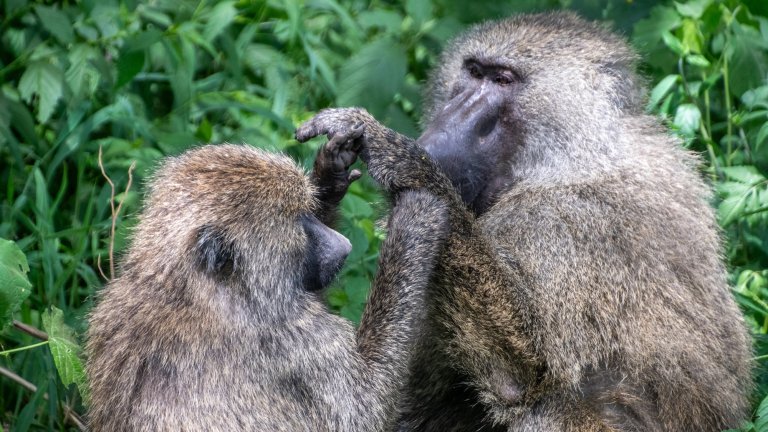
Though we do it without thinking, keeping track of time is integral to the brain's function, keeping our senses and our actions ordered in a chronology that we then recall in the form of memory. But important as it is, researchers have never understood the mechanism by which humans index the happenings of everyday life. Now, two macaque monkeys may have helped MIT researchers solve the time tracking puzzle.

[ Read Full Story ]

Chinese Scientists Engineer the World's Smartest Rat


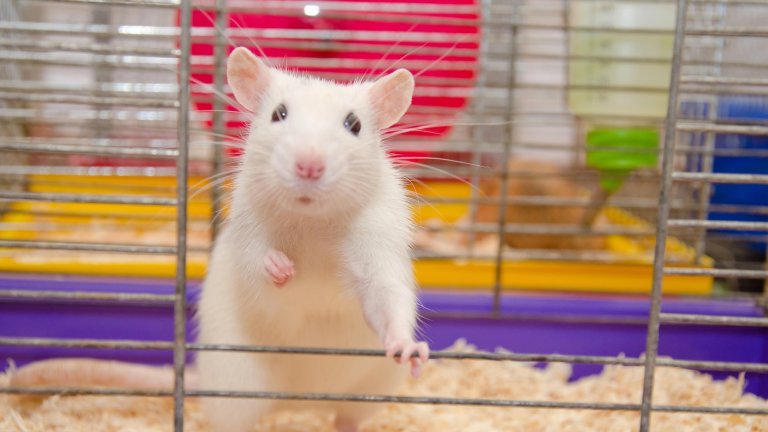
In a development that gives Acme Labs and NIMH a run for their money, scientists in Georgia and China have collaborated to create the world's smartest rat. The genetically engineered rat, Hobbie-J, over-expresses a gene that regulates neuron communication, greatly enhancing the rat's ability to navigate mazes and remember toys.

[ Read Full Story ]

Scientists Observe Live Human Cells Communicating For the First Time


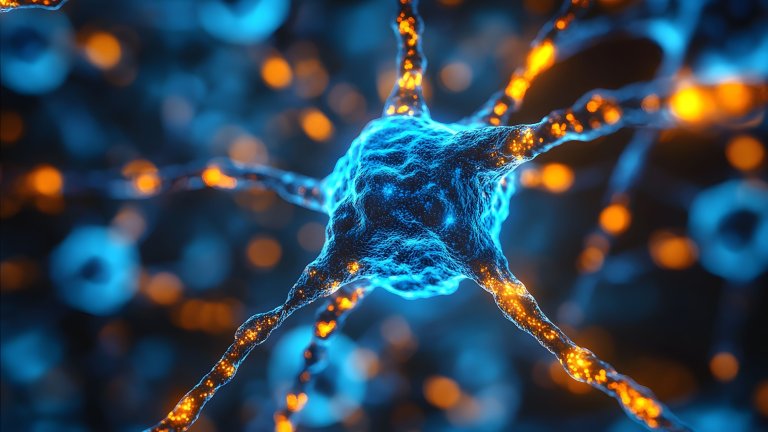
The basis of a human body's cells' ability to communicate with one another is the vesicle. That little ball packed with biological material is the medium through which all of our billions of cells coordinate with each other to keep our conscious stable and our bodies responsive. However, despite that importance, high resolution live imagery of cell and vesicle interaction has remained elusive.

Now, scientists from the University of Copenhagen have succeeded producing the first hi-res live recording of the interaction. In the nearer term, this development could greatly assist the study of diseases, like schizophrenia and Huntington's, that result from vesicle-cell interaction failure.

[ Read Full Story ]

Boosting a Brain Wave Makes People Go Slo-Mo

Researchers manipulate a certain brain wave to slow down voluntary movement in humans

Researchers have found that manipulating a particular brain wave can force human subjects to move more slowly, and provided some of the first evidence of how brain waves can directly affect behavior.

A group of 14 volunteers received brain stimulation as they tried to manipulate the position of a spot on a computer screen with a joystick. That stimulation led to a 10 percent drop in execution of the computer task.

[ Read Full Story ]

Performing Brain Surgery with Focused Sound Waves


Imagine going in for a brain procedure where you have to endure neither an invasive, cut-you-up procedure nor radiation treatment. When it was finished, you could enjoy a glass of bubbly with your doctors, and go home shortly thereafter. It's close to becoming a reality.

[ Read Full Story ]

Digital Rat Brain Spontaneously Develops Organized Neuron Patterns

Researchers hope the breakthrough could lead to a fully virtual human brain within ten years

Four years ago, a team of researchers at the École Polytechnique Fédérale de Lausanne in Switzerland switched on Blue Brain, a computer designed to mimic a functioning slice of a rat's brain. At first, the virtual neurons fired only when prodded by a simulated electrical current. But recently, that has changed.

Apparently, the simulated neurons have begun spontaneously coordinating, and organizing themselves into a more complex pattern that resembles a wave. According to the scientists, this is the beginning of the self-organizing neurological patterns that eventually, in more complex mammal brains, become personality.

[ Read Full Story ]

The First Artificial Nerve Cell That Uses Real Neurotransmitters

Organic electronics interfacing seamlessly with our nerves could pave the way for prosthetic brains

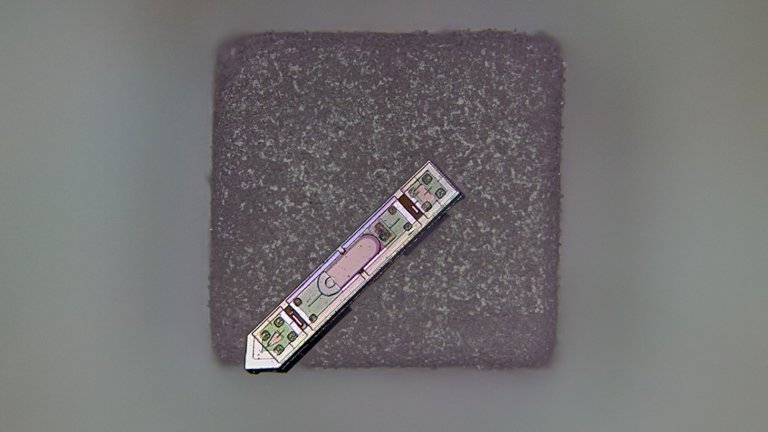
While Dean Kamen spends his time creating bionic replacement arms, a team of Swedish scientists have begun developing a robotic prosthesis for a far more complex organ: the brain.

[ Read Full Story ]

Turning Brain Waves Into Beautiful Music

By converting functional MRI scans into musical notes of varying dynamics and frequencies, a new data visualization for our thoughts is born

Ever wondered what your brain sounds like on the inside? Trinity College philosophy professor Dan Lloyd has created a program that orchestrates our brainwaves. Scanning brains on an MRI, Lloyd can watch as certain areas of the brain light up and then assign different frequencies to the areas of the brain used, correlating the intensity of usage with volume. The results are bizarrely beautiful.

[ Read Full Story ]

Coming Soon: Photographic Memory in a Pill?

Scientists isolate a protein that significantly increases visual recall

Wish you had a photographic memory? Well, Encyclopedia Brown, drugs may amp your brain up to that point soon. A group of Spanish scientists claim to have singled out a protein that can extend the life of visual memory significantly. When the production of the protein was boosted in mice, the rodents' visual memory retention increased, from about an hour to almost 2 months.

[ Read Full Story ]
Page 1 of 3 123next ›last »


Download Our iPhone App

Stay up to date on the latest news of the future of science and technology from your iPhone with full articles, images and offline viewing


Follow Us On Twitter

Featuring every article from the magazine and website, plus links from around the Web. Also see our PopSci DIY feed


Become a Fan On Facebook

Share links with friends, comment on stories and more


December 2009: Best of What's New

In our December issue, Popular Science names the 100 best innovations of the year: bombproof wallpaper, self-parking cars, the fastest helicopter, and 97 more. Plus inventor profiles and videos.

Check out the best of what's new here.

Popular Science Photo Pool


Share your photos in the Pop Sci pool at www.flickr.com!
tags_sprite.png
POP_embeddedForm_cover_May09.jpg