genetics

Thousands of Worms Headed to International Space Station For Muscle Tests


The perils of space flight number in the hundreds, from radiation exposure to the impact of micro-asteroids. But for astronauts who spend an extended amount of time floating weightlessly in the near-endless void of space, muscle atrophy remains the most common health problem. Thankfully, a shipment of RNA-treated worms may help scientists on the International Space Station solve that issue.

[ Read Full Story ]

Soon, Babies May Have Three Biological Parents


Even though the combination of affluence and fertility drugs has raised the age at which many women give birth, children born to older women continue to suffer a disproportionately high rate of birth defects and genetic disease. Many of these problems result from the degradation of the area of the region of the egg around the nucleus.

To correct for those problems, a team of Japanese researchers has implanted the nucleus of an older woman's egg into the egg cell of a younger donor. This may fix the problem, but it also moves medicine closer to the ethically challenging creation of a person with three biological parents.

[ Read Full Story ]

British Academy To Look Into Ethics of Human-Animal Genetic Hybrids

But are they locking the barn door after the horse-men have cantered out?

The Island of Dr. Moreau:
When former President Bush mentioned human-animal hybrids during a State of the Union speech in 2006, most of the audience probably sat scratching their heads for a second. However, in the years since then, transplanting human genes into animals, whether to make better milk or study human diseases, has become a bigger and bigger issue.

Now, a year after English scientists implanted human stem cells into bovine egg cells, Britain's Academy of Medical Sciences has launched a study to determine the ethics of creating human/animal hybrids.

[ Read Full Story ]

New Genomic Zoo to Collect DNA of 10,000 Vertebrate Species

The massive Genome 10K Project will help biologists watch evolution in action on the genetic level

A new "genomic zoo" has launched, with the goal of sequencing the genomes of 10,000 vertebrate species. The project aims to help researchers understand recent and rapid adaptive changes among the species. It could also allow predictions of how certain species might respond to climate change, pollution, new diseases and competitors.

The Genome 10K Project will scour zoos, museums and universities worldwide for thousands of specimens. An international coalition of more than 68 scientists has outlined their plans in a paper that will appear tomorrow in the Journal of Heredity.

[ Read Full Story ]

Italian Court Reduces Murderer's Sentence Due To Presence of Gene Linked To Violence


As Doctor Hibert so eloquently put, "only one in two million people has what we call the "evil gene". Hitler had it, Walt Disney had it, and Freddy Quimby has it." And while we understand that line as a joke, it seems that an Italian court has taken the idea far more seriously.

[ Read Full Story ]

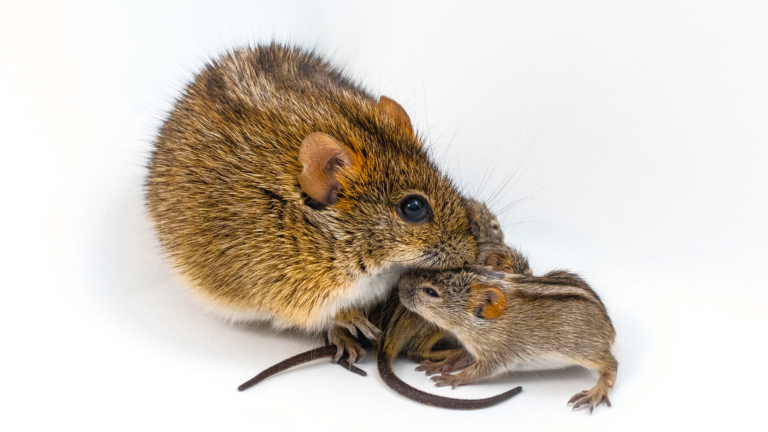
Hideous Rodent May Provide Cure For Cancer

The naked mole rat is immune to cancer. At last, scientists have figured out why

Naked mole rats are unique in many ways. For one, they're the only mammals with a hive mind, obeying their queen as if they were ants. Also, they feel no pain, an adaptation still not fully understood. But most importantly for us, they are the only animals that don't get cancer.

And now, a new study by scientists at the University of Rochester, New York, explains at last why these horrific animals, of all of the world's creatures, are immune to cancer.

[ Read Full Story ]

Chinese Scientists Engineer the World's Smartest Rat


In a development that gives Acme Labs and NIMH a run for their money, scientists in Georgia and China have collaborated to create the world's smartest rat. The genetically engineered rat, Hobbie-J, over-expresses a gene that regulates neuron communication, greatly enhancing the rat's ability to navigate mazes and remember toys.

[ Read Full Story ]

For the First Time, Geneticists Diagnose Disease Through Whole-Genome Analysis


For the first time, researchers have made a clinical diagnosis by sequencing the entire protein-coding parts of a person's genome.

"We have shown that one can use whole genome sequencing to make clinically meaningful diagnoses- it is technically feasible . . . and can provide new clinical insight that directs treatment," Richard Lifton, a geneticist at Yale who spearheaded the research, told Popsci.com.

Protein-coding DNA only makes up about one percent of the human genome, but is responsible for about a large portion of diseases with a genetic component.

[ Read Full Story ]
READ MORE ABOUT > , , , , ,

How Your Body Packs Two Meters of DNA Into a Six-Micron Cell Nucleus


I can't seem to manage to keep my iPod in my bag for a day without creating an awful tangle of headphones, but my body's cells can work with two meters of stringy DNA into a tiny nucleus without making a knot. The secret is a structure called a fractal globule, according to a research paper to be published tomorrow in the journal Science.

[ Read Full Story ]

IBM Creates DNA-Sequencing Microchips In Race To The $1000 Genome


Like many other aspects of health care, the implementation of personal genetic medicine has run aground against the costs of producing an entire genome. Even now, a decade after the completion of the Human Genome Project, commercial whole genome sequencing can cost as much as $100,000. And at that price, the sequencing just isn't worth the benefits.

[ Read Full Story ]
Page 1 of 5 12345next ›last »


Download Our iPhone App

Stay up to date on the latest news of the future of science and technology from your iPhone with full articles, images and offline viewing


Follow Us On Twitter

Featuring every article from the magazine and website, plus links from around the Web. Also see our PopSci DIY feed


Become a Fan On Facebook

Share links with friends, comment on stories and more


December 2009: Best of What's New

In our December issue, Popular Science names the 100 best innovations of the year: bombproof wallpaper, self-parking cars, the fastest helicopter, and 97 more. Plus inventor profiles and videos.

Check out the best of what's new here.

Popular Science Photo Pool


Share your photos in the Pop Sci pool at www.flickr.com!
tags_sprite.png
POP_embeddedForm_cover_May09.jpg