brain

How Much Power Does The Human Brain Require To Operate?

Simulating the brain with traditional chips would require impractical megawatts of power. One scientist has an alternative

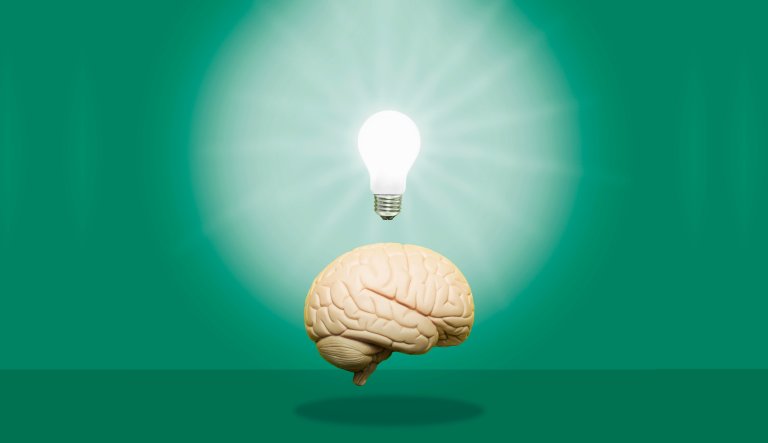
According to Kwabena Boahen, a computer scientist at Stanford University, a robot with a processor as smart as the human brain would require at least 10 megawatts to operate. That's the amount of energy produced by a small hydroelectric plant. But a small group of computer scientists may have hit on a new neural supercomputer that could someday emulate the human brain's low energy requirements of just 20 watts--barely enough to run a dim light bulb.

[ Read Full Story ]

Electric Fields Halt Spread of Brain Cancer


Until the naked mole rats yield their secrets, humanity will still have to worry about treating and controlling cancer. And to that end, one company may have figured out a novel way to prevent the spread of a highly dangerous form of brain cancer, through the use of pulsing electric fields.

[ Read Full Story ]

New Neurological Evidence That the Internet Makes People Smarter


Your grandma might think that the Internet is rotting your brain, but it's possible if she did a little face-time with Google that she could stay sharper in the noggin herself. In a new study, Internet novices who were instructed to search the web showed increased activity in areas of the brain associated with making decisions and memory in just two weeks, according to a poster presented today at the annual Society for Neuroscience conference.

[ Read Full Story ]

Telepathy on the Horizon: New Interface Allows Brain-to-Brain Communication


Ever wish you could read minds? While the technology to correctly call your poker buddies' bluffs still eludes us, researchers in the UK have shown that brain-to-brain communication is indeed possible. All you need is some electrodes, a computer, and an Internet connection.

[ Read Full Story ]

Boosting a Brain Wave Makes People Go Slo-Mo

Researchers manipulate a certain brain wave to slow down voluntary movement in humans

Researchers have found that manipulating a particular brain wave can force human subjects to move more slowly, and provided some of the first evidence of how brain waves can directly affect behavior.

A group of 14 volunteers received brain stimulation as they tried to manipulate the position of a spot on a computer screen with a joystick. That stimulation led to a 10 percent drop in execution of the computer task.

[ Read Full Story ]

A Squirt of Stem Cell Gel Heals Brain Injuries


Scientists have developed a gel that helps brains recover from traumatic injuries. It has the potential to treat head injuries suffered in combat, car accidents, falls, or gunshot wounds. Developed by Dr. Ning Zhang at Clemson University in South Carolina, the gel is injected in liquid form at the site of injury and stimulates the growth of stem cells there.

[ Read Full Story ]

Neurosurgeons Practice on Virtual Simulator before Removing Brain Tumor

Virtual simulators reach a medical milestone as warm-up for a real-life operation

This simulator goes far beyond the olden days of the board game "Operation." Last month, for the first time, neurosurgeons rehearsed on a 3-D model of a patient's brain just hours before removing a brain tumor for real.

[ Read Full Story ]

Goodbye, Ritalin. Hello, Brain Magnets


An Israeli company wants to keep adults focused using a magnetic field to stimulate the brain. The technique, called transcranial magnetic stimulation, involves hooking someone up to a device that creates a magnetic field. The field then induces an electrical current in specific brain regions, which activates that part of the brain. It's worked for depression, and now may help the estimated 8 million adults with ADHD.

[ Read Full Story ]
READ MORE ABOUT > , , , ,

A Flight Simulator For Flies Helps Humans Build Better UAVs


Fluorescent Fly Brain :  courtesy of Cognition for Technical Systems

Flies may not seem like nature's ace pilots when they're bumping up against a closed window or getting squashed beneath a rolled-up copy of the New York Times Magazine, but a German company hopes to unravel the secrets of insect flight by tapping their brains. Literally.

[ Read Full Story ]

Magnetic Brain Stimulation Speeds Up Motor Learning


I was always told that learning a skill like juggling or playing an instrument requires three things: practice, practice and practice. Now, researchers have found a way to shorten the path to new motor skills to practice, practice and magnetic brain stimulation.

[ Read Full Story ]
READ MORE ABOUT > , , ,
Page 1 of 4 1234next ›last »


Download Our iPhone App

Stay up to date on the latest news of the future of science and technology from your iPhone with full articles, images and offline viewing


Follow Us On Twitter

Featuring every article from the magazine and website, plus links from around the Web. Also see our PopSci DIY feed


Become a Fan On Facebook

Share links with friends, comment on stories and more


December 2009: Best of What's New

In our December issue, Popular Science names the 100 best innovations of the year: bombproof wallpaper, self-parking cars, the fastest helicopter, and 97 more. Plus inventor profiles and videos.

Check out the best of what's new here.

Popular Science Photo Pool


Share your photos in the Pop Sci pool at www.flickr.com!
tags_sprite.png
POP_embeddedForm_cover_May09.jpg