Last year we told you how hackers could someday infiltrate your car’s control systems and install malware to take things over, as long as they had some computer skills and a laptop. Now car-hacking researchers have done it remotely, using innocent tech like Bluetooth devices and even a CD.
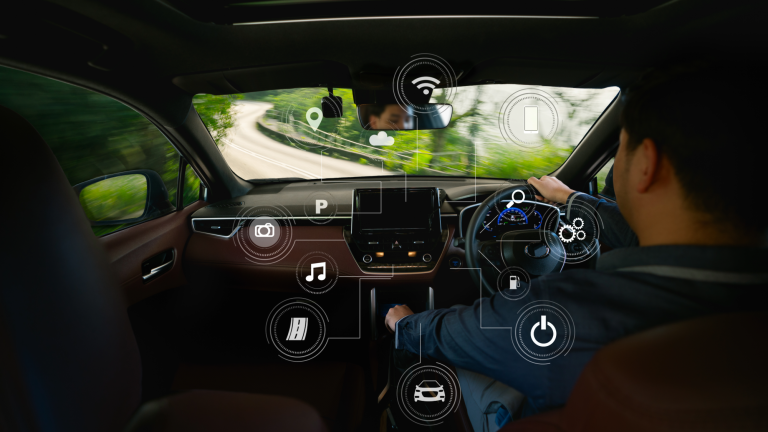
Researchers at the University of California, San Diego, and the University of Washington are researching vulnerabilities in electronic vehicle controls, trying to warn automakers about potential security holes. Many new cars have Bluetooth wireless technology and built-in connections for cell phones and other devices, and those connections could be exploited. In one example, the researchers called the car’s cellular connection and uploaded malicious code using an audio file. In another test, they found out how to pair the car to a Bluetooth-enabled device, which they used to execute code.
Your driving tunes could put your car at risk, too — in one test, the researchers added some code to an mp3 file and turned a song into a Trojan horse. When it played on the car’s stereo, the song altered the car’s firmware, allowing hackers a doorway to the car’s main control systems, according to IDG News.
Scofflaws could conceivably use these doorways to track a car’s location, unlock the doors, disable the brakes and more.The researchers, led by Stefan Savage, an associate professor with the University of California-San Diego, and Tadayoshi Kohno of the University of Washington, are studying these systems as part of a National Academy of Sciences project.
Most new cars have some kind of computer system that controls basic functions. Since 2008, all new U.S. cars have a Controller Area Network system, which can be used as a diagnostic tool. And many new cars also have Bluetooth networks, GPS systems, and cellular technology — like General Motors’ OnStar or Ford’s Sync, for instance.
Not wanting to single out a particular automaker, the team didn't identify which car they used, only saying they bought a 2009 sedan equipped with fewer computer systems than most high-end cars.
The National Academies’ Committee on Electronic Vehicle Controls and Unintended Acceleration was formed partly to address last year’s Toyota scandal, in which the automaker was (incorrectly, as it turned out) blamed for faulty braking systems.
The remote car hacking was not exactly simple — it’s still much easier to do it the original way, by plugging into the car and taking it over. But the major automakers have taken notice, Kohno and Savage said.
Five amazing, clean technologies that will set us free, in this month's energy-focused issue. Also: how to build a better bomb detector, the robotic toys that are raising your children, a human catapult, the world's smallest arcade, and much more.


Online Content Director: Suzanne LaBarre | Email
Senior Editor: Paul Adams | Email
Associate Editor: Dan Nosowitz | Email
Assistant Editor: Colin Lecher | Email
Assistant Editor: Rose Pastore | Email
Contributing Writers:
Kelsey D. Atherton | Email
Francie Diep | Email
Shaunacy Ferro | Email
if people would stop trying to beat the system, we wouldn't have to keep updating the system.
Whoa that is like saying "duhhh if people would stop breaking the law we wouldn't need a police force"
DOOFUS
that comment was uncalled for, as well as unnecessary. but, thank you for noticing my point, weather you think it's intelligent or not.
I just signed up for an account only for the purpose of agreeing with "yournamehere" in calling out the ridiculous comment of "my name here".
I somehow knew someone would say that these people are at fault for investigating the security of vehicle computer systems. To be honest, I bet some criminal somewhere already knows this, and you can be sure many more would have found it soon. Research like this isn't misguided; it's imperative to keeping the good guys one step ahead.
Mankind continues to find ways to disgust me.....
I think it's time to release the DNA code snippers and snip away at a few disgusting human habits and breed some real people who respect others and this planet!
@gizmowiz
90% of popsci commentors would be wiped out.
Kind of makes Googles idea of having a car drive itself as an insane idea doesn't it?
Can you imagine if we allowed cars to drive themselves and then hackers took control?
Imagine the mayhem they could cause and they could bribe the whole USA that either they pay them gazillions of bucks or they will cause every car to drive off a cliff or into each other!
Makes me want to look over that mix CD my girlfriend gave me...
“Happiness is when what you think, what you say, and what you do are in harmony." -Mahatma Gandhi
Conventional car thieves will find this an expensive way to break into cars... Laptops tend to break when thrown through windows. :) But you can't make omelets with out breaking a few eggs first I guess... :)
"if people would stop trying to beat the system, we wouldn't have to keep updating the system."
yes, BUT, the constantly evolving attempts on both sides to one-up each other leads to progress. are you against progress, sir???
Kind of makes Googles idea of having a car drive itself as an insane idea doesn't it?
Can you imagine if we allowed cars to drive themselves and then hackers took control?
Imagine the mayhem they could cause and they could bribe the whole USA that either they pay them gazillions of bucks or they will cause every car to drive off a cliff or into each other!
----------------------------------------
Nope. Planes are nearly autonomous, but you're not scared to ride in one of those. Why would an autonomous car be any different?
There is at most a half dozen cars with brake by wire(which is the only way your brakes could be "overridden". Even then, those brake by wire systems have manual overrides built into them(ie shaft driven master cylinder that is directly connected to the brake pedal just like any non BBW car). Yet again they author proves she doesn't know what she is talking about. Someone please stop allowing Rebecca to write for popsci. She is just an ignorant person with an agenda.
While this may be news to mainstream media and therefore the public; car hacks are nowhere near new. Auto thieves in California have been using these 'little black boxes' for 20 years or so that have a key blank attached that can be inserted in a given brand's door lock that will kill the car alarm. With keyless entry, it's now just a matter of scanning the band and putting out the signal. Granted, most of these scumbags don't have any techsavvy whatsoever, but the tit-for-tat with auto technology is already entrenched. I'm thinking a mildly hardened electronics package that engages when the car physically breaks away from a laser-driven sensor that then keeps out RF signals. Automatic override in a post impact scenario to allow stuff like OnStar. Anything that gets implemented will eventually be countered, so the idea must be to put blocks in the way so we can get a couple of years semi-worry free operation; which is all the auto manufacturers care about anyway. Face it America, if you drive a five year old vehicle, you are on your own.
This makes me happy that I have an older car that doesn't have all these "deficencies." "The more you complicate the plumbing, the easier it is to clog it up!"
Car makers need to go back to the basics. Anything outside of power windows, door locks, and power seats, just isn't necessary. A GPS can be added if needed. All the other stuff is just a distraction anyway. Lets get real, do we REALLY need to be able to start our car remotely? or unlock the car from our keychain? The more we rely on microprocessors to give us the "nice to have" features, the more vunerable we make ourselves to outside intrusion. Is it worth giving up your security to be lazy and impatient? Lets use a vehicle for it's designed purpose....to get you from point A to point B.