
Air New Zealand has cleared its runways to test both all-electric and hydrogen-powered planes. Although in its early stages, the four-month “intensive proving program” may help one day usher in a new era of sustainable flight.
Aircraft remain some of the biggest sources of vehicle-based pollution in the world. These types of pollution include greenhouse gas emissions like carbon dioxide, as well as other toxic byproducts such as sulfur oxides and contrails. Given the ubiquity of both commercial and private air travel today, it’s vital that companies engineer better plane technology for a more sustainable future. Unfortunately, possible alternatives such as rechargeable, emissionless battery-electric arrays and hydrogen fueling still need improvement before they become economically viable.
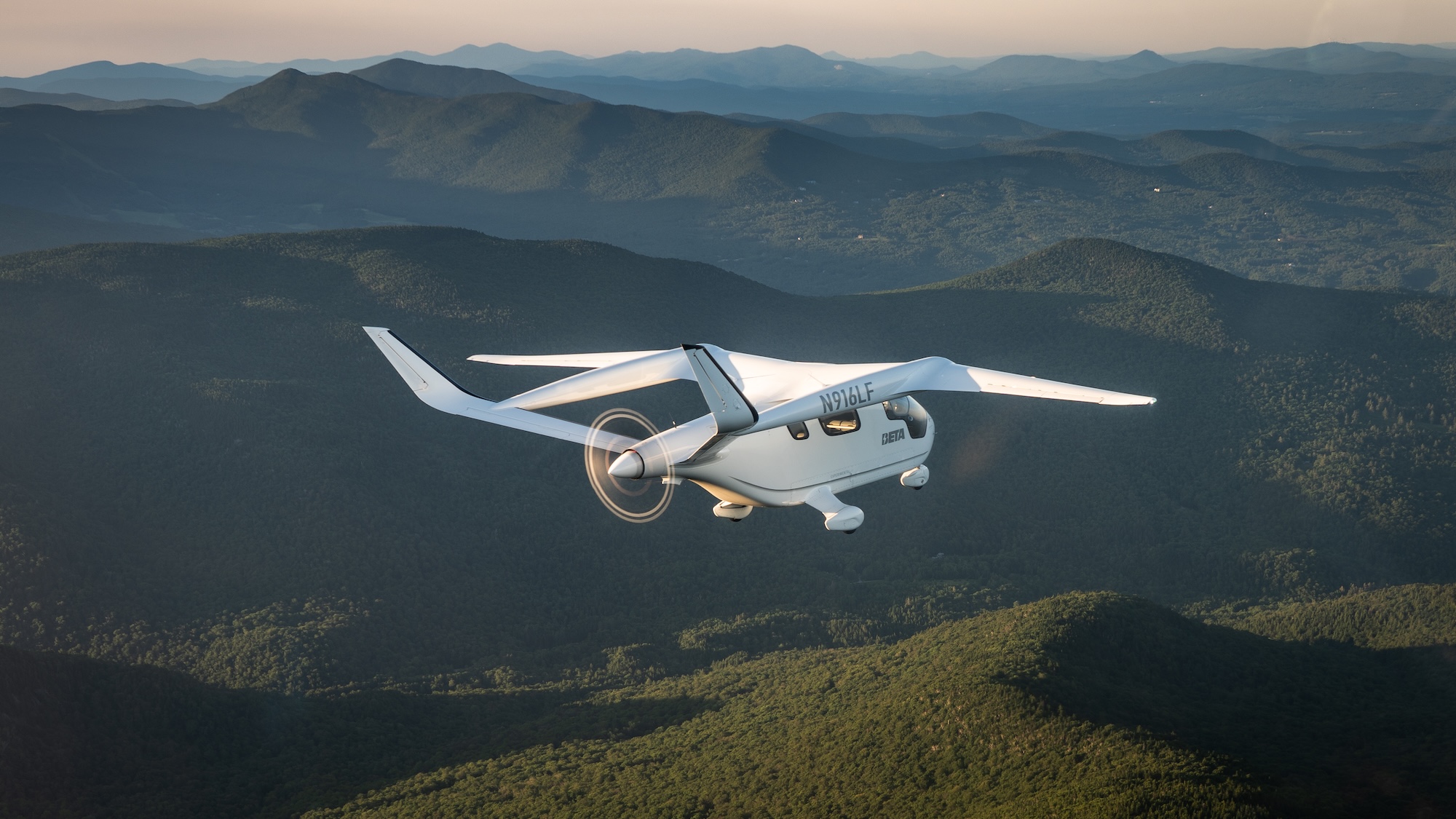
However, these advancements are on the horizon with projects like Air New Zealand trials. In November, the nation’s flag carrier airliner started overseeing small cargo flights using an ALIA CX300. Engineered by the United States-based company BETA Technologies, the CX300 is an electric conventional takeoff and landing vehicle designed to be compatible with existing airport infrastructures.
A two-pilot ALIA CX300 uses 65 kW chargers that enable it to recharge in around 90 minutes, allowing for daily operations on multiple routes. While it’s much smaller than today’s cargo planes, it can still carry around 200 cubic feet of cargo on nearly 250-mile-long trips. That might not seem like too far, but that’s plenty of distance for much of New Zealand air travel.
“Sixty percent of regional flights in New Zealand are less than 350 kilometers [217 miles], and around 85 percent of our electricity is renewable,” Air New Zealand CEO Nikhil Ravishankar said in a statement. Ravishankar believes this makes the country a “perfect laboratory for next-generation aircraft.”

Fabrum's LH2 Flight Systems Testing
Aside from the all-electric test program, a consortium of engineering and aircraft companies are developing and testing a new kind of hydrogen fuel tank. Once considered cost prohibitive, hydrogen fuel planes are showing increasing promise as another possible replacement for at least some fossil fuel aircraft. These will be trialed at Christchurch Airport on New Zealand’s South Island.
“By bringing all the elements together for the first time on site at an international airport–producing, storing and dispensing liquid hydrogen into composite aviation tanks as fuel–we’re proving that liquid hydrogen technologies for aircraft are now available and that hydrogen-electric flight will soon be a reality,” said Christopher Boyle, managing director for the engineering group Fabrum.
