
Many of the animals we know and love today have tails, from the littlest kitten to the largest whale. These tails vary widely by anatomy and purpose—from the grippy tails of opossums to the balancing tails of kangaroos to the swimming tails of fish. Others tell us how an animal is feeling, like a happy puppy with a wiggly butt.
Having a tail that extends beyond the anal opening is a requirement of membership in the phylum Chordata, where humans and all other vertebrates reside. But us humans don’t really have a “tail” in the same way most creatures do, at least past eight weeks in the womb. Neither do our closest primate relatives.
For humans, the story of losing our tails goes way back in the evolutionary timeline. “The reason that humans don’t have tails is that our ancestors didn’t have tails,” says Carol Ward, a distinguished professor in the integrative anatomy program at the University of Missouri. But how we lost tails is a story that goes back at least 20 million years into human—and ape—geneological history.
One tail of a mystery
In the heart of the Miocene, land-dwelling animals were starting to look more and more like the fauna of today. During this era, which lasted from around 23 million years ago to five million years ago, the first dog-bears appeared, primitive giraffes frolicked through Eurasia, and dog-sized three-toed horse ancestors lived in Florida.
Related 'Ask Us Anything' Stories
Humans, on the other hand, weren’t exactly humans yet. Human evolution is a story of divergence that goes back to the Miocene when African apes split off from orangutans. Recent research estimates that the last common ancestor between humans, chimps, and bonobos split off around five to six million years ago, and evidence for early members of the Homo genus didn’t appear in the fossil record until around 2.8 million years ago.
The trouble here is that these evolutionary cousins of ours are also tailless. So to find a tailed relative, we have to go back even further. Around 25 to 30 million years ago, our ape ancestors branched off from tailed monkeys. Once that split happened, many species of tailless apes started popping up in the millions of years that followed. This makes it pretty much impossible to determine which exact tailless species would go on to evolve into us, says Ward.
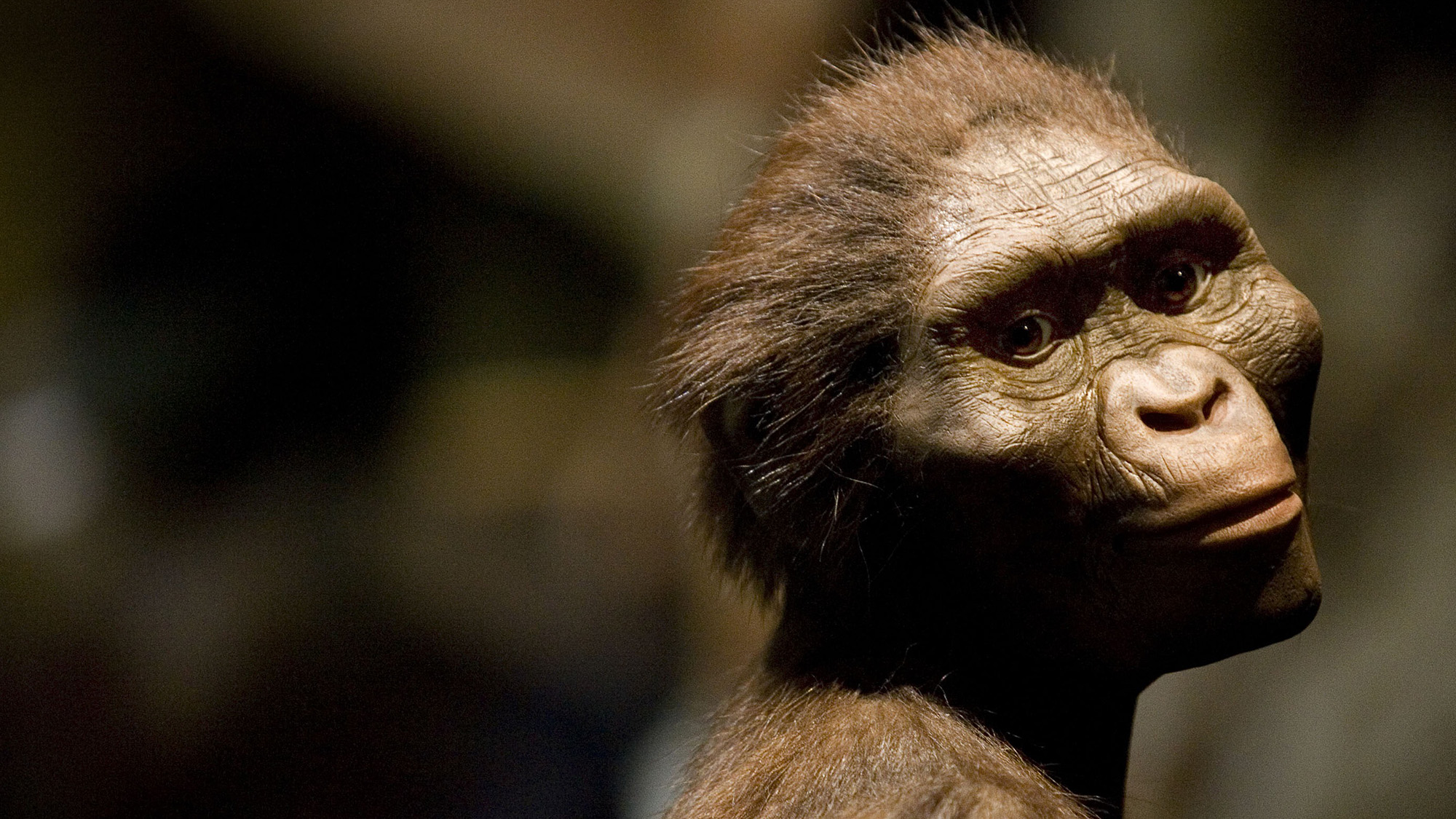
The fossil record only offers us limited glimpses of what was happening, but even those snippets are enlightening. One such glimpse is the Ekembo, a genus with specimens dating back 17 to 20 million years ago that have been found in Kenya. Fossils of one species in this genus, the Ekembo heseloni, offer up a pretty good look at the relationship between apes and tails at the time, says Ward. These guys probably looked like chimps with legs and arms of the same length, adds Ward, and fossil evidence suggests that these creatures climbed on tree branches on all fours and kept the long, bendy lower backs that modern apes eventually lost. But what they were missing was the key components necessary for a tail.
When it comes to pinpointing when ape tails disappeared, we have to look to the sacrum fossil, the bony structure at the base of our lumbar vertebrae. Sacrum fossils for say, cats and other tailed mammals, lead into a bunch of tail vertebrae. For apes and humans, the sacrum ends with just a small tip.
“We have that small tippy point for Ekembo heseloni,” Ward says, “We know that sacrum could not have supported a tail, and that animal didn’t have one.”
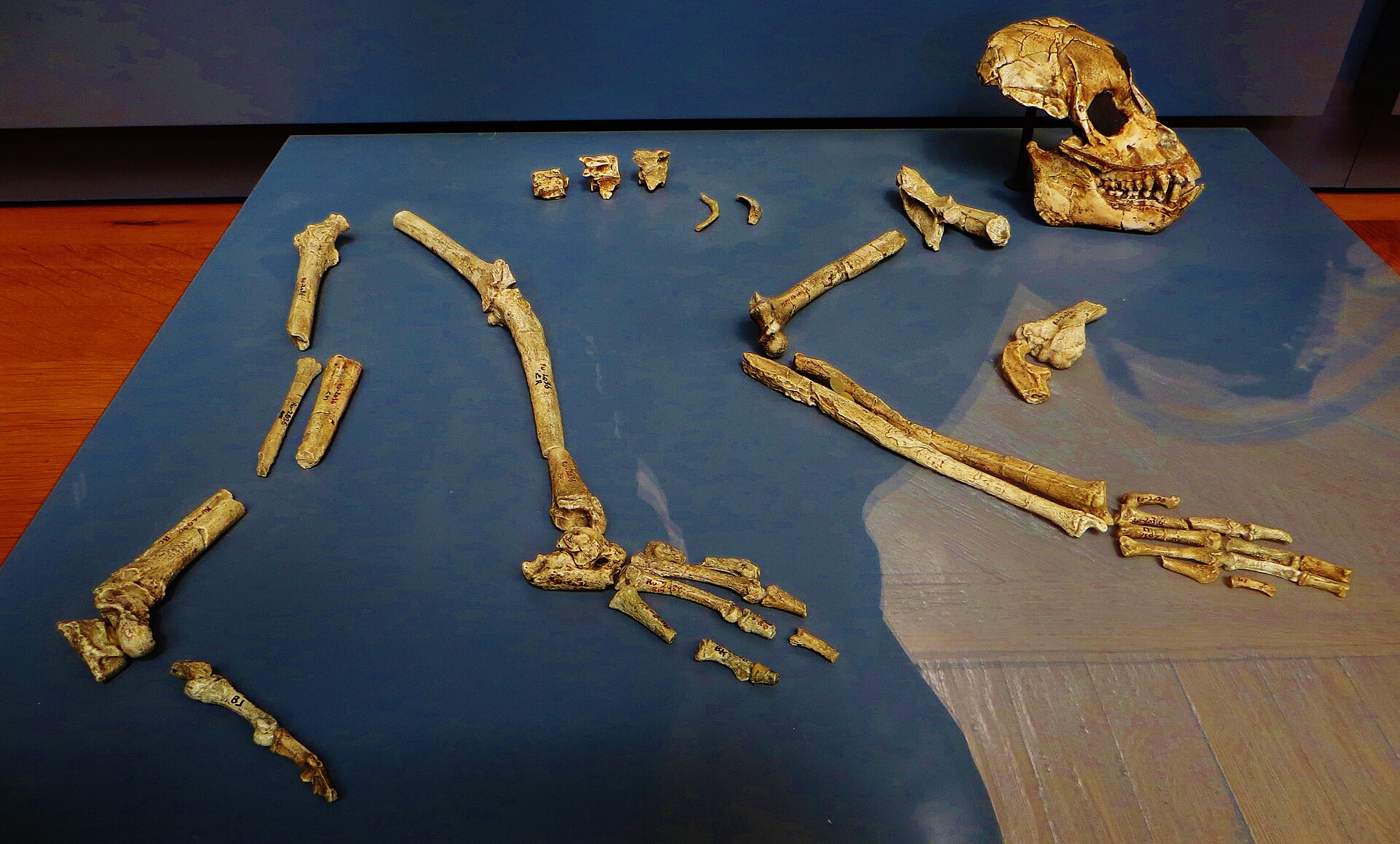
But Ekembo isn’t the only example of a tailless primate from around this time. Another Miocene-era ape dubbed Nacholapithecus appears in Kenya’s fossil record about 15 million years ago. Fossils of these creatures’ sacrums demonstrate that they too wouldn’t have been able to support a tail, adds Ward.
While it’s not clear which exact ape goes on to become a hominid millions of years down the line, the evidence shows that apes had evolved to be tailless in this time period. And if our ancient ape ancestors didn’t have tails, homidis—and, in turn, humans—won’t either.
Why hominid (and ape) tails disappeared
So we know pretty certainly that the “human” tail went the way of the dinosaurs long before humans were a twinkle in evolution’s eye. But why? There are a bunch of theories, but it may have to do with movement and motion, Ward suggests.
Even though we, and our tailless brethren like gorillas, chimps, and gibbons, are related to these 20-million-year-old apes in some capacity, they likely looked very different from their modern counterparts.
“Modern chimps and gorillas have really long forelimbs, really long hands and fingers, short hind limbs, and a bunch of other features for hanging below branches,” says Ward. “But millions of years ago, that wasn’t the case. [Early apes] had arms and legs that are about the same length, so we’re pretty sure they walked on all fours.”
These strategies are intertwined with taillessness. While many animals use their tails to help maintain balance while in motion, they are especially useful if that movement is swift—think a running cheetah or a swinging monkey.
Miocene apes were eating fruit out of trees, explains Ward. Getting to the good stuff on the edge of a fruit tree branch requires supporting their weight on multiple branches, moving slowly and carefully so as to not lose balance.
For our slow-moving ape ancestors, a tail may have been a waste of energy to grow, or a potential liability waiting to be yanked by a predator. “They were climbing, but they were doing it deliberately,” Ward says. “The tail just didn’t offer an advantage.”
In Ask Us Anything, Popular Science answers your most outlandish, mind-burning questions, from the everyday things you’ve always wondered to the bizarre things you never thought to ask. Have something you’ve always wanted to know? Ask us.
