

Some 6,000 years ago in the northern reaches of modern Latvia, a young woman died. Afterwards, a group of early humans buried her in an ancient, sacred place along a lakeshore. They carefully lowered her small teenage frame into the ground, gently placing a stone ax, 28 flint flakes, 15 blades, and a stone scraper beside her. Stained with ochre, the stone implements were part of her last rites. This young woman remained there thousands of years, until, when archaeologists discovered her along with more than 300 others in the 20th century. The site, known as Zvejnieki cemetery, is one of Europe’s largest Stone Age cemeteries.
Research conducted at Zvejnieki has often challenged longheld assumptions about gender roles in prehistoric Europe. For instance, the young woman interred in burial 211 described above is one of several women and children buried with stone axes at the site, upending the notion that axes only belonged to Stone Age men. Now, a new study published September 10 in the journal PLOS One again upends gender stereotypes, demonstrating that women and children were just as likely to be buried with stone tools as men. The woman in burial 211 alone was laid to rest with a staggering 45 different stone objects.
Zvejnieki cemetery’s long history
Nestled along the northern shore of Lake Burtnieks in northern Latvia, Stone Age communities used the Zvejnieki burial site for more than 5,000 years. Archeologists estimate that it was first used around 7,500 BCE, and was abandoned sometime around 2,500 BCE.
Zvejnieki remained untouched for more than 4,000 years, a veritable treasure trove of the Stone Age waiting to be discovered. Then in the 1960s, Lake Burtnieks’s northern shore was used as a gravel quarry. Latvian workers harvested rock from the small hill along the lake, eventually discovering a human skull amongst the rubble in 1964.
Archaeologists soon swooped in, and immediately noticed Stone Age graves exposed along the quarry’s walls. The quarry was closed and a team of archaeologists carried out an extensive dig between 1964 and 1978. In 2005, another large dig was conducted and lasted four years. So far, a total of 330 individuals have been found at the Zvejnieki cemetery, making it one of the largest sites of its kind in Europe.
Women buried with stone tools
Led by Dr. Aimée Little from the University of York’s archaeology department, the new study takes a closer look at the stone tools found at Zvejnieki. As part of the Stone Dead project, the new research demonstrates how tools played an important role in Stone Age funerary rites. While some tools seemed specifically made for gravesites, others were broken into pieces as part of intricate rituals.
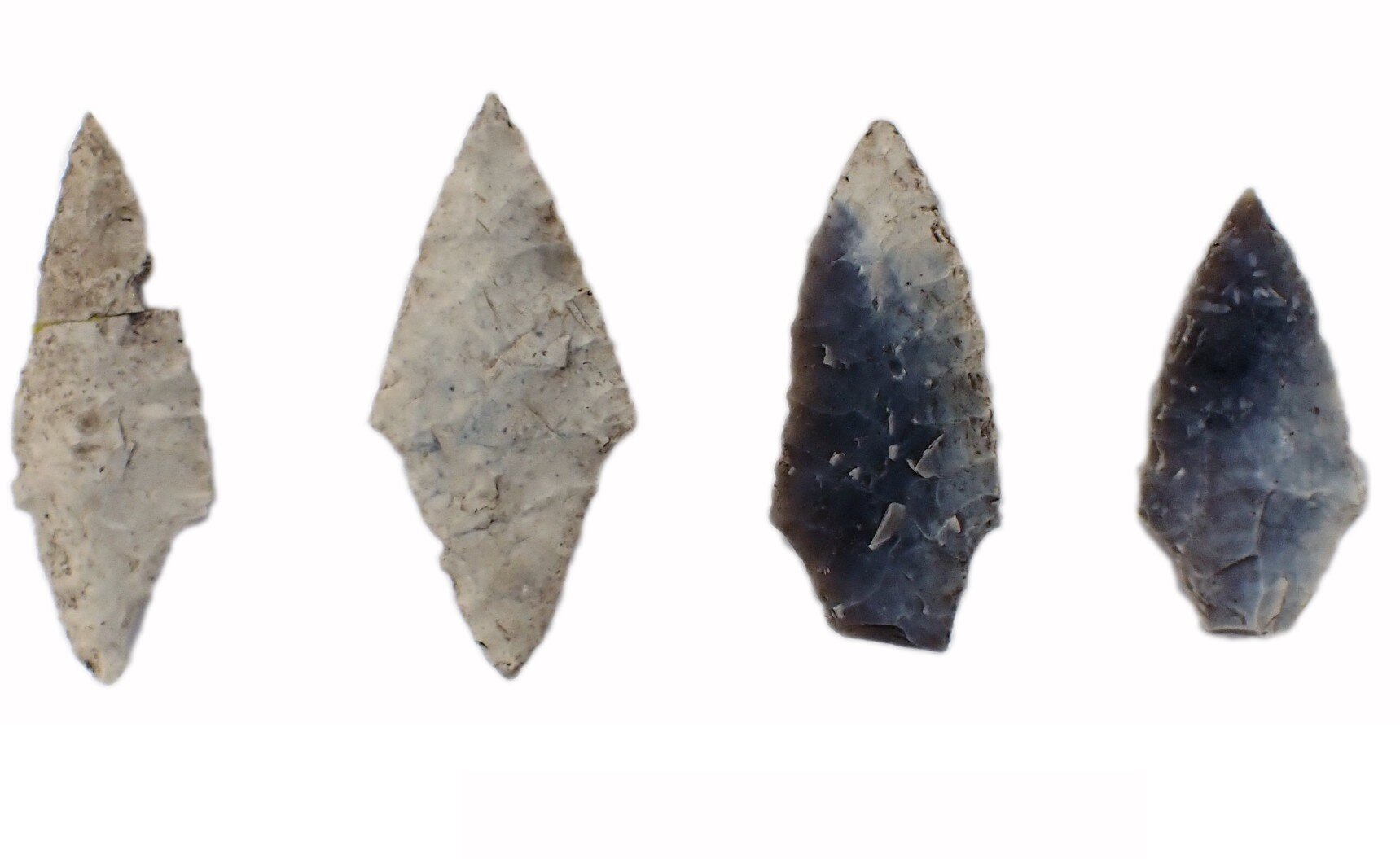
The team also found that women were just as likely, if not more so, to be buried with stone tools than men. This flies in the face of a decades-old stereotype that Stone Age women didn’t use stone tools as frequently as men. The women were too busy cooking, crafting, and caring for the family to bother with the stone tools used by men in hunting and building. Or so the outdated story went.
“Our findings overturn the old stereotype of ‘Man the Hunter,’” Little said in a statement. Historically, this stereotype “has been a dominant theme in Stone Age studies, and has even influenced, on occasion, how some infants have even been sexed, on the basis that they were given lithic tools.”
Study co-author Dr. Anđa Petrović of the University of Belgrade echoes Little: “This research demonstrates that we cannot make these gendered assumptions and that lithic grave goods played an important role in the mourning rituals of children and women, as well as men.”
The mystery of broken tools
The stone tools found at Zvejnieki come in many forms, from blades to flint flakes to knives. Some of the stone tools were used for everyday activities, such as processing dead animals or wood working. Other tools found in the gravesites appear to be brand new and were buried with the dead during funerary rites. Sometimes, these tools were intentionally broken apart.
Across the eastern Baltic states (an area pertaining to modern-day Estonia, Latvia, and Lithuania), there are even more examples of broken tools in Stone Age burials. This seems to indicate a shared ritual tradition across the region. For Little, this raises even more questions.
“The study highlights how much more there is to learn about the lives—and deaths—of Europe’s earliest communities, and why even the seemingly simplest objects can unlock insights about our shared human past and how people responded to death.”
Related History Stories
