
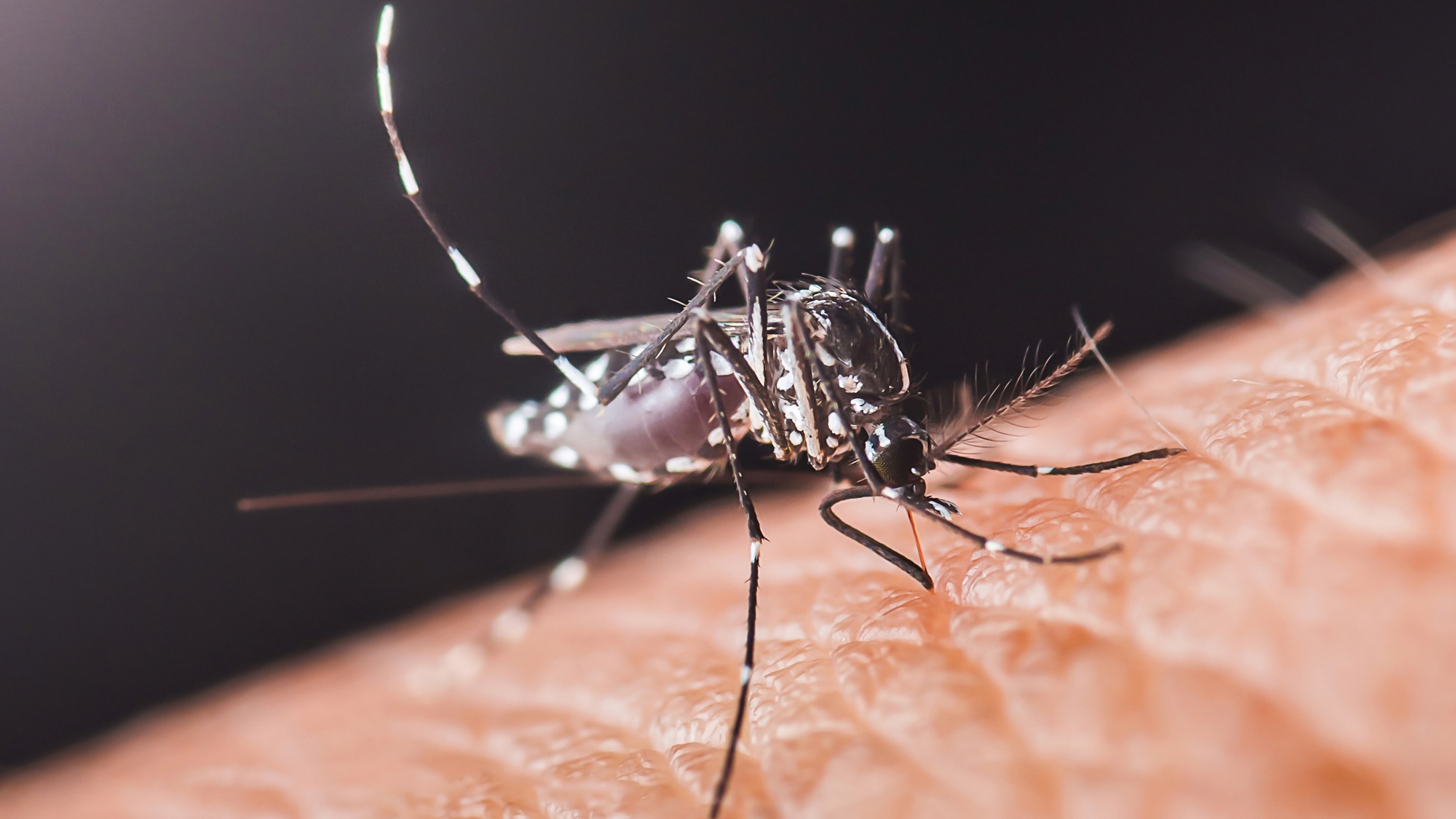
Mosquitoes are undeniably the deadliest animals to humans. Malaria infections carried by the insects still kill over 600,000 people every year, while around half the world’s population remains at risk of exposure despite significant medical advances. Meanwhile, mosquito saliva regularly spreads a number of other dangerous diseases including West Nile virus, dengue fever, and various forms of encephalitis.
Not all mosquitoes are to blame, however. Every bloodsucking malaria vector comes from those within the group Anopheles leucosphyrus, which encompasses a comparatively small portion of the planet’s roughly 3,500 known mosquito species. So when and why did humans fall prey to such a pernicious threat? Based on recent genetic analysis, the deadly saga started when early hominins migrated into Southeast Asia around 1.8 million years ago.
The evidence is detailed in an international research team’s study published today in the journal Scientific Reports. To investigate the issue, biologists sequenced DNA from 38 mosquitoes spanning 11 different species in the Leucosphyrus group collected from Southeast Asia between 1992 and 2020. They used computer models to estimate the long-term rates of DNA mutation and construct larger evolutionary histories of the insects.
According to their analysis, a taste for human blood developed only once within the Leucosphyrus group somewhere between 2.9 and 1.6 million years ago—specificially in Sundaland, a region encompassing Borneo, Java, the Malay Peninsula, and Sumatra. Before this mutation, mosquitoes were perfectly content to feed on the other nearby non-human primates. The study’s authors noted that this aligns with paleoanthropologists’ earliest proposed date for Homo erectus arriving in Sundaland about 1.8 million years ago.
Modern humans didn’t arrive in the region until 76,000–63,000 years ago, giving mosquitoes plenty of time to develop their preference for hominins. But these findings also predate past theories of insect evolution, particularly for African malaria transmitters like Anopheles gambiae and Anopheles coluzzii. Prior to these recent genetic discoveries, researchers believed human feeding only started between 509,000 and 61,000 years ago.
Importantly, in order to chow down on humans, mosquitoes need to know how to find them. They likely evolved genetic encoder receptors for detecting hominin body odor slowly over time. For this to happen, however, the Sundaland region needed a significant H. erectus population about 1.8 million years ago. In this way, the scientists argue that examining mosquito evolution can help fill in the gaps on hominin development and migration, particularly in areas like Southeast Asia that contain comparatively limited fossil records.
