
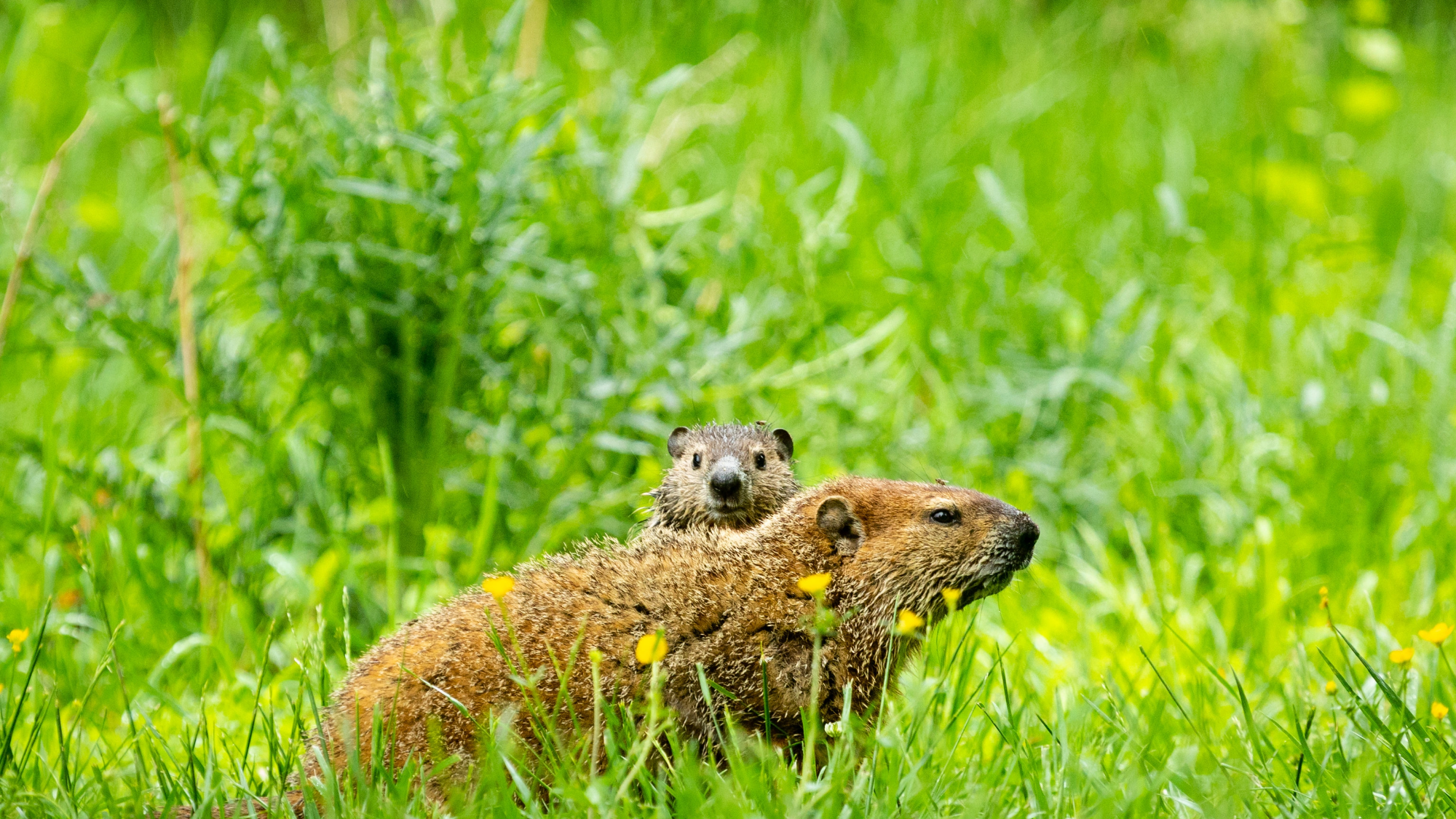
Despite advances in meteorological technology, we still keep a close eye on a rodent’s burrow every February 2 for a weather forecast. While groundhogs—also called woodchucks—have been associated with the end of winter and beginning of spring for centuries, there’s more to know about our rodent friends than their amateur Al Roker’ing.
No pee or poop
Unlike bears, groundhogs are true hibernators. During hibernation, they don’t eat and rely on the fat stores they have built up and go into a deep and full sleep during the winter.
“They don’t wake up and walk around, go to the bathroom or anything like that,” Karen McDonald, STEM program coordinator at the Smithsonian Environmental Research Center in Maryland tells Popular Science. “The waste is actually being recycled in their body.”
When they are awake in the spring, summer, and fall, groundhogs use restroom chambers in their burrows to limit odors and fecal contamination in their main chambers. They also reduce their metabolism, heart rate, and breathing rate. As a result, the little waste they create in their blood is recycled chemically into their body.
During the winter, their body temperature also can drop from around 100 degrees Fahrenheit to around 40°F. Their heart rate slows from about 80 beats per minute to as low as four to five and about 16 breaths per minute. They also lose up to half their body weight.
Move over, meerkats
In addition to a chamber for storing waste, a groundhog burrow system may include separate areas for sleeping, nesting, and raising young. It may also have multiple entrances for ventilation and rapid escape should a predator arrive. However, something is missing.
“Their burrows do not have the food storage or a kitchen, because they are the pantry. They’re the ones storing the food,” McDonald explains.
Groundhog burrows have the same configuration no matter the season and they are also considered important ecosystem engineers.
“Their burrows can end up providing habitat for multiple apartment dwellers. You may find a box turtle or a rabbit family or other animals living there,” says McDonald. “It creates these habitats but also changes the soil chemistry because they’re digging and they’re mixing up the soil.”
The neighborhood watch
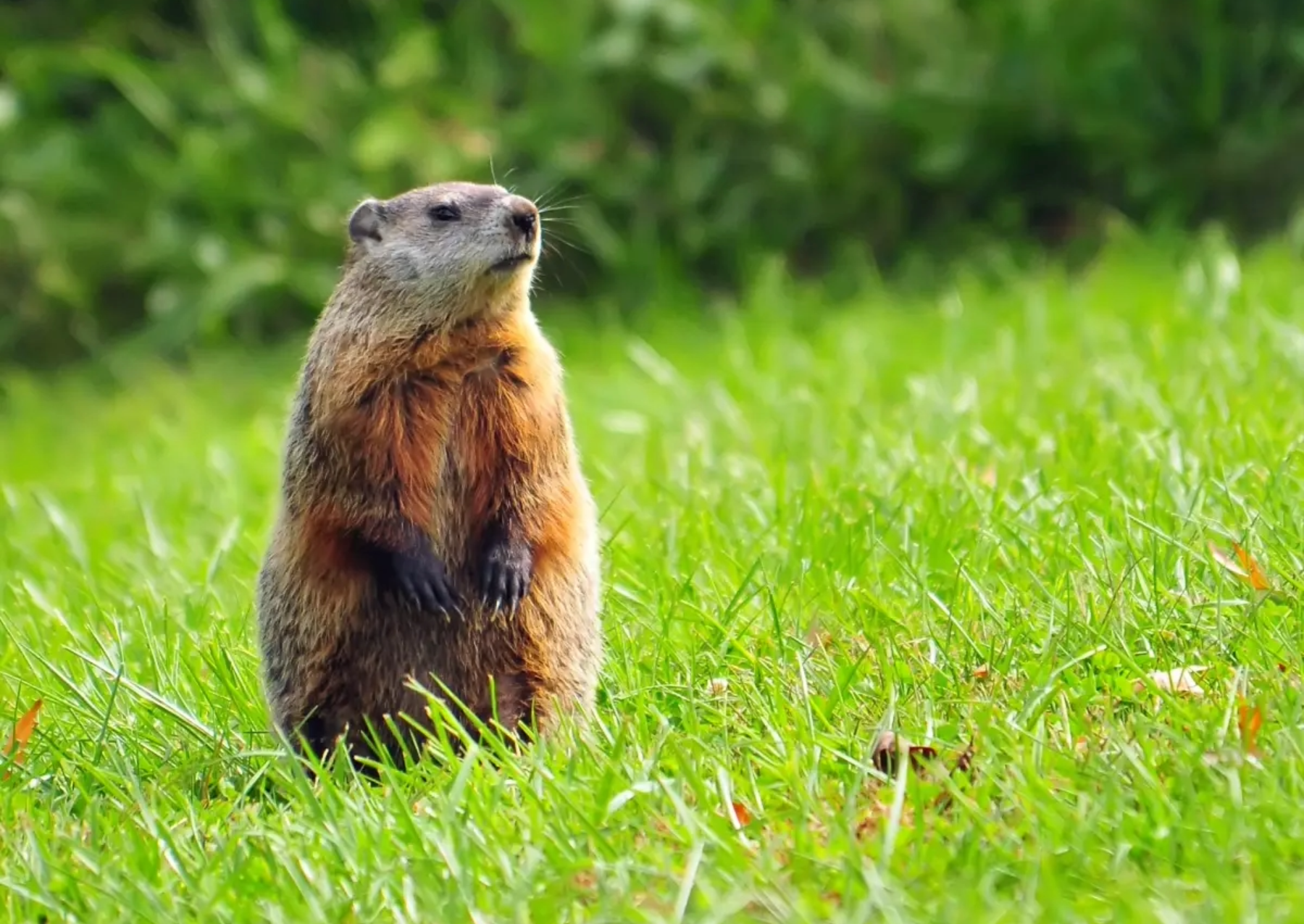
Groundhogs can build tunnels that are 20 to 45 feet-long thanks to their strong forelimbs and curved claws. When they make burrow tunnels, they will also create plenty of exits to escape potential predators–and warn others.
“They actually are sort of like an alarm system for the forest, because they keep watch for predators,” McDonald explains. “If groundhogs call other animals, they’ll know that the danger is nearby and will watch for predators too.”
Solitary creatures
Even though they make for pretty good neighbors, groundhogs lead fairly solitary lives. They live alone for most of the year and only come together briefly during the spring breeding season.
“They definitely like it alone, except when they have their babies. The females have the young, they rear them and they kick them out,” McDonald says.
Groundhogs are nature’s alarm clock, not weather forecaster
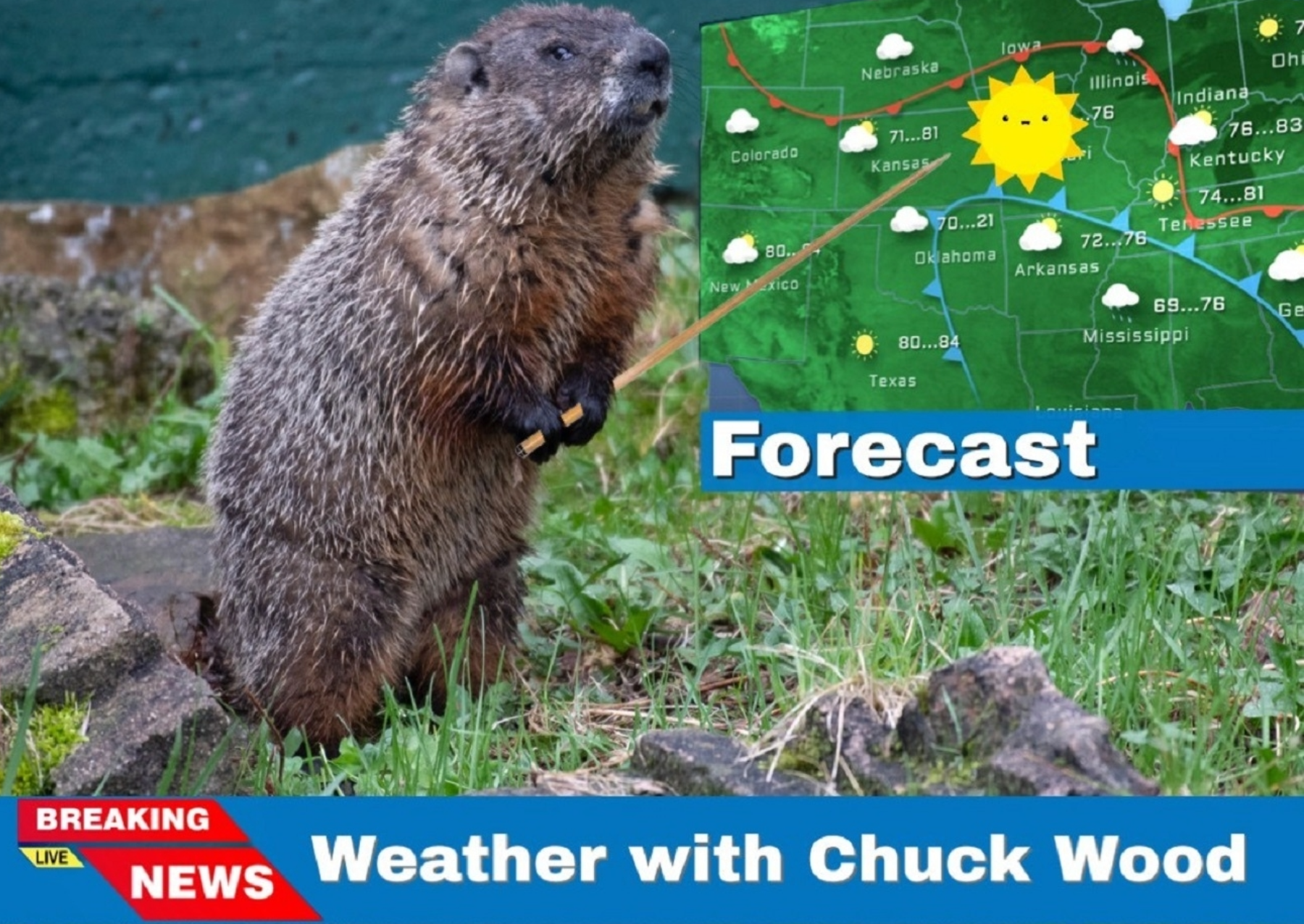
In the United States, the legend goes that various groundhogs can predict if spring will arrive early or if there will be six more weeks of winter weather. While there is no evidence that groundhogs can forecast the weather, they can use sunlight to tell when it is time to wake up closer to spring.
They rely on the photoperiod, or the number of consecutive hours of light in a 24-hour period, as an environmental cue. As the hours of sunlight increase towards the spring, it signals the end of winter.
“They rely on the photoperiod more than other animals to know when to wake up. And because they are so reliant, they’re like a clock,” says McDonald. “We know they’re going to emerge at that photoperiod when spring is coming.”
Ultimate survivors
Groundhogs are not considered endangered or threatened, partly because they have an incredibly varied diet.
“They eat a lot of different types of plants,” says McDonald. “Instead of specializing, they have this broad diet that allows them to live in disturbed areas where humans are, where there’s a variety of plants. They eat different types of grasses, they might eat some clover. They like wild flowers because they’re tasty and pretty. They’ll eat leaves from plants. They might even, if there’s not a ton of food out, they might chew on some bark.”
Ancient roots
While Groundhog Day in the United States is on February 2, the celebration has deep European pagan roots. The origin likely lies in the Celtic festival of Imbolc, which marks the half-way point between the winter solstice and spring equinox. It is celebrated on February 1 and associated with the Celtic goddess of fertility (now known as St. Brigid) and celebrates longer days ahead. Groundhogs emerging from their dens were seen as a symbol that spring was on its way.
Like many pagan traditions, Imbolc eventually merged with Christianity and became Candlemas (celebrated on February 2) in the 400s. In the Catholic Church, Candlemas commemorates the purification of the Virgin Mary and the presentation of Christ in the Temple and the candles needed for the year ahead are blessed.
As for why these lowly rodents continue to remain part of our end-of-winter celebrations, McDonald says it’s pretty simple.
“Small woodland creatures are magnetic.”
