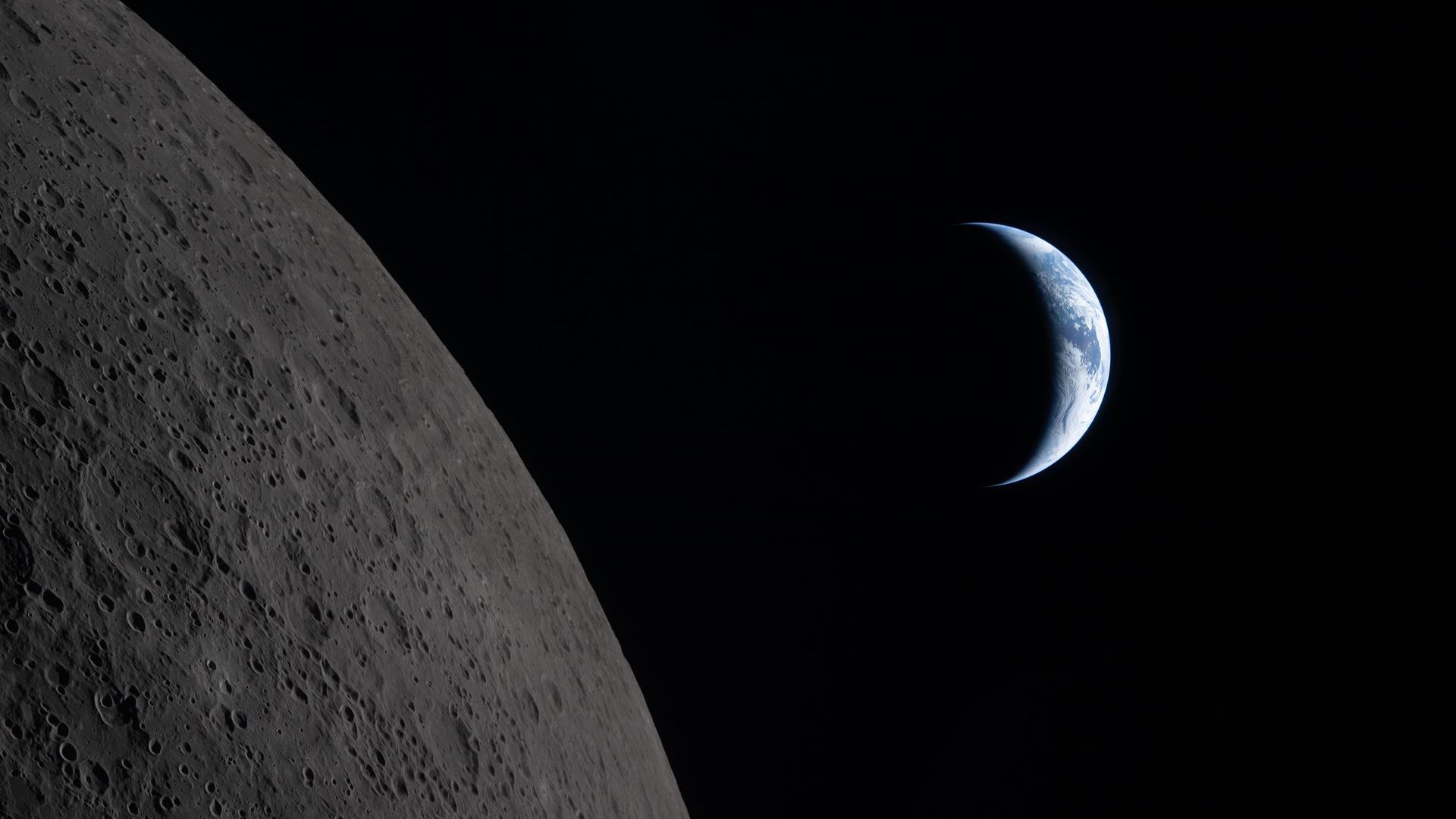
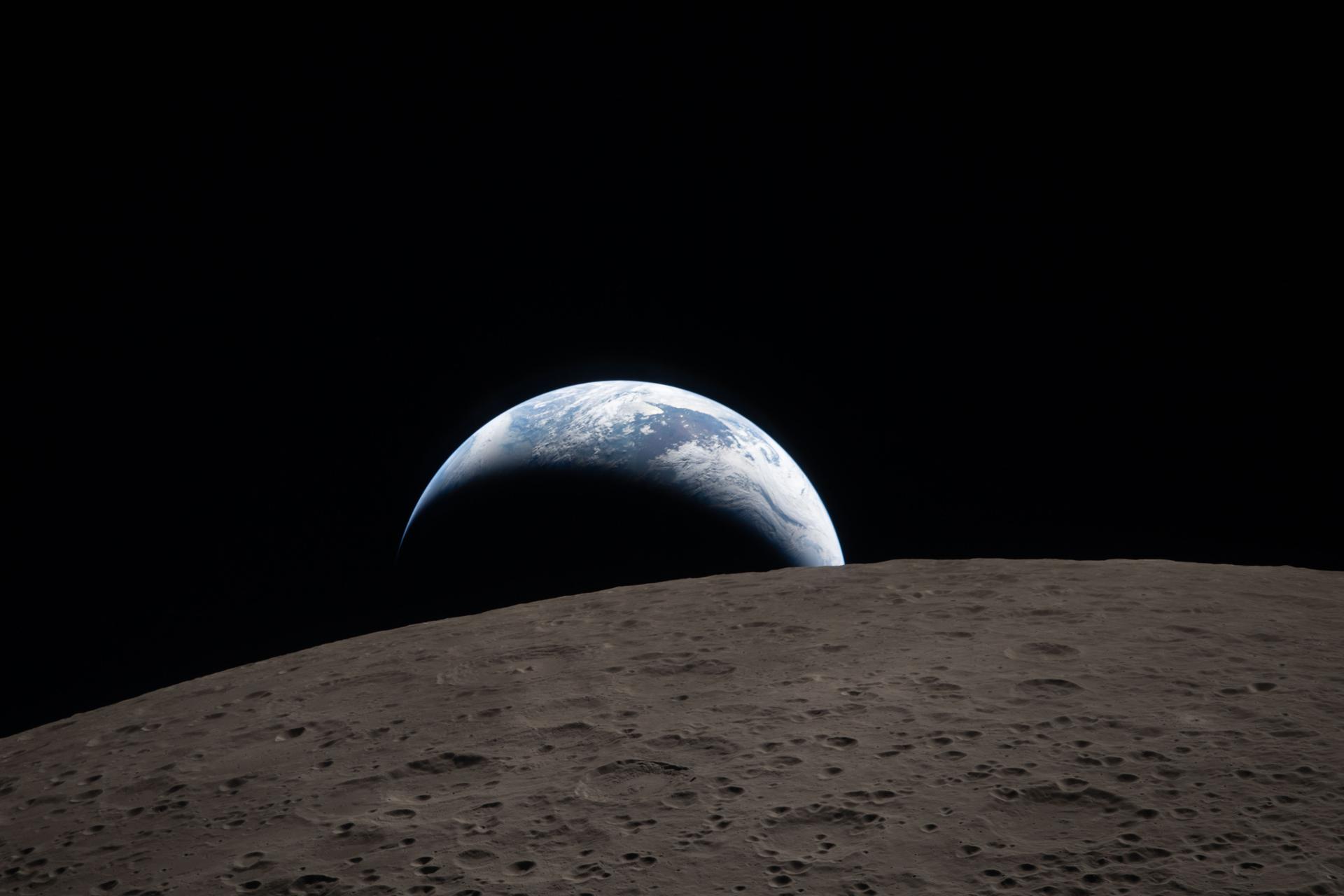
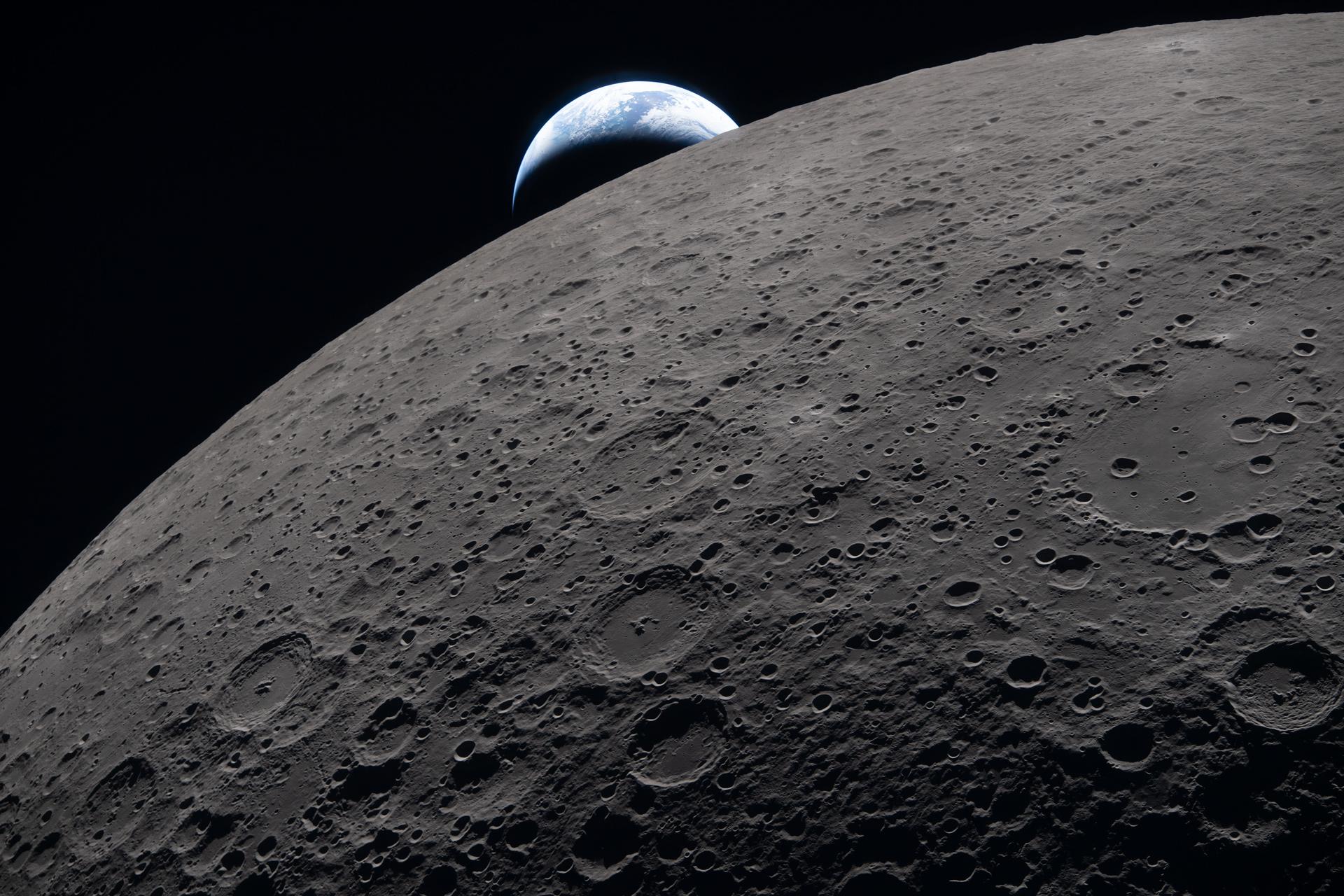
Our planet draws closer to passing behind the Moon in this image captured by the Artemis II crew during their lunar flyby, about six minutes before Earthset. Earth is in a crescent phase, with sunlight coming from the right. The dark portion of Earth is experiencing nighttime. On Earth’s day side, swirling clouds are visible over muted blue in the Australia and Oceania region.
The lines of small indentations on the Moon’s rugged surface are secondary crater chains. These structures are formed by material ejected during a violent primary impact. Image: NASA
Get the Popular Science daily newsletter💡
Breakthroughs, discoveries, and DIY tips sent six days a week.
By signing up, you confirm you are 16+, will receive newsletters and promotional content and agree to our Terms of Use and acknowledge the data practices in our Privacy Policy. You may unsubscribe at any time.
The Artemis II mission has re-inspired our collective fascination with space. We’ve gazed on our home planet in a way unseen in decades and caught a glimpse of a part of the moon never seen by human eyes. The historic lunar flyby also sent humans farther from Earth than ever before.
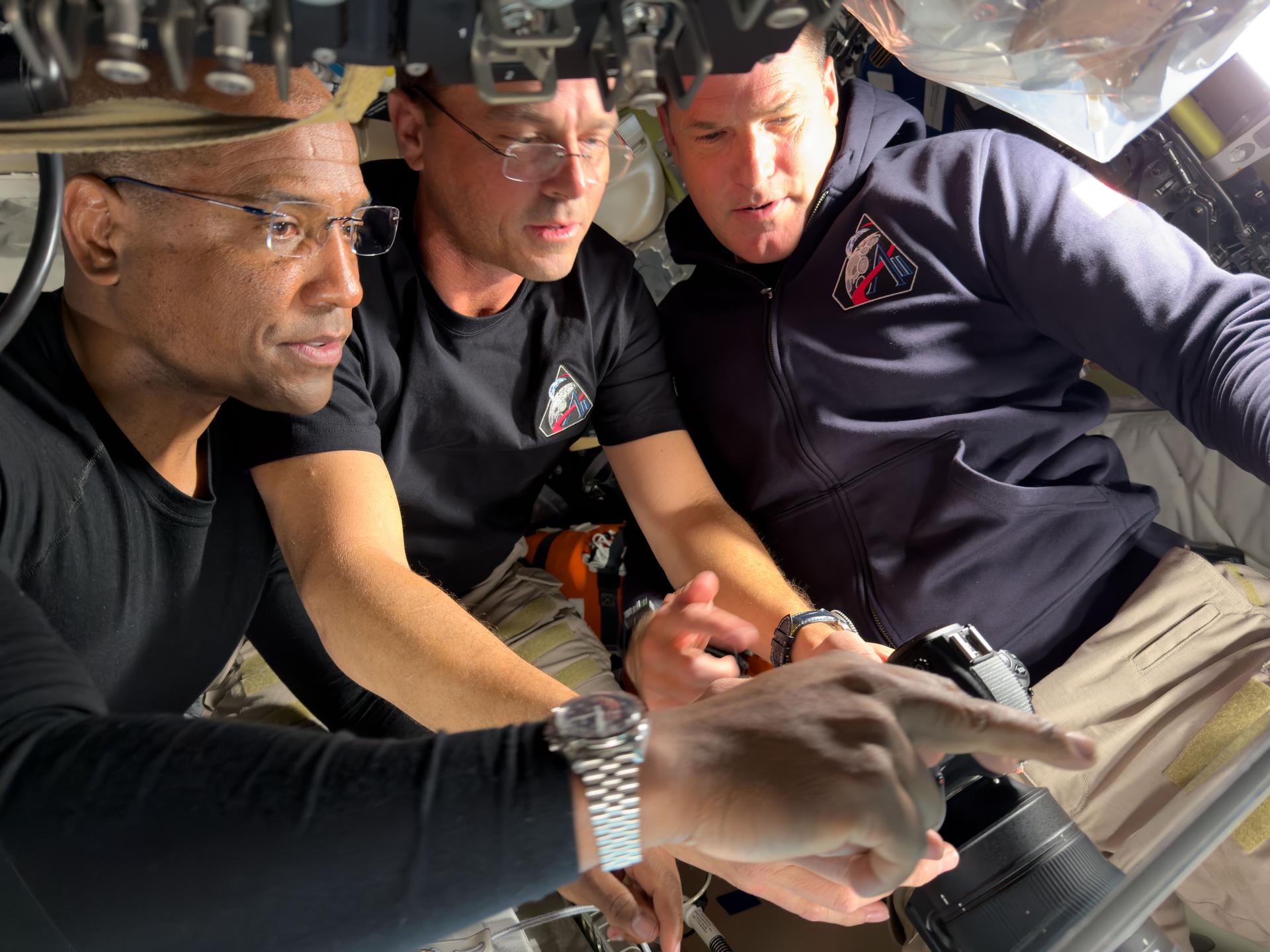
Thanks to stellar camera work by the mission’s crew—Commander Reid Wiseman, pilot Victor Glover, and NASA mission specialist Christina Koch, and CSA mission specialist Jeremy Hansen—those of us left down here can feel like we’re along for the ride.
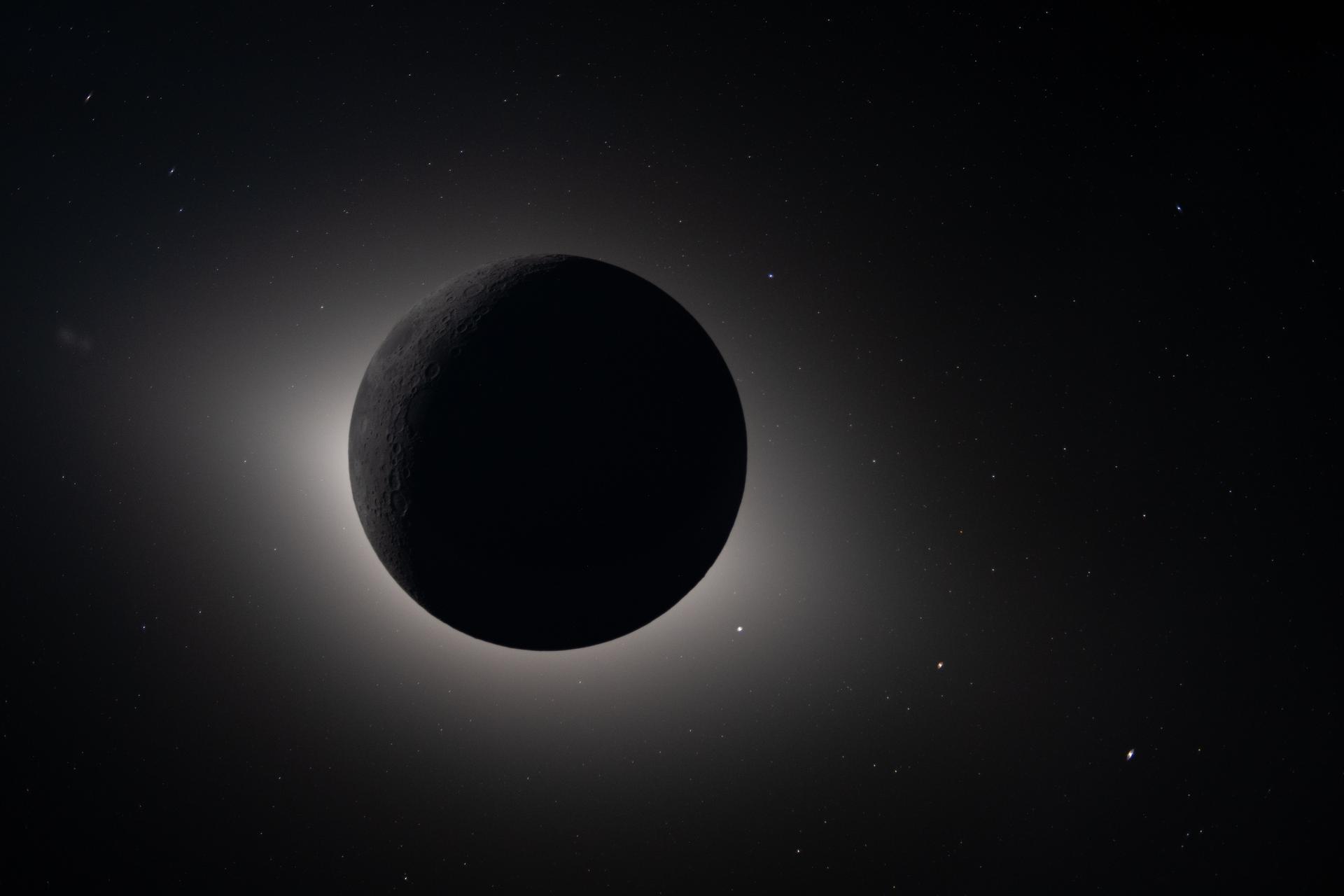
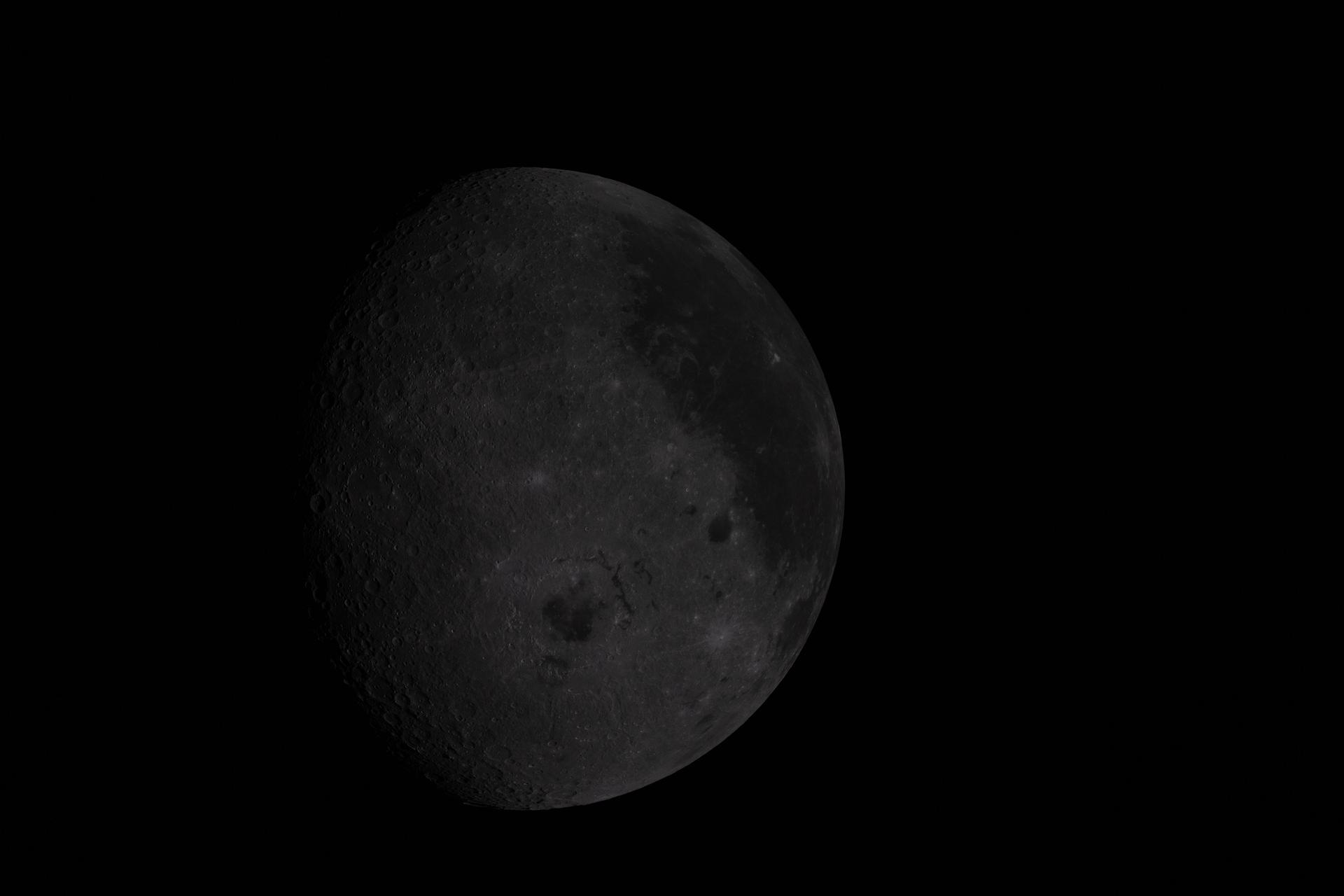
Captured by the Artemis II crew during their lunar flyby on April 6, 2026, this image shows the Moon fully eclipsing the Sun. From the crew’s perspective, the Moon appears large enough to completely block the Sun, creating nearly 54 minutes of totality and extending the view far beyond what is possible from Earth. The corona forms a glowing halo around the dark lunar disk, revealing details of the Sun’s outer atmosphere typically hidden by its brightness. Also visible are stars, typically too faint to see when imaging the Moon, but with the Moon in darkness stars are readily imaged. This unique vantage point provides both a striking visual and a valuable opportunity for astronauts to document and describe the corona during humanity’s return to deep space. The faint glow of the nearside of the Moon is visible in this image, having been illuminated by light reflected off the Earth. Image and caption: NASANASA
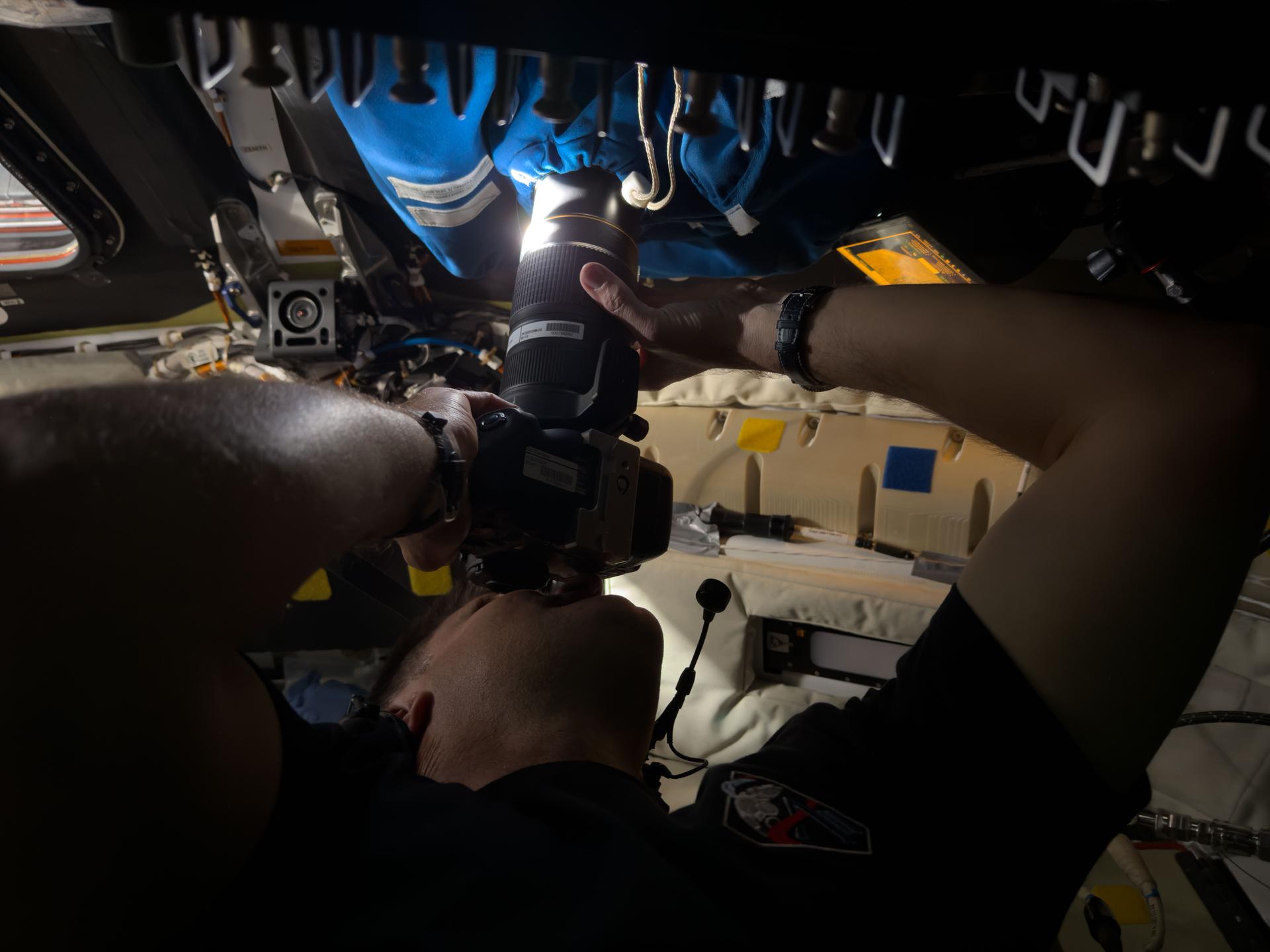
Capturing these beautiful and unprecedented photographs wasn’t a fluke. The NASA and CSA astronauts worked with Rochester Institute of Technology alumni Katrina Willoughby and Paul Reichert at the Johnson Space Center in Houston to up their photography skills in preparation for Artemis II.
“Most people can use a camera and get a photo that is good enough, but good enough isn’t what we’re after scientifically,” Willoughby, a graduate of RIT’s imaging and photographic technology program, said. We’re really teaching the astronauts how to go beyond the basics. Being able to understand how to use the equipment, and what the options are, gives us a lot more capability.”
The pair spent two years working with the crew and designed training modules to emulate the challenges of photographing in space. The astronauts learned how to operate both commercially available cameras (including iPhones), along with more advanced equipment and hardware.
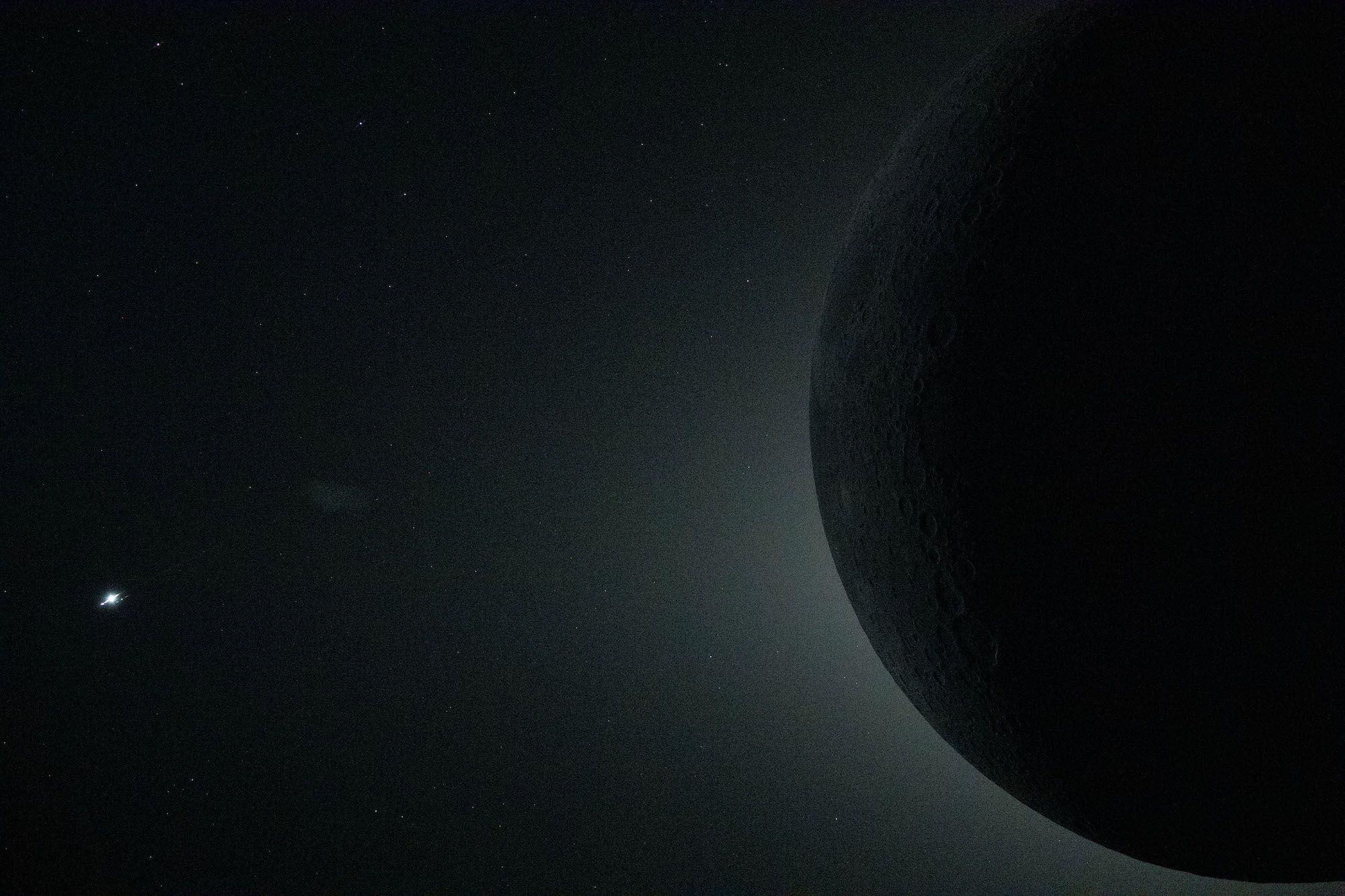
A close-up view from the Orion spacecraft during the Artemis II crew’s lunar flyby on April 6, 2026, captures a total solar eclipse, with only part of the Moon visible in the frame as it fully obscures the Sun. Although the full lunar disk extends beyond the image, the Sun’s faint corona remains visible as a soft halo of light around the Moon’s edge. From this deep-space vantage point, the Moon appeared large enough to sustain nearly 54 minutes of totality, far longer than total solar eclipses typically seen from Earth. This cropped perspective emphasizes the scale of the alignment and reveals subtle structure in the corona during the rare, extended eclipse observed by the crew. The bright silver glint on the left edge of the image is the planet Venus. The round, dark gray feature visible along the Moon’s horizon between the 9 and 10 o’clock positions is Mare Crisium, a feature visible from Earth. We see faint lunar features because light reflected off of Earth provides a source of illumination. Image and caption: NASA
While the photographs are absolutely awe-inspiring, they also hold importance for scientific study. Lunar and planetary scientists can use the images to better understand our moon and solar system. The Artemis II crew returns to Earth on April 10.
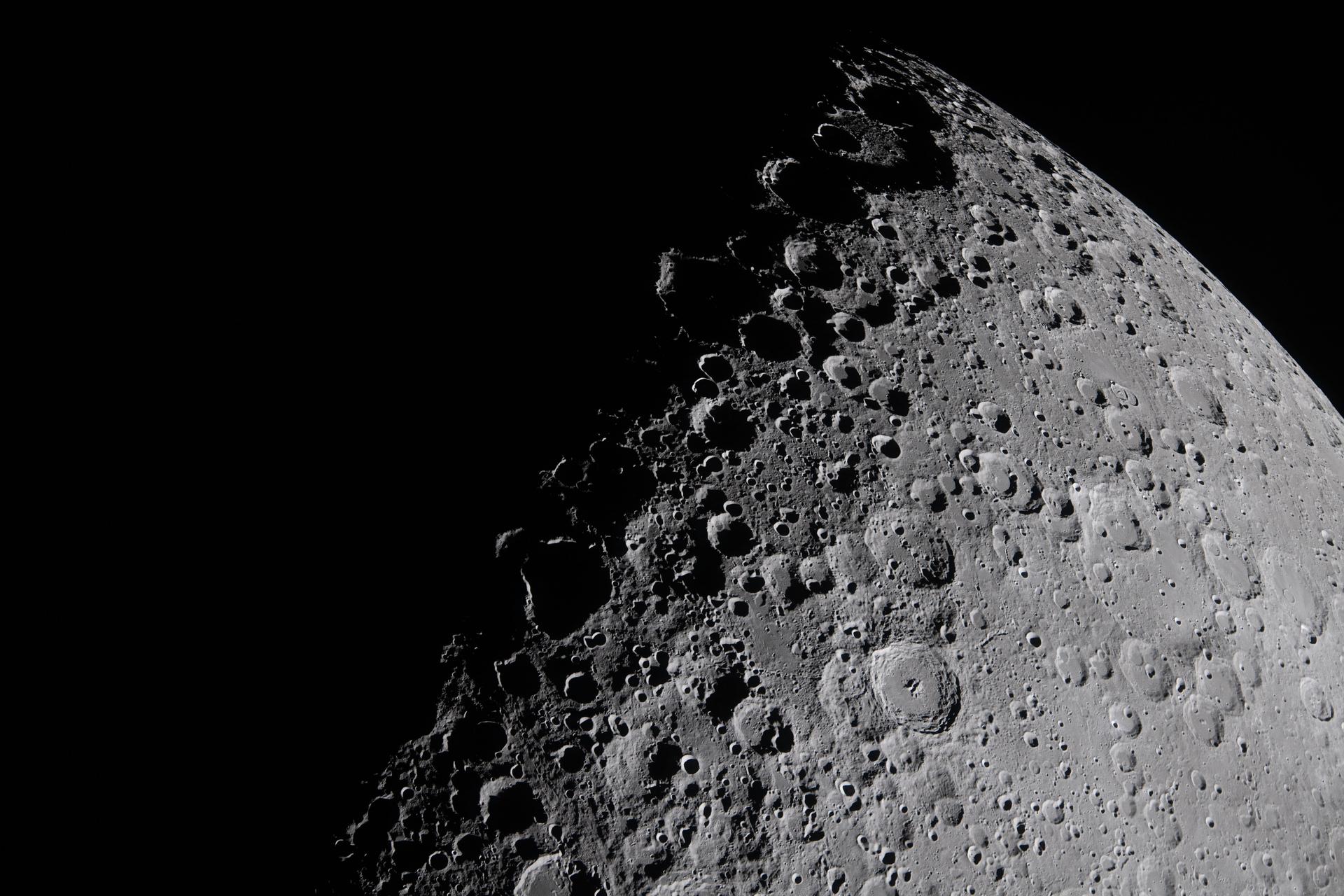
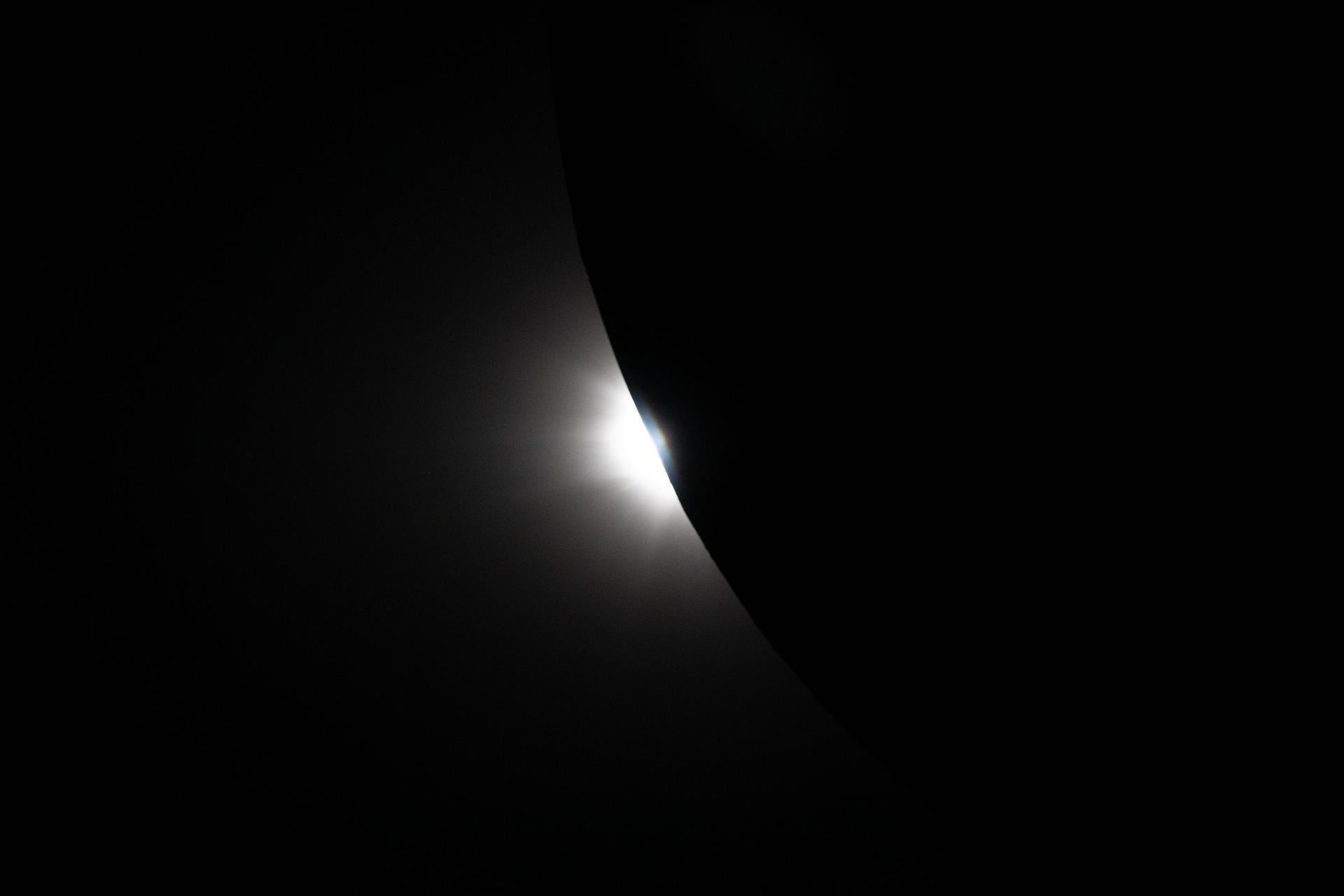
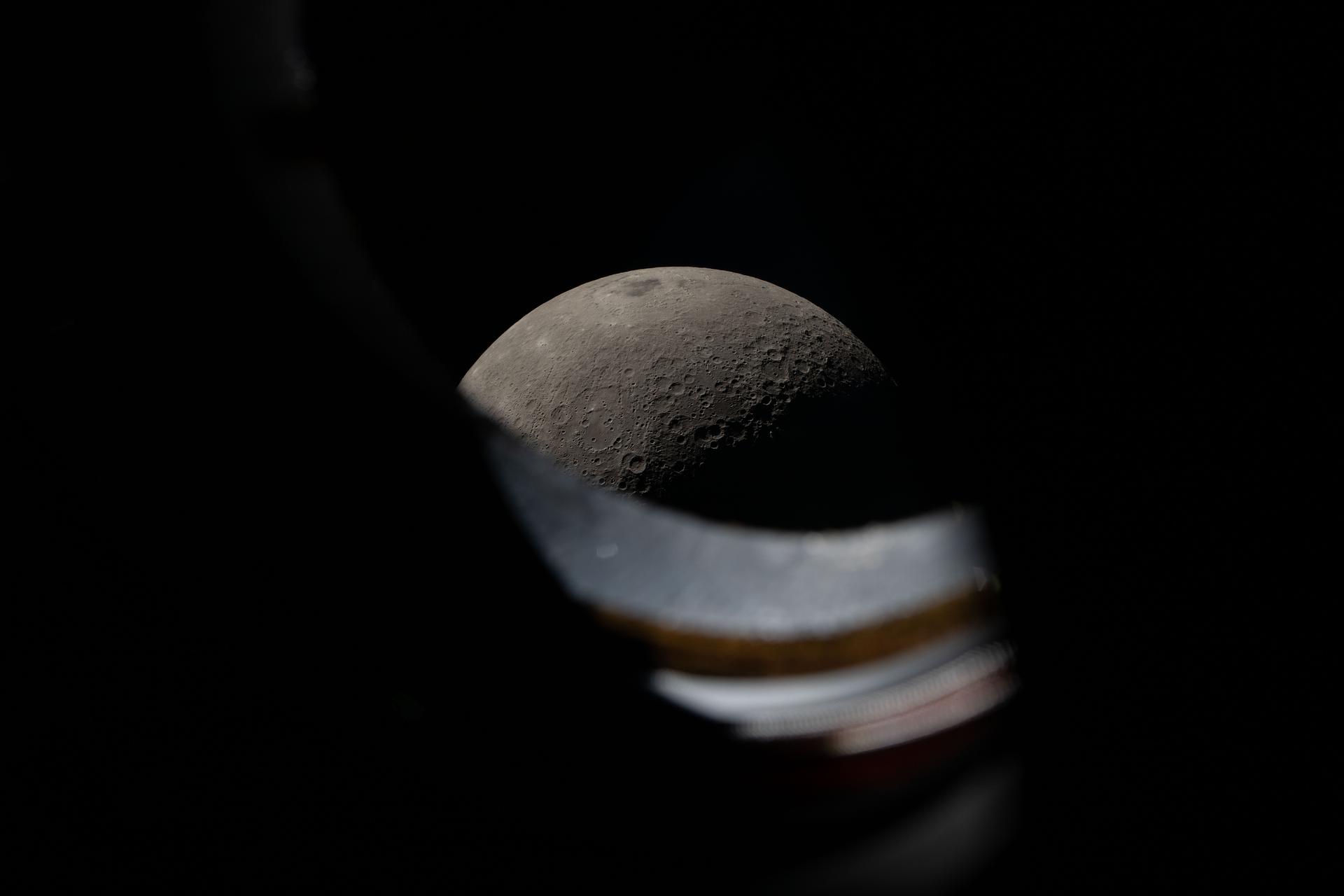
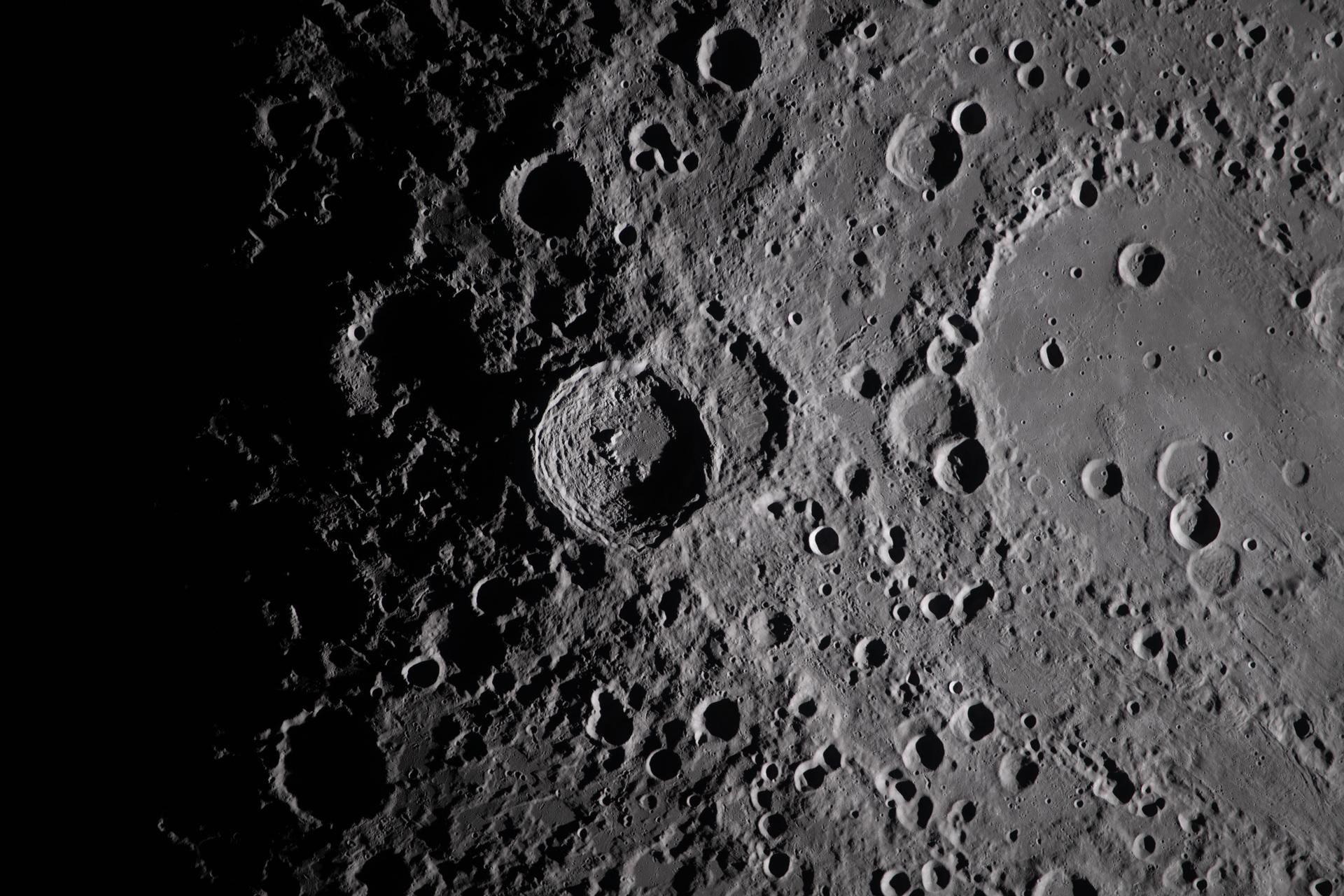
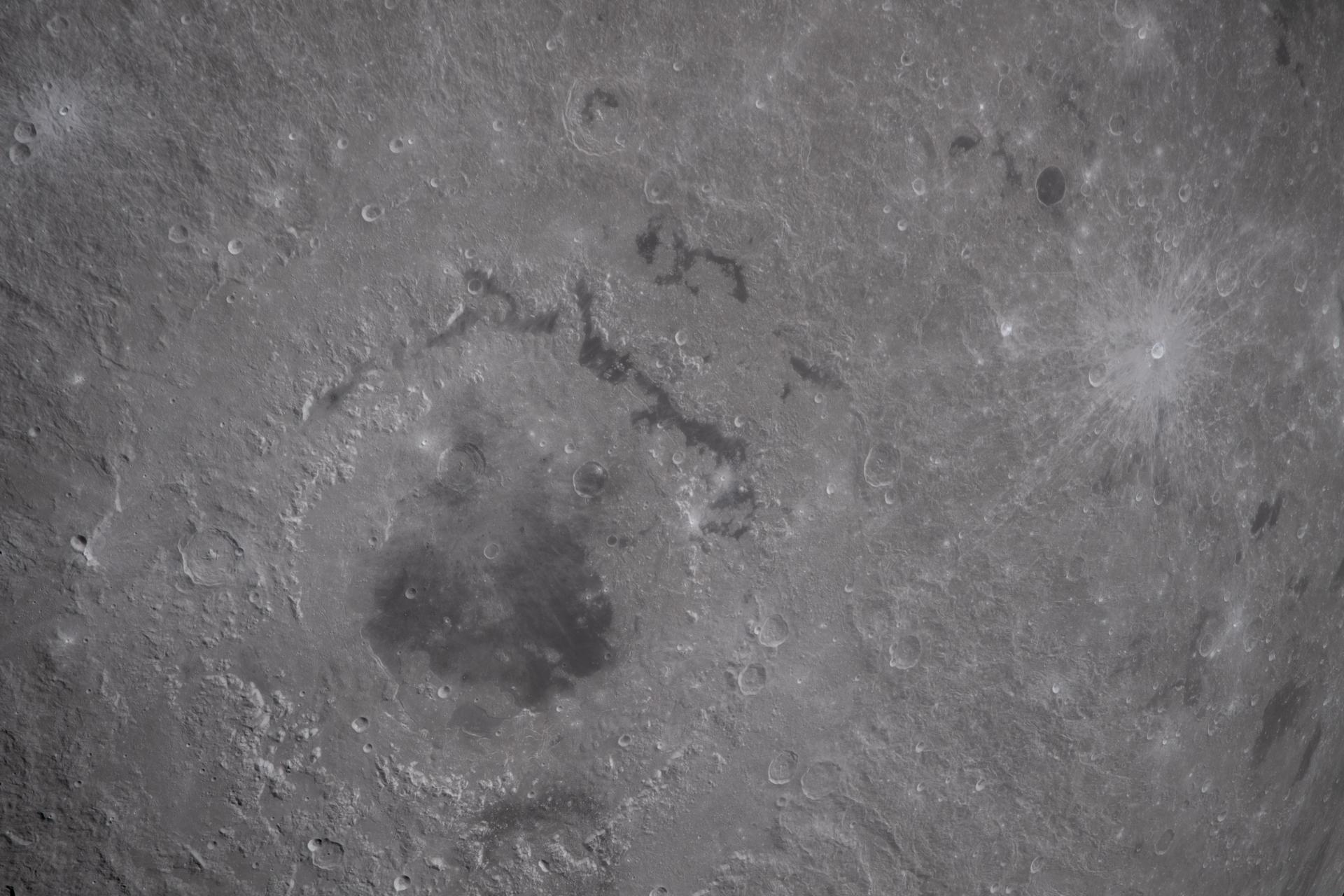
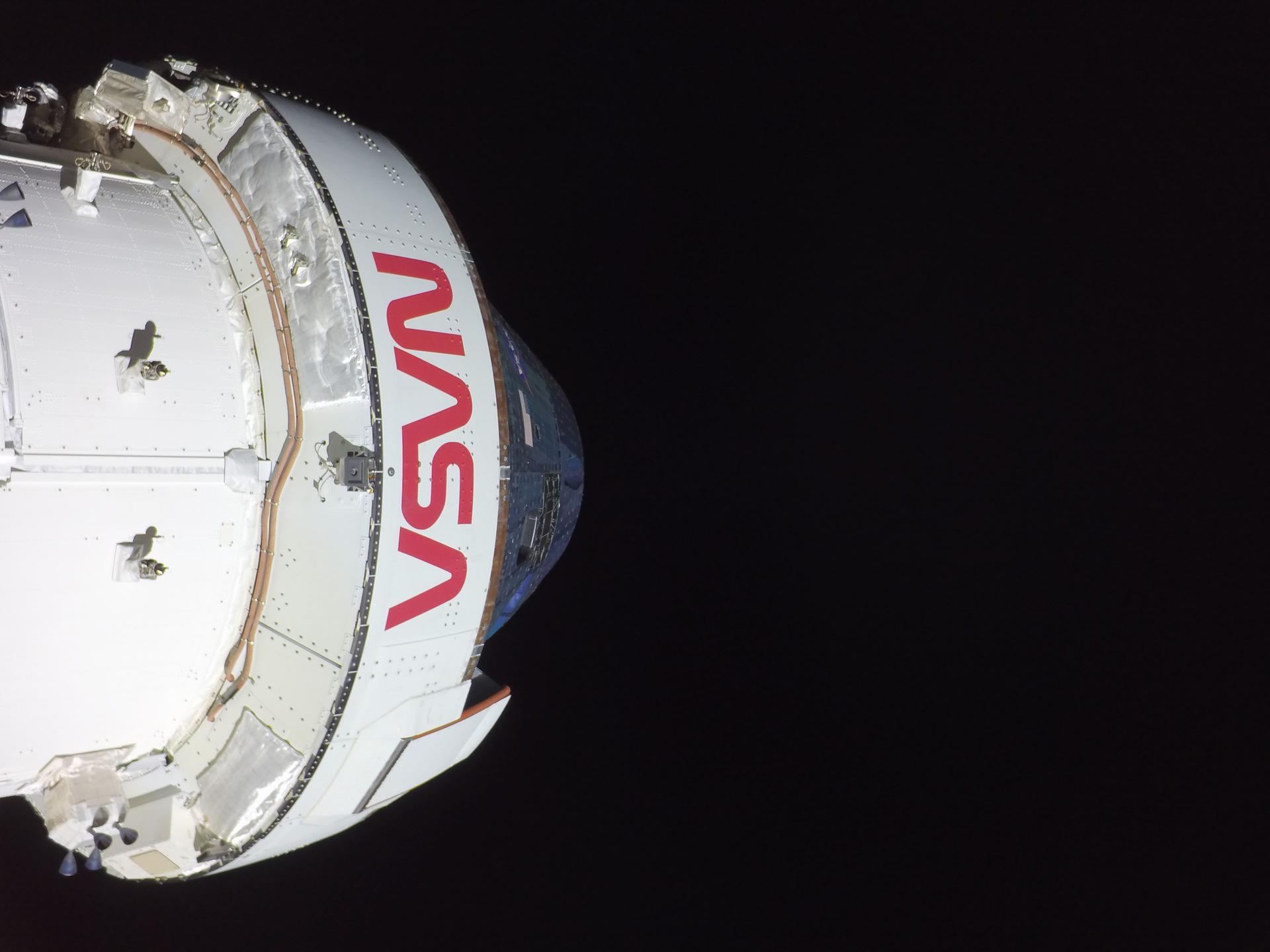
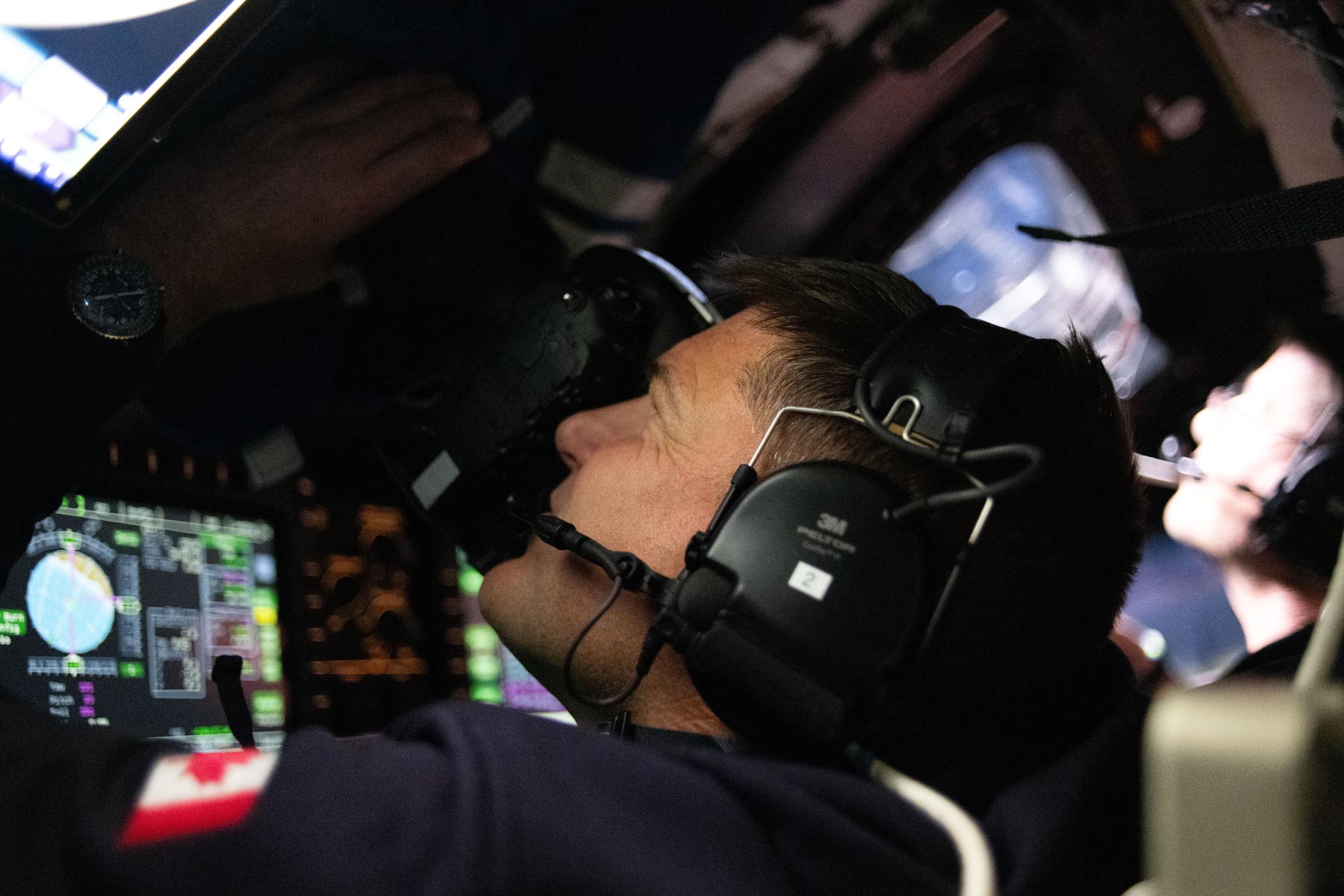
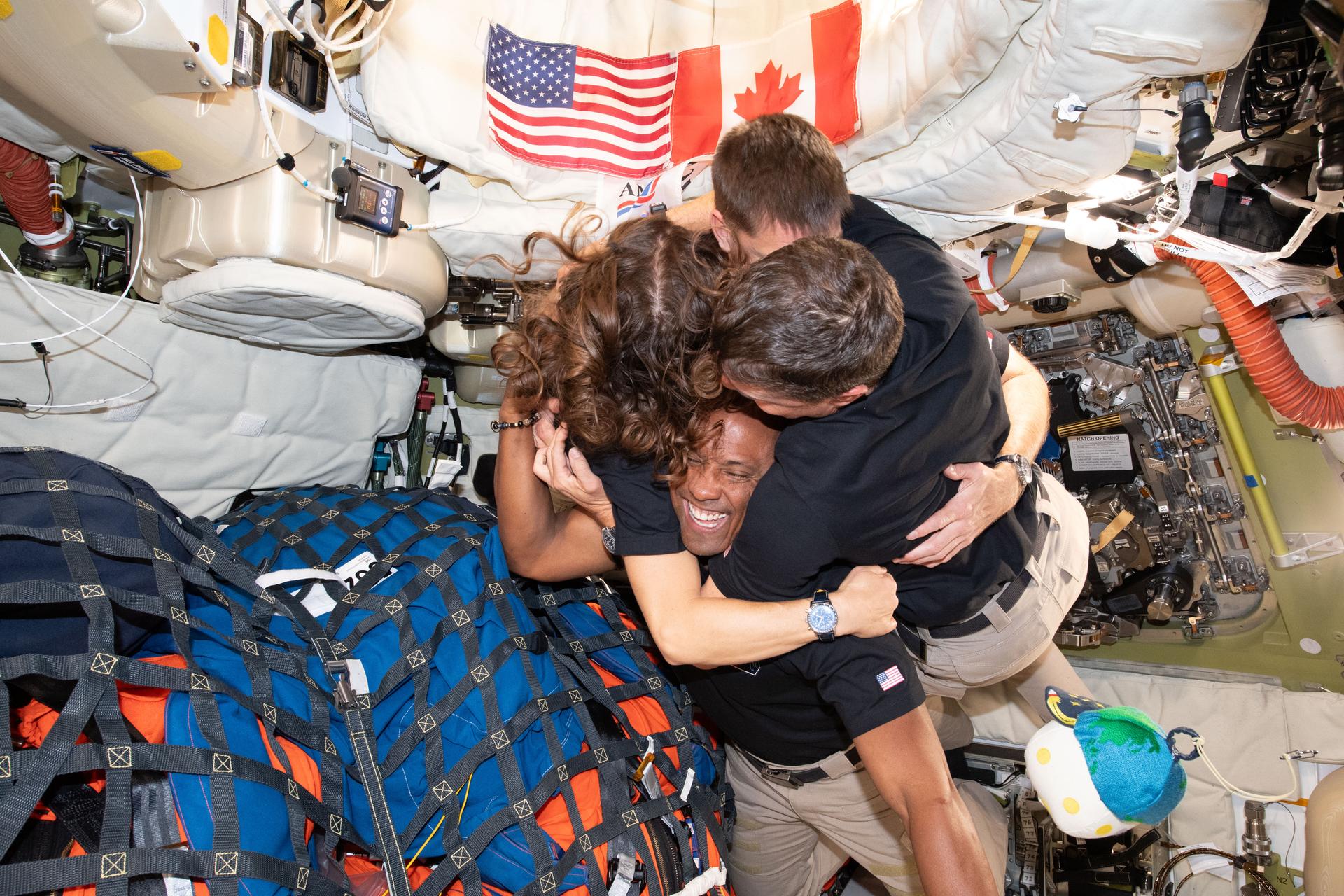
The Artemis II crew captures a portion of the Moon coming into view along the terminator – the boundary between lunar day and night – where low-angle sunlight casts long, dramatic shadows across the surface. This grazing light accentuates the Moon’s rugged topography, revealing craters, ridges, and basin structures in striking detail. Features along the terminator such as Jule Crater, Birkhoff Crater, Stebbins Crater, and surrounding highlands stand out. From this perspective, the interplay of light and shadow highlights the complexity of the lunar surface in ways not visible under full illumination. The image was captured about three hours into the crew’s lunar observation period, as they flew around the far side of the Moon on the sixth day of the mission. Image and caption: NASAEarthset captured through the Orion spacecraft window at 6:41 p.m. EDT, April 6, 2026, during the Artemis II crew’s flyby of the Moon. A muted blue Earth with bright white clouds sets behind the cratered lunar surface. The dark portion of Earth is experiencing nighttime. On Earth’s day side, swirling clouds are visible over the Australia and Oceania region. In the foreground, Ohm crater has terraced edges and a flat floor interrupted by central peaks. Central peaks form in complex craters when the lunar surface, liquefied on impact, splashes upwards during the crater’s formation. Image and caption: NASACaptured from the Orion spacecraft near the end of the Artemis II lunar flyby on April 6, this image shows the Sun beginning to peek out from behind the Moon as the eclipse transitions out of totality. Only a portion of the Moon is visible in frame, its curved edge revealing a bright sliver of sunlight returning after nearly an hour of darkness. In final moments of the eclipse observed by the crew, the reemerging light creates a sharp contrast against the Moon’s silhouette and reveals lunar topography not usually visible along the lunar limb. This fleeting phase captures the dynamic alignment of the Sun, Moon, and spacecraft as Orion continues its journey back from the far side of the Moon. Image and caption: NASAThe Moon seen peeking above the window sill of the Orion spacecraft during the Artemis II lunar flyby on April 6, 2026. The Artemis II crew spent about 7 hours at the Orion windows during the flyby, taking photos and recording observations on the Moon to share with scientists on the ground. Image and caption: NASAA close-up view taken by the Artemis II crew of Vavilov Crater on the rim of the older and larger Hertzsprung basin. The right portion of the image shows the transition from smooth material within an inner ring of mountains to more rugged terrain around the rim. Vavilov and other craters and their ejecta are accentuated by long shadows at the terminator, the boundary between lunar day and night. The image was captured with a handheld camera at a focal length of 400 mm, as the crew flew around the far side of the Moon. Image: NASAThe lunar surface fills the frame in sharp detail, as seen during the Artemis II lunar flyby, while a distant Earth sets in the background. This image was captured at 6:41 p.m. EDT, on April 6, 2026, just three minutes before the Orion spacecraft and its crew went behind the Moon and lost contact with Earth for 40 minutes before emerging on the other side. In this image, the dark portion of Earth is experiencing nighttime, while on its day side, swirling clouds are visible over the Australia and Oceania region. In the foreground, Ohm crater shows terraced edges and a relatively flat floor marked by central peaks — formed when the surface rebounded upward during the impact that created the crater. Image: NASAAstronaut Jeremy Hansen captures an image through the camera shroud covering window 2 of the Orion spacecraft. The camera shroud, essentially a curtain with a hole for the lens to pass through, is used to prevent light from the cabin from reflecting on the windowpanes. Image and caption: NASAA shot from early in the Artemis II lunar flyby, taken with a smaller aperture setting, shows a moodier version of the Moon than some of the other flyby images with more typical lighting settings. The four crew members spent about 7 hours photographing and recording observations of the Moon as they flew around the far side on April 6, 2026. Image and caption: NASAArtemis II Pilot Victor Glover, Commander Reid Wiseman, and Mission Specialist Jeremy Hansen prepare for their journey around the far side of the Moon by configuring their camera equipment shortly before beginning their lunar flyby observations. Image and caption: NASAIn this view of the Moon, the Artemis II crew captured an intricate snapshot of the rings of the Orientale basin, one of the Moon’s youngest and best-preserved large impact craters on his first shift during the lunar flyby observation period. Image and caption: NASANASA’s Orion spacecraft is pictured here from one of the cameras mounted on its solar array wings. At the time this photo was taken at 9:03 a.m. ET, the Artemis II crew was in a sleep period ahead of beginning their seventh day into the mission. Image and caption: NASACSA (Canadian Space Agency) astronaut and Artemis II Mission Specialist Jeremy Hansen is seen taking images through the Orion spacecraft window early in the Artemis II lunar flyby. Hansen and his fellow crewmates spent approximately seven hours taking turns at the Orion windows capturing science data to share with their team back on Earth. Image and caption: NASAThe Artemis II crew – (clockwise from left) Mission Specialist Christina Koch, Mission Specialist Jeremy Hansen, Commander Reid Wiseman, and Pilot Victor Glover – take time out for a group hug inside the Orion spacecraft on their way home. Following a swing around the far side of the Moon on April 6, 2026, the crew exited the lunar sphere of influence (the point at which the Moon’s gravity has a stronger pull on Orion than the Earth’s) on April 7, and are headed back to Earth for a splashdown in the Pacific Ocean on April 10. The crew was selected in April 2023, and have been training together for their mission for the past three years. Image and caption: NASA