
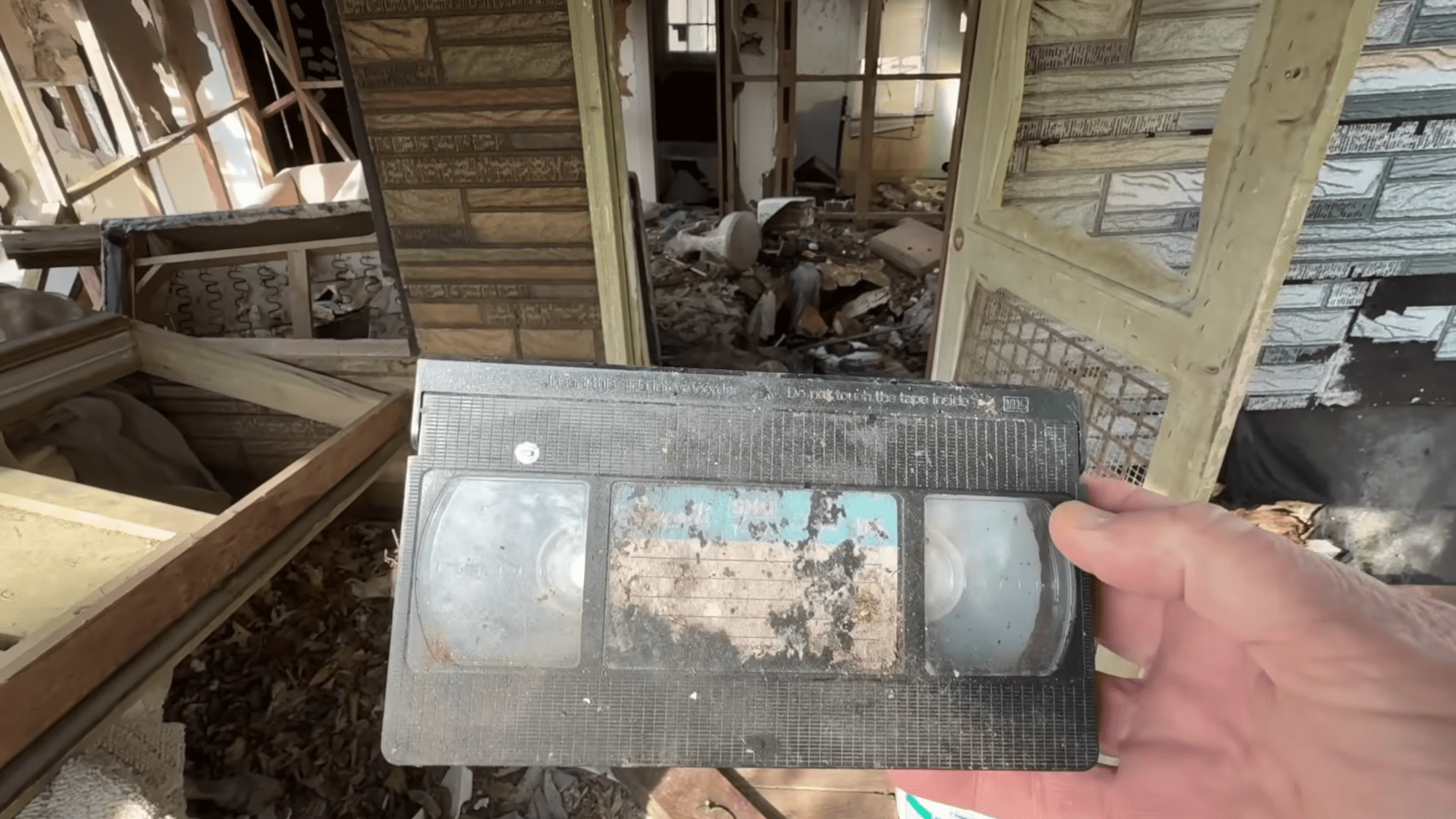
Have you ever walked into an old garage or antique store, seen a VHS tape gathering dust and wondered: would those sad old pieces of plastic still play? An eclectic YouTuber named Brady Brandwood is taking that curiosity to the extreme. Brandwood has collected a handful of neglected VHS tapes and CDs from long-abandoned buildings in Georgia and is setting out on a journey to bring them back to life. Remarkably, after likely spending more than a decade exposed to the elements, almost all of the old media still worked. Well, mostly worked, at least.
“I’ve heard the lifespan of a VHS tape is about 30 years,” Brandwood says in his video. “I’m betting it’s actually a lot longer than that. “They are obviously very durable, even when they are left out in the elements.”

What Will We Find On These Old VHS Tapes? Will They Even Play???
Searching abandoned homes for neglected VHS tapes
Brandwood has odd tastes. The regular programming on his channel (which has nearly 700,000 subscribers) normally involves chronicling the life of wild lobsters and welcoming wild animals into his home. This video switches things up, opening with him wandering through creepy, rotting homes in Georgia’s woodlands from a first-person camera view. The creaky floors, rotted wood, and strewn-about furniture make it look like something straight out of a “Resident Evil” game.
“Kinda sad, all of this will be bulldozed down soon,” he says. Something like a fast food restaurant or gas station will likely replace it. And whoever, or whatever is living in this basement will be evicted.”
The YouTuber returned to the house with his camera, because he had previously spotted some VHS tapes scattered around and wondered if there was any way to find out what was hidden on them. He left with several dirt-filled tapes as well as a handful of CDs, each showing varying levels of apparent wear and tear. One of the CDs clearly had a picture of Elvis on the front, while another had the words “The Blind Side” written in black marker.
Brandwood didn’t actually own a VHS player, so he had to visit several thrift shops to find one—a hunt he also recorded. To play back the CDs, he used an old Apple Power Mac G5 from his storage unit. But even with the correct hardware on hand, neither the VHS tapes nor the CDs would play in their current, dirt-coated state.
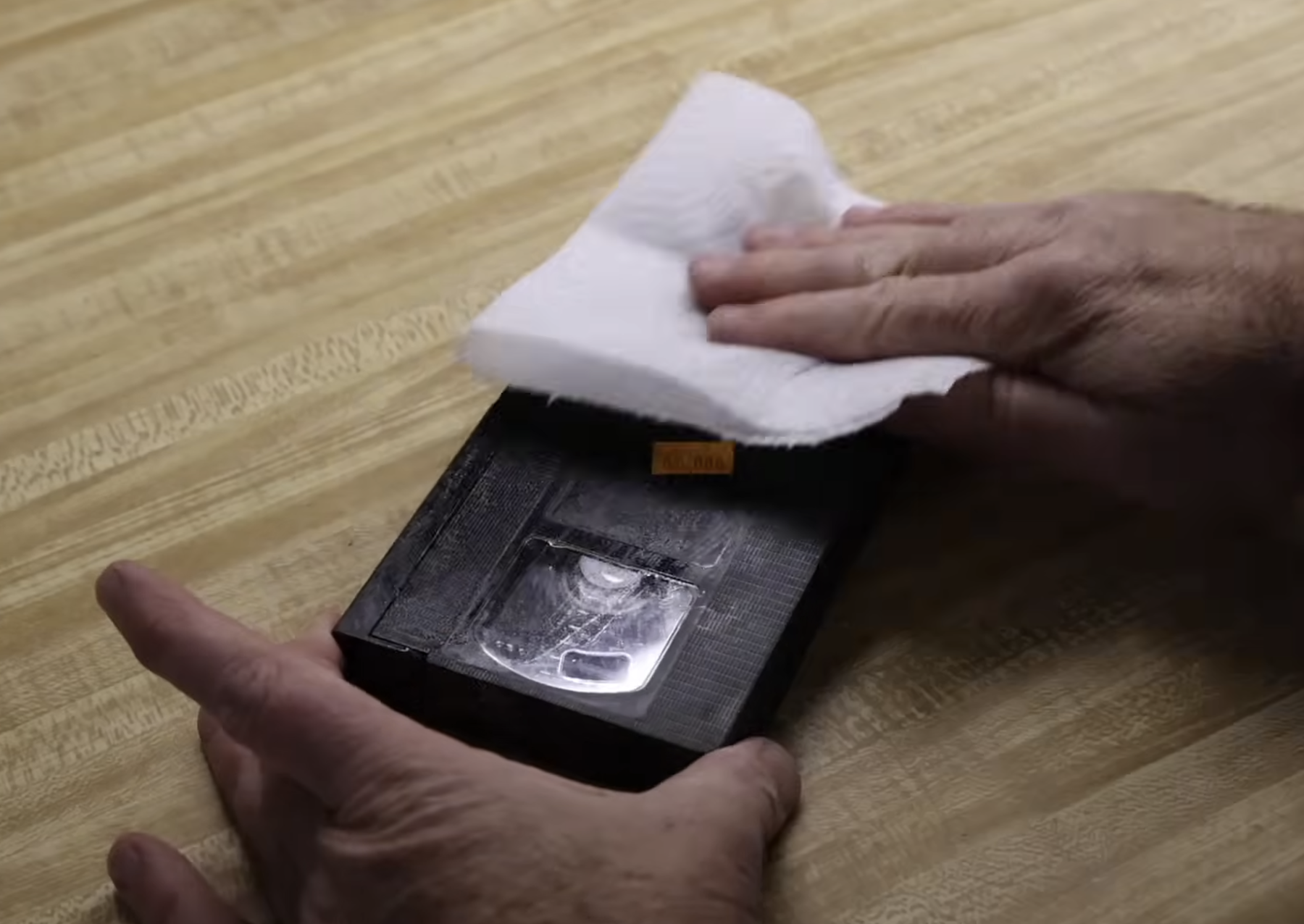
To clean the VHS tapes, Brandwood started by wiping down the exteriors to remove dirt and grime. He then opened up the top of the tape casing to get a better look at the mechanical innards. It was a mess, to say the least. Mold was growing on the inside, and a good deal of extra dirt was lodged within. Upon closer inspection, one of the tapes had apparently also served as a spider’s nest at some point.
After all that cleaning came the moment of truth. He loaded in one of the VHS tapes and, at first, nothing happened. He ejected it and loaded it once more, and this time, after a brief dramatic pause, the screen went gray and old-time swing music started playing. Moments later, the Paramount Pictures logo with the mountaintop in the background appeared. When he rewound the tape, he realized it was a recording of something from Cartoon Network. It wasn’t crystal clear, but the old tape worked.
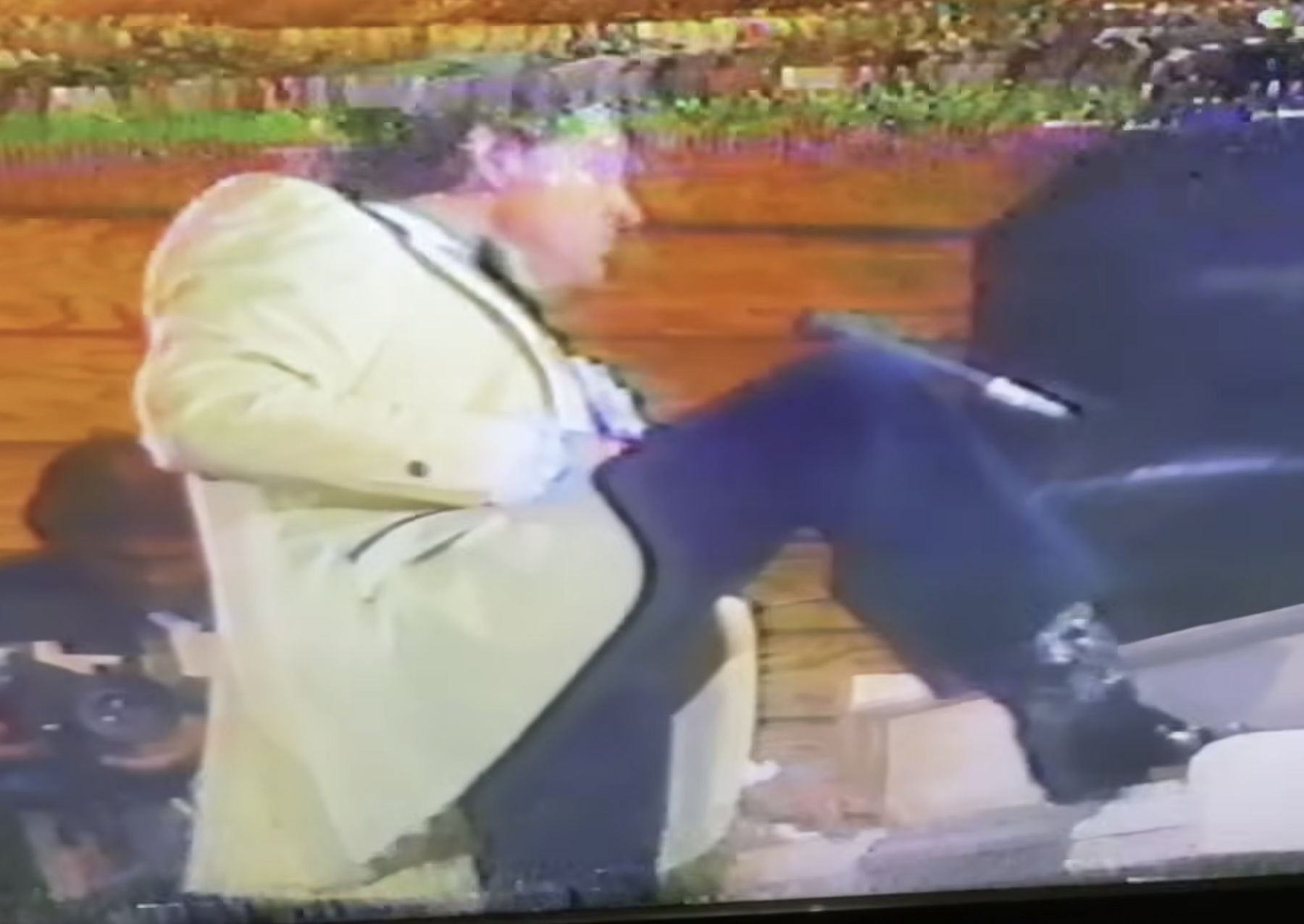
The other refurbished VHS tapes managed to play as well. One showed what appeared to be a dinosaur documentary. Another loaded up to reveal a filmed Jerry Lee Lewis concert, in which the musician can be seen playing the piano with his foot. While all of the VHS tapes were able to play, the same couldn’t be said for the recovered CDs. Some were simply too degraded, and the computer spat them back out.
The race against time to save physical media’s secrets
Brandwood set out to the abandoned VHS tapes and CDs for fun, but figuring out the science behind preserving old physical media is serious work. Around the globe, archivists are racing against time to find the best ways to immortalize degrading tech and safeguard the contents held within them.
Popular Science recently spoke with Cambridge University Library archivist Leontien Talboom who teamed up with video game enthusiasts to create a new stand for cleaning and imagining floppy disc drives. The square cartridges were the dominant medium for storing digital information throughout the last three decades of the 20th century and are familiar to anyone who remembers the Tamagotchi craze.
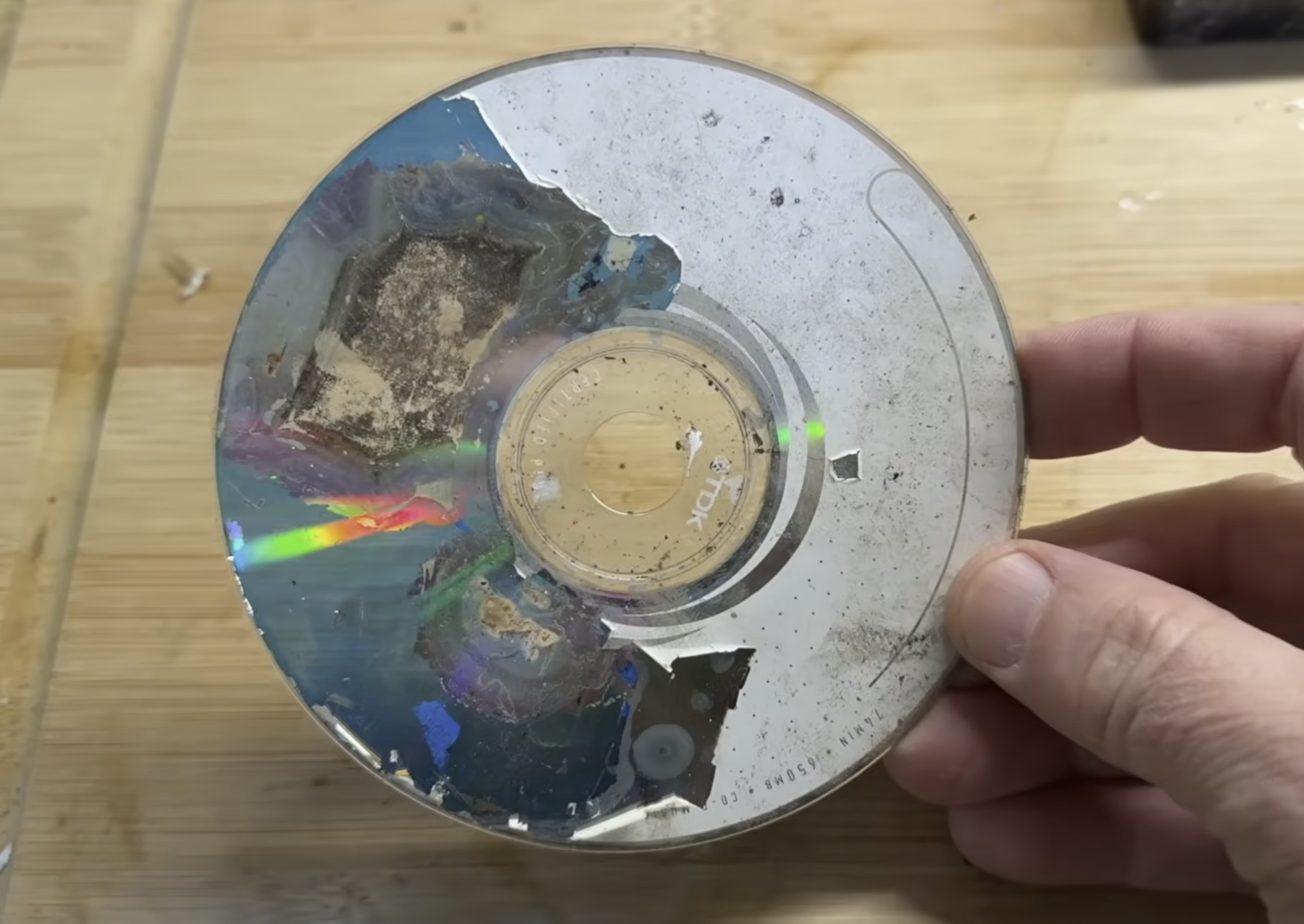
Here in the United States, archivists at the Library of Congress are actively running experiments on CDs. They’re artificially exposing them to various heat and humidity levels to see how fast they degrade, and what can be done to slow the process.
For CDs and VHS tapes alike, the best way to prolong their life is to keep them in a climate-controlled environment to prevent decay. Ironically, even though the transition from VHS to CDs was driven partly by the perception that the CDs were a more durable, long-lasting medium, Brandwood’s adventure shows that’s not necessarily the case. It turns out the humble VHS tape may have been a more robust engineering accomplishment than was previously appreciated.
