
Our ancient ancestors loved their birch tar. Neanderthals likely used the sticky substance to build and repair tools, but it also may have had another important use. With its antibiotic properties, birch tar could also treat wounds. The findings are detailed in a study published today in the journal PLOS One.
Long believed to be one of the less advanced Homo species, recent studies have shown that Neanderthals built tools, collected random items, and even made art using a type of crayon. Archaeologists frequently find birch tar at Neanderthal archaeological sites, which comes from birch trees. Some researchers have questioned if Neanderthals were using it for more than just making tools. Indigenous communities in northern Europe and Canada treat wounds with birch tar and there is growing evidence that Neanderthals employed a variety of medical practices, including helping their sick or injured comrades.
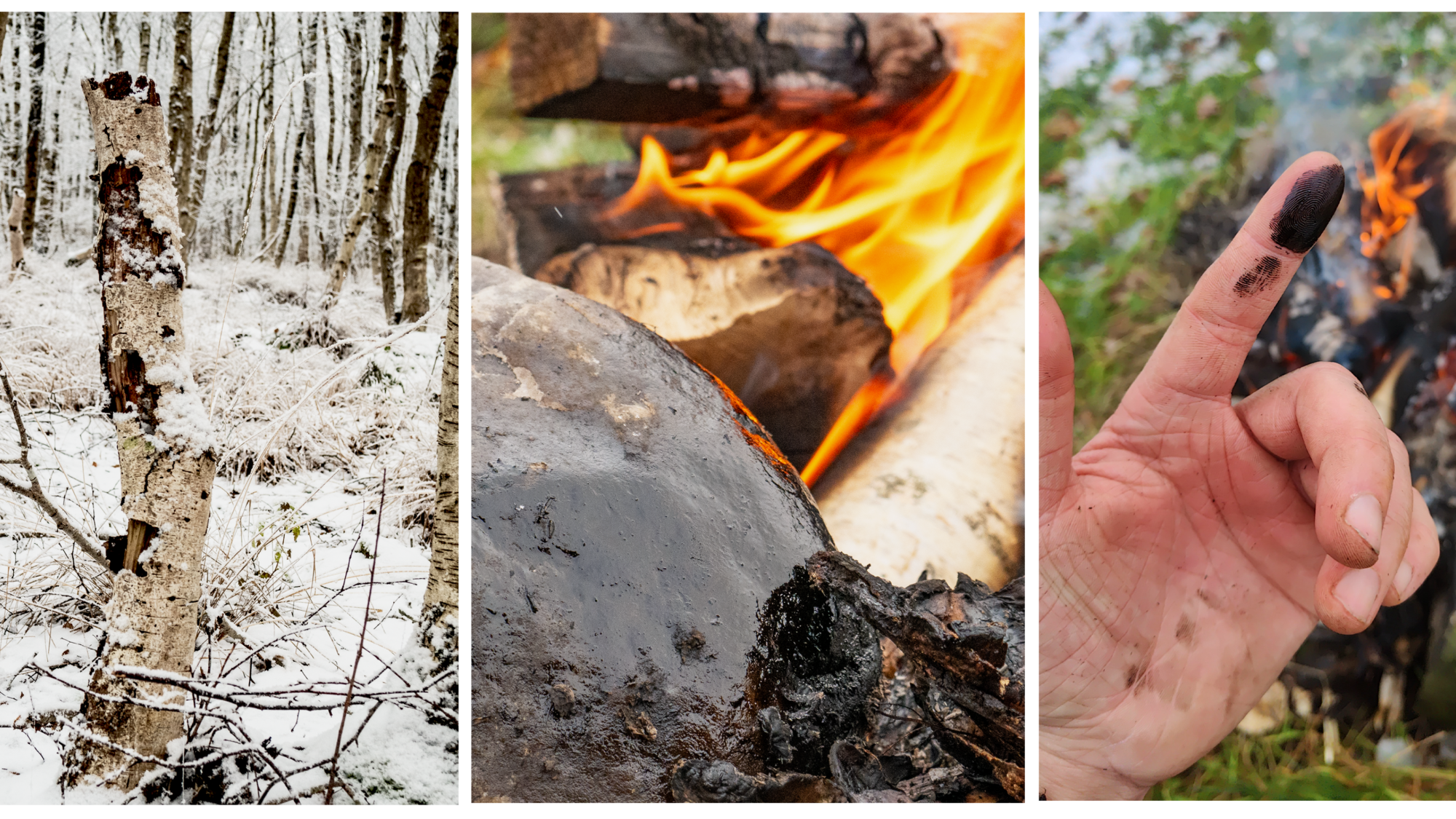
To investigate birch tar’s medicinal potential, the team extracted tar from modern birch tree bark, specifically targeting tree species known from Neanderthal sites. They used multiple extraction methods that Neanderthals would have used, including distilling the tar in a clay pit and condensing it against a stone surface.
“The messiness of birch tar production deserves a special mention,” the study’s co-authors wrote in a joint statement. “Every step of the production is a sensory experience in itself, and getting the tar off our hands after spending hours at the fire has been a challenge every time.”
In the lab, the team exposed the tar samples to different strains of bacteria. All of the tar samples were effective at hindering the growth of Staphylococcus bacteria known to cause wound infections.
Related Neanderthal Stories
According to the team, these experiments support the efficacy of Indigenous medicinal practices, and also reinforce the possibility that Neanderthals used birch tar to treat their own wounds. It also may have been used as an insect repellent.
“We found that the birch tar produced by Neanderthals and early humans had antibacterial properties,” the team said. “This has important implications for how Neanderthals may have mitigated disease burden during the last Ice Ages, and adds to a growing set of evidence on healthcare in these early human communities.”
Future studies of the potential uses of these natural ingredients could also lead to a more thorough understanding of a lost Neanderthal culture and could have a direct impact on the future of medicine as antibiotic resistance grows.
“By bringing together research on indigenous pharmacology and experimental archaeology, we begin to understand the medicinal practices of our distant human ancestors and their closest cousins,” the team concluded. “Additionally, this study of ‘palaeopharmacology’ can contribute to the rediscovery of antibiotic remedies whilst we face an ever more pressing antimicrobial resistance crisis.”
