Corrupted files may be the fault of cosmic radiation.
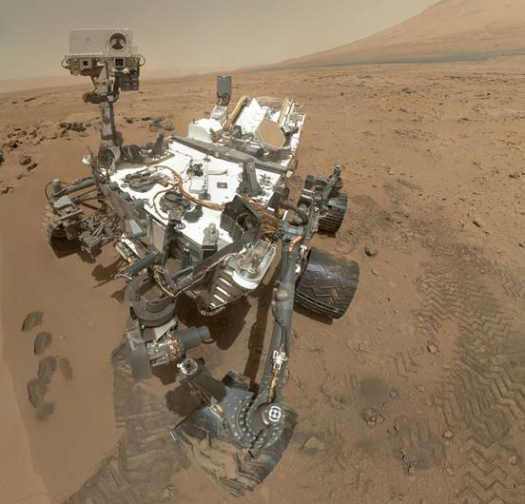
A Rover In Full
A Rover In Full NASA/JPL-Caltech

NASA's Mars rover Curiosity paused its work over the weekend and is chilling in safe mode on Mars, while engineers on Earth try to resolve a computer glitch. The rover switched to a backup computer, but operations are on hiatus while NASA engineers work on the problem.

Last week, engineers noticed a glitch in the flash memory on one of the rover's two computers. Curiosity had normal communications with Earth on Wednesday, Feb. 27, but like an annoying Facebook friend, it updated its status yet included no actual information. In the status update, engineers learned the rover did not go to sleep when planned, and when they started diagnosing the problem, they realized the main A-side computer had some corrupted files.

Meanwhile, the rover switched over to a secondary B-side computer. It used this computer for a while during the journey from Earth last year, but it's been using the A computer the vast majority of the time.

Engineers are still trying to determine the source of the corrupted files, but it could actually be the fault of cosmic rays. High-energy particles are constantly bombarding all the planets, and while Earth's magnetic field protects us from most of them, the particles can still cause secondary showers of charged particles that can inflict damage on our computers. Back in 1996, IBM apparently estimated that an average desktop computer could expect one error per month per 256 megabytes of memory. A few years ago, Intel patented the concept of building cosmic ray detectors into every computer chip.

Though Curiosity had plenty of shielding on its interplanetary journey, on the surface of Mars, it's not as well-protected. The problem happens when a high-energy particle streams into a computer chip, either creating a 0 or 1 where there isn’t one, or switching an existing bit of memory to a different state. This is called a soft error.

This is pretty lousy timing for NASA, which just started a series of tests analyzing Curiosity’s first drill sample. The rover swallowed some pulverized rock several days ago and was in the early stages of testing it. NASA said the rover should resume science investigations within a few days.

6 Comments

Must be using Windows Vista.

It's a good thing it uses vista then. Because if it were a Mac it would have cost twice as much and the only difference would have been a shiny aluminium case.

Back on topic, I had always wondered how significant solar radiation was to rovers since they more or less get rid of their shielding in entry. Good to see it's so minor though.

Must be using Windows in general man

It really won't make much of a difference since it will be buried under dozens of feet of Martian/Comet dust in about 17 months.

http://science.nbcnews.com/_news/2013/02/26/17107085-comet-just-might-hit-mars-in-2014?lite

Comet C2013-A1 has now been updated since this article was written by NASA's JPL labs to a .00037 AU mimimum from .00073 and now maximum distance is 197,000 miles and 33,000 minimum. That's with only 148 days arc. When additional data is gathered will know more of course but it's withing the error of the probability cone to impact Mars so it's possible.

If it does, there will be nothing there for millions of years worth looking at and so much dust that rovers would bog down in quicksand like dust. However hovering an orbiters in space above the huge new 1000 mile crater and 30 miles deep will be an awesome view.

But then that assumes were not dust ourselves here back on Earth.

This thing is scary big and traveling scary fast.

who exactly is taking these pictures, there is no robot arm extending out to take the picture.

@Handthumb Not possible, NASA always uses operating systems that have been tested for many years. This lander is running windows millenium edition, the newest operating system that has aged into service at NASA. The backup computer however is running windows 3.11.


June 2013: American Energy Independence

Five amazing, clean technologies that will set us free, in this month's energy-focused issue. Also: how to build a better bomb detector, the robotic toys that are raising your children, a human catapult, the world's smallest arcade, and much more.


Online Content Director: Suzanne LaBarre | Email
Senior Editor: Paul Adams | Email
Associate Editor: Dan Nosowitz | Email
Assistant Editor: Colin Lecher | Email
Assistant Editor: Rose Pastore | Email

Contributing Writers:

Kelsey D. Atherton | Email
Francie Diep | Email
Shaunacy Ferro | Email

circ-top-header.gif
circ-cover.gif
bmxmag-ps