
Last Monday NBC published a white paper from the Department of Justice about the United States's targeted killing program. Soon media outlets from PBS to Huffington Post to the Wall Street Journal to NBC itself started calling it the "drone memo."
Here's the thing: The paper hardly mentions drones. It just sets out rules for a targeted killing policy and lists "pilotless aircraft or so-called smart bombs" as possible tools for carrying out those killings. The policy itself is not technology-specific. Yet somehow drones have become shorthand for targeted killing. Why?
While it's true that drones are the best-known tool for carrying out targeted strikes, they are only one of many methods by which the United States attacks individual terrorists from afar. Here are some others:
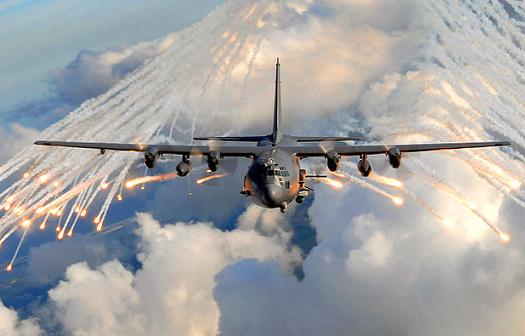
AC-130
The AC-130 is a type of gunship built on the body of a troop transport that has been in service since Vietnam. In Vietnam, AC-130s were used to attack truck convoys that could not shoot down aircraft. They carry sophisticated sensor equipment and can linger over a target for a long time, making them an ideal tool for attacking an enemy base.
In 2009, an AC-130 was used in Somalia as a targeted strike against the leader of al Qaeda in Somalia. AC-130s were part of the U.S. mission in Somalia even earlier, in a strike in 2007 against Ahmed Madobe, leader of an armed Islamic fundamentalist group. (Though he was targeted, he survived the first strike, and was later captured by Ethiopians).
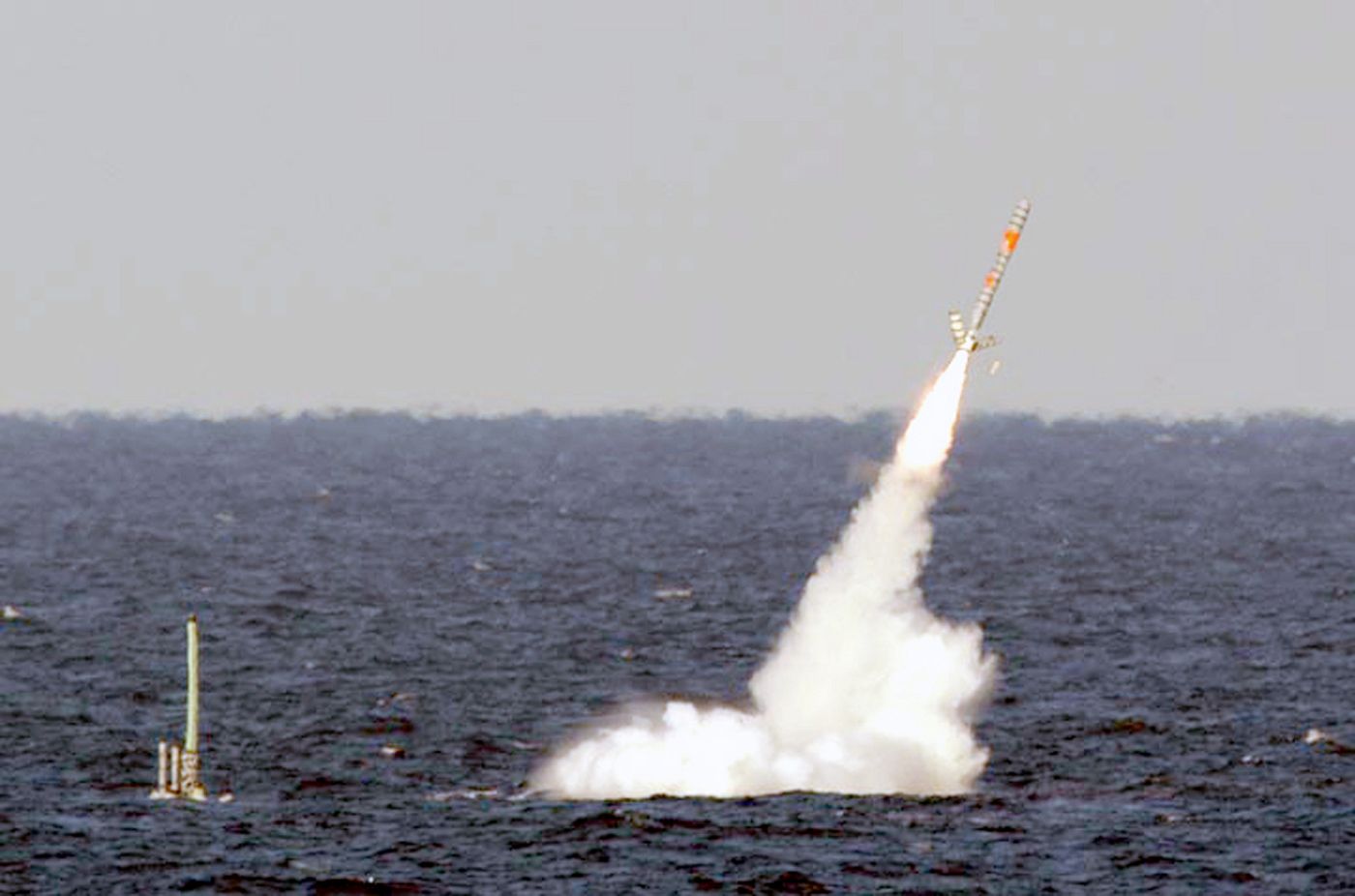
Tomahawk cruise missiles
Tomahawk cruise missiles, in use since the 1980s, are also part of the targeted killing program. In 2009, missiles were fired at an alleged al Qaeda training camp, with the goal of eliminating al Qaeda deputy Muhammad al-Kazemi.
This was hardly the first time cruise missiles were used to take out a militant leader. In 1998, at the order of Bill Clinton, the United States used cruise missiles to hit back after al Qaeda bombed U.S. embassies in Kenya and Tanzania. These attacks predate the War on Terror (and the legal justifications used), though the main target is pretty recognizable today: they were aiming for Osama bin Laden.
Special operations forces
Another way the U.S. does targeted killings is with special forces. The most famous example of this was the Abbottabad raid in May 2011. As has been told in multiple books, and adapted into a major film, Operation Neptune Spear was carried out by SEAL Team 6, with the express purpose of killing Osama bin Laden. Sending people on a strike is riskier than using a drone or a missile, but having eyewitnesses makes it much easier to know if your mission was a success--which was vital in this case.
Part of the reason we think of targeted killing as just a drone phenomenon is because so many targeted killings have in fact been carried out by drones, to the point where "al Qaeda's number 2 killed in drone strike" has been the subject of a comedy column. So it's natural to conflate the two, but most drones are used for other purposes, such as surveillance and scouting, and non-drone means have been used for targeted killings.
Drones were actually considered for Abbottabad, but Obama's desire to confirm bin Laden's death meant sending in people--which illustrates the broad range of targeted killing options available. We may talk about the "drone war" and debate the drone memo, but we're not really looking at the use of a specific technology. Instead, the "drone debate" is about policy, and how the United States chooses to attack its enemies in the War on Terror. Fancy as modern drones may be, it's the policy that makes this kind of war new.
An earlier version of the article misstated Fazul Abdullah Mohammed as the target of the AC-130 strike in 2009, left out the 2007 AC-130 strike in Somalia, and listed Qaaim al-Raymi instead of Muhammed al-Kazemi as the target of the 2009 cruise missile strike in Yemen.

The incredible innovations, like drone swarms and perpetual flight, bringing aviation into the world of tomorrow. Plus: today's greatest sci-fi writers predict the future, the science behind the summer's biggest blockbusters, a Doctor Who-themed DIY 'bot, the organs you can do without, and much more.


Online Content Director: Suzanne LaBarre | Email
Senior Editor: Paul Adams | Email
Associate Editor: Dan Nosowitz | Email
Assistant Editor: Colin Lecher | Email
Assistant Editor: Rose Pastore | Email
Contributing Writers:
Kelsey D. Atherton | Email
Francie Diep | Email
Shaunacy Ferro | Email
Words can't express the irony of this article, and specifically this statement:
"Here's the thing: The paper hardly mentions drones. It just sets out rules for a targeted killing policy and lists "pilotless aircraft or so-called smart bombs" as possible tools for carrying out those killings. The policy itself is not technology-specific. Yet somehow drones have become shorthand for targeted killing. Why?
While it's true that drones are the best-known tool for carrying out targeted strikes, they are only one of many methods by which the United States attacks individual terrorists from afar."
So, we shouldn't be focusing on drones when discussing targeted killing because they aren't the only way to conduct targeted killing, just the most efficient and frequently used tool...
The problem is really the POLICY of targeted killing... not the tools used to kill them. Fancy that.
And this one:
"Part of the reason we think of targeted killing as just a drone phenomenon is because so many targeted killings have in fact been carried out by drones, to the point where "al Qaeda's number 2 killed in drone strike" has been the subject of a comedy column. So it's natural to conflate the two, but most drones are used for other purposes, such as surveillance and scouting, and non-drone means have been used for targeted killings."
@iambronco
I'm not sure what your point is. Yes, the policy itself can be questioned (and probably should be). But the point of this article was to look at the ridiculousness of conflating the existence of unmanned aerial vehicles with a particular policy. That's all.
It's not "irony," it's the ENTIRE POINT.
@stanislausbabalistic
My point was indeed lost on you, but more importantly I agree with you and the premise of the article. I didn't need it explained to me, but thank you all the same.
I love how some people (not saying the author, mind you) will change their views based on the leader in power. If Bush had killed an American and his 16-year-old American child (in separate attacks) most Democrats would be calling for impeachment. But when the Nobel laureate golden child says it's completely lawful to murder your own citizens without trial, then the peacenik Dems approve of assassinations and defend the President.
Of course, it's possible that the blue peace hippies are just silent while the old-school blood-thirsty Democrats are speaking up.
The man is either up to some shady business or he REALLY loves messing with conspiracy theorists. He attacks Libya AFTER Qaddafi renounces terrorism. He refuses to send aid to the diplomats and aids in Benghazi even though they had 5 hours to respond and had people close by. The birth certificate originally released was CLEARLY doctored even though the cert later released had the same information on it and was either doctored better or was valid. He had banned (not sure if its still active) gulf deep-water oil drilling because it was "too dangerous" but gave money and approval to a Soros-backed deep-water drilling project in Brazil that went deeper than anything we had going.
Did I get off topic? What are we talking about again?
Double edged sword here. You take out a bad guy, one you cannot reach by normal methods. You also open yourself to possible abuse of that power. Then you have people who will squawk about that power, or the loss of a life (even a criminal life). Then there are the money, power, control folks who activate groups, the groups never mention the interests that fund them or think it awful to accept money from them. No different than environmental groups who picketed and pushed for a stop to Gulf Drilling, funded in part by George Sorros, who in turn had heavily invested in Brazilian offshore oil (where the rigs are now). Someone smell a rat?
just as Esther responded I am dazzled that someone can profit $9300 in one month on the computer. did you look at this link
jump30.ℂom
I'm not sure whether I find the author disingenuous or idiotic when he criticizes the media's belated focus on drones.
Drones facilitate a convenient, spur-of-the-moment, target-of-opportunity, low-profile attack on a foreign country, with or without a prior declaration of war (or at least hostilities). Such incursions into another country's sovereign territory can remain below the radar of the US citizenry, especially since the likelihood of US casualties is zero.
Were we to launch another form of attack, such as the alternative methods indicated in the article, the outcome would be different.
An AC130 crossing into sovereign waters would draw a rebute from the UN and any number of international policing bodies. So would an invasion by special forces. And a tomahawk cruise missile isn't all that good at cruising around looking for juicy targets of opportunity before striking, like a drone can do.
The latter options are all more premeditated actions, not hunting expeditions, and would be subject to more oversight. If you want to wage a dirty secret war, drones are the option of choice. And I think the author knows that. He's just ignoring it.
Chuck
I meant sovereign airspace when I said sovereign waters
Chuck
til I saw the check saying $6412, I have faith that...my... mom in-law could realy earning money in there spare time at there computar.. there moms best frend haz done this 4 only about 12 months and just now repayed the morgage on their cottage and bought a gorgeous Jaguar E-type. I went here, pie21.ℂOM
The sniper, or assassin on the ground, is still the best targeted killing system. Drones do have advantages, but they aren't adaptable outside their sphere. The operative on the ground is. The drone is time on station dependent, the operative isn't. The operative can limit collateral damage at will, and the drone cannot. The drone still needs their directive information from people on the ground that tell them a certain target has become visible, and then they launch a drone, but the operative on the ground could already have gone home by then.
We are trying to be a moral people who employ amoral method that still want to be seen as moral. People consider that an operative on the ground is less amoral than a drone that takes the human out of the equation. Drones do have use, but should be considered a logistical asset, not as a primary weapons platform. While we certainly arm them, they are primarily a data acquisition device.