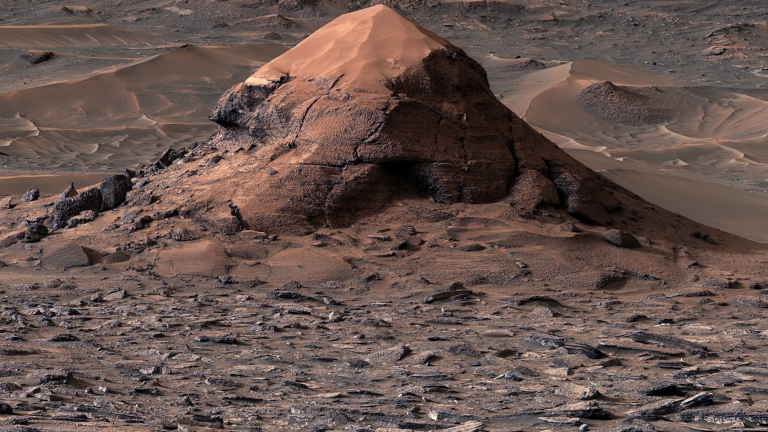
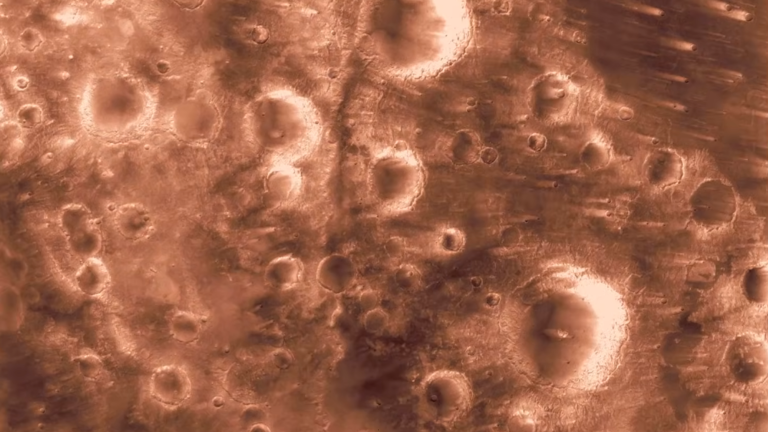
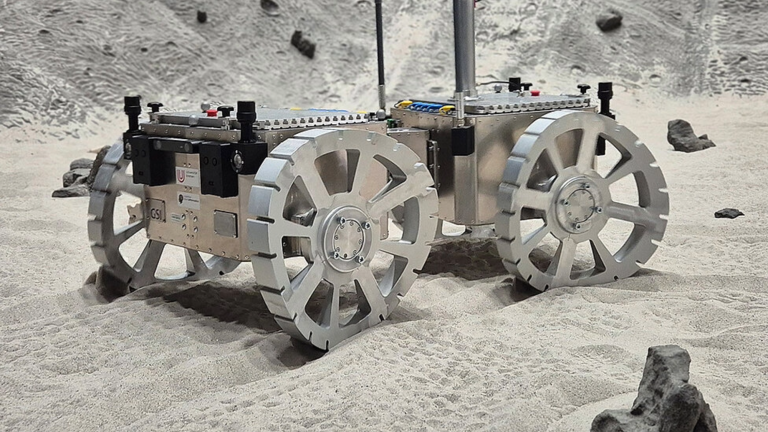
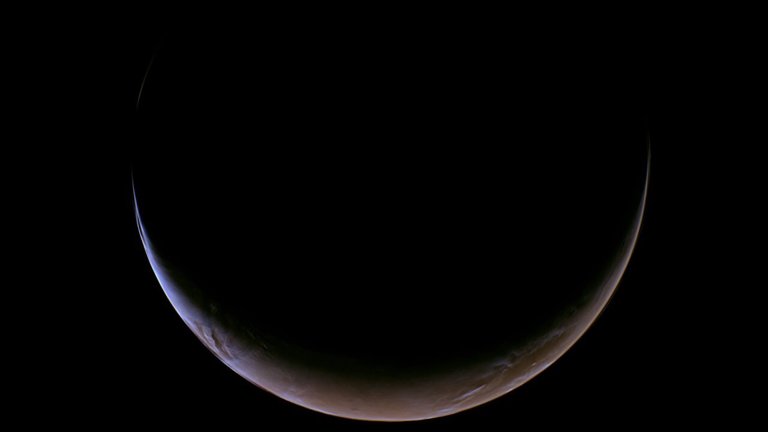
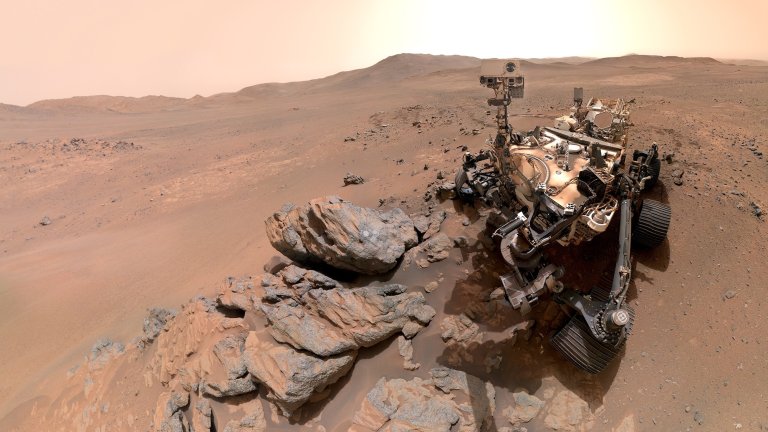
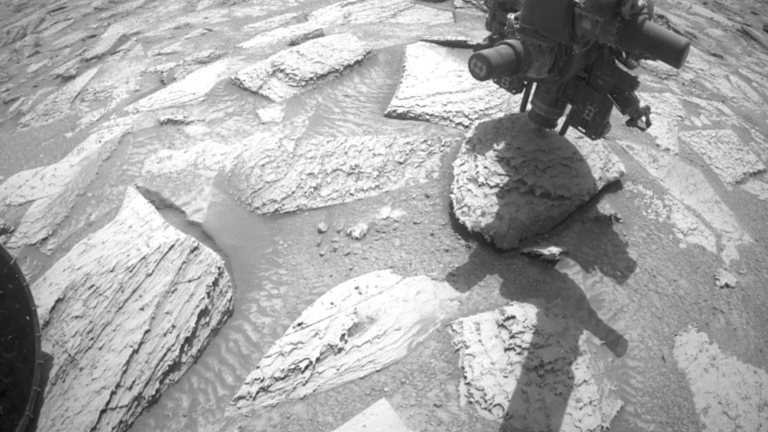
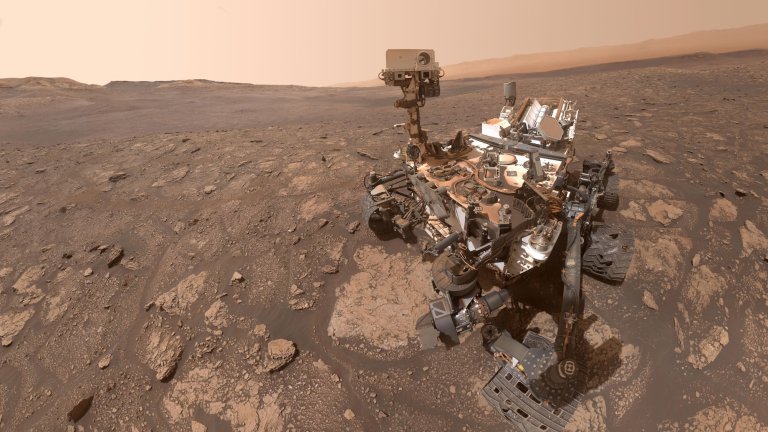
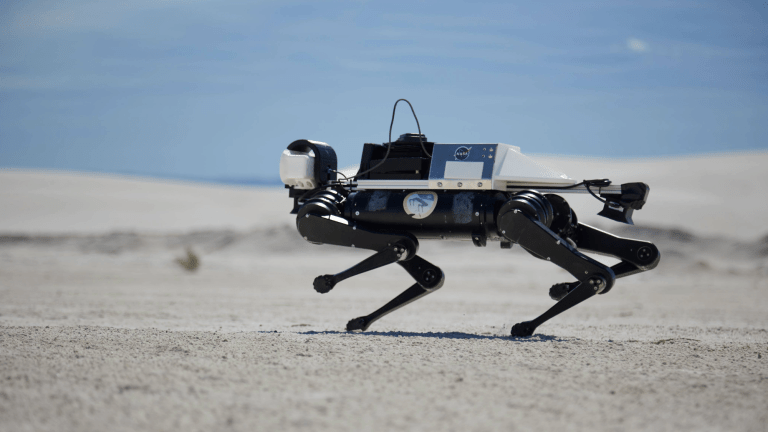
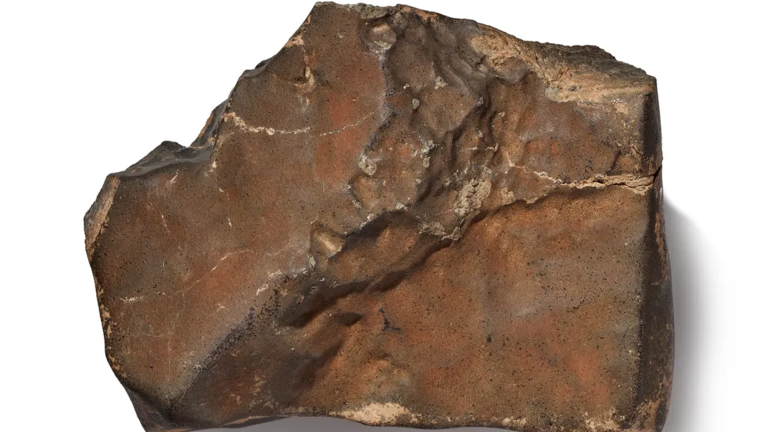
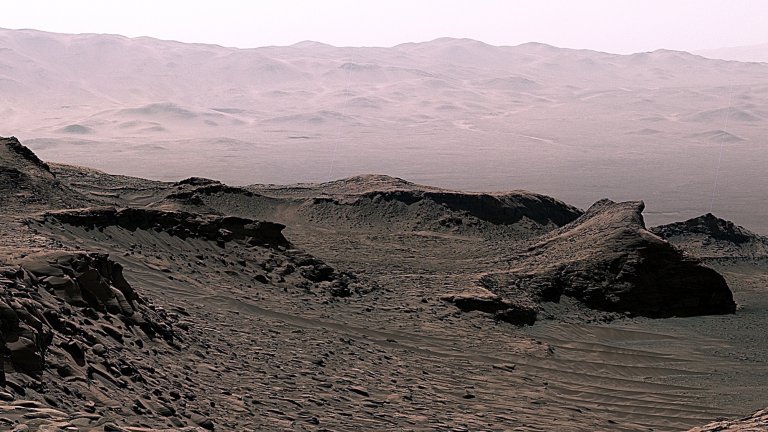
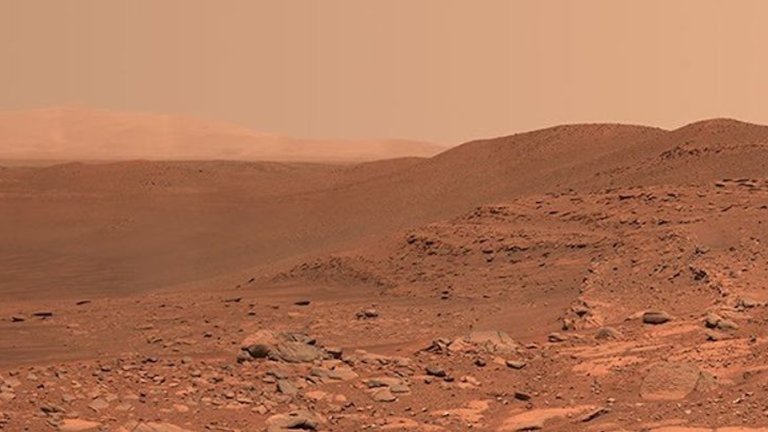
The Mars rover Curiosity, now just days from landing on the Martian surface, is something of a technological marvel, unlike anything that has come before it. It packs some of the most high-tech scientific hardware ever sent into space aboard a robotic spacecraft, delicate tools and complex systems that will allow it to conduct the most sophisticated science ever performed on the surface of Mars.
But first NASA engineers have to slow it from 13,000 miles per hour to zero in just seven minutes and place carefully into an extremely hostile environment. It's a delicate act, an art form really, but it's been done before. Curiosity doesn't stand alone, but on the shoulders of giants.
Curiosity's landing will be the most technologically dazzling landing on another planet ever conceived by human spaceflight engineers, but it isn't happening without the benefit of experience. Since the 1960s, the United States and Russia (then the Soviet Union) have been building expensive, sophisticated machines and slamming them into other planetary bodies. Some missed their targets completely, some were crushed like soda cans, some were bashed to pieces, and some lucky few made it long enough to beam a signal back home.
Thus far we've landed on nearby planets, faraway moons, and fast-moving asteroids zipping through our celestial neighborhood. We've delivered stationary landers, exploratory rovers, and in one case an orbiter that was never intended to touch down on anything at all. Take a spin through the history of robotic space landings--the ones in which everything that could've gone wrong didn't.
Five amazing, clean technologies that will set us free, in this month's energy-focused issue. Also: how to build a better bomb detector, the robotic toys that are raising your children, a human catapult, the world's smallest arcade, and much more.


Online Content Director: Suzanne LaBarre | Email
Senior Editor: Paul Adams | Email
Associate Editor: Dan Nosowitz | Email
Assistant Editor: Colin Lecher | Email
Assistant Editor: Rose Pastore | Email
Contributing Writers:
Rebecca Boyle | Email
Kelsey D. Atherton | Email
Francie Diep | Email
Shaunacy Ferro | Email
Through mistakes we learn how to do things right... In this case, that stands very apparent!!! Its amazing with all of the craziness in the world, the one thing we can still work together on, is exploring the vast universe!!!
As sophisticated as this rover us, they're still not even looking for life and have no intention to even talk about that. These evil characters with NASA lie through their teeth. They have no intention of ever finding life anywhere. They want everyone to suffer and never have the satisfaction of knowing there's life out there.
... I can't have been the only one to think that the Luna 9 probe looked like a Firefly transport. =P
@allenhri You have a much too cynical frame of mind to actually contribute a comment worthy of this board.
I believe it is well established there is nearly a zero chance of finding life on the red planet, and it is not a goal of this mission to establish the contrary. However, part of the mission is to determine whether there is evidence there was life at some point in time.
It certainly appears likely there was a viable atmosphere and liquid water which are primary ingredients for carbon based life to take root. This mission may be able to ascertain these as facts. Additionally, this mission may help us understand what happened to cause the loss of water and atmosphere, helping us to escape a similar fate in the future.
I will confidently predict that once the Rover returns, and testing is done on rock / soil samples, that eventually there will be a test for The "God Particle" / Higgs Boson -- and it will be found there, just like it was here..............
More on this subject in my upcoming book:
The Sixth Sense Activation Sequence.
Steve Meyer / HolisticDNA.
I like sharing information on.
http://www.kizi1.org | http://www.friv-2.info
I read that they are thinking of sending "colonists" on one way trips to this planet to spend the rest of their lifetimes. Why would anyone want to subject other people to a life in this hostile and desolate place.? Life there would be completely dependent on machines to produce even the minimum basics humans need to exist..We all know that machines can fail, with little warning. One little failure would mean instant death. Who could live like that?
Mars is not compatible with human life and it probably never could be.
Explore it with probes and robots. If they fail, a few more billion dollars can replace them. For the little it would gain us, not a single human life is worth the risk of trying to inhabit such an inhumane place.
The time taken to travel the 34.8 million miles from Earth to Mars is about 8.4 months (235.2 days) . We lost 2 space shuttles and their crews just going and coming
from near Earth orbit. Leave Mars to the robots.
Odds are against life on Mars, but when do we start populating the red planet not just to populate the planet to to jump start the inspiration of innovation and invention. Great inventions come from demand and once there better transportation and communication will be the next goal.
Having the need gives way for answers.
Thanks for giving me the useful information. I think I need it. Thank you
http://www.yepi10.net/
http://www.yepi4.co/
Thanks for giving me the useful information. I think I need it. Thank you
www.friv6.info
www.friv1.co
yepiclip.com
Play Game via internet is a great technology with which a user can reduce his boredom and can entertain himself to the fullest possible extent. So people go ahead and delight some games to refresh yourself
http://yepifree.com/
http://www.yepi1.info/