Laser light can not only trigger lightning but redirect it, causing it to strike in the same place over and over, according to new research. This means lasers could serve as lightning rods. Because that would be awesome.
Laser lightning rods have been a research subject for several decades, because they could trigger lightning and guide it to a specific place. Firing a laser would create an ionized channel in the atmosphere, which could conduct the lightning to the ground. Laser lightning rods could be an alternative to lightning rockets, according to Aurlien Houard of the Laboratoire d'Optique Appliquée in Palaiseau, France, a co-author of this study. Lightning rockets can apparently trigger a lightning strike by bringing a conductive material, like some type of salts, toward the static layer of a thunderhead. But a laser would be easier to control than a rocket.
A team of French researchers set out to test how well lasers can harness and control lightning. They sent a laser beam past a spherical electrode toward an oppositely charged flat electrode. The laser stripped away the outer electrons from the atoms in its way, ionizing the pathway between the electrodes and creating a plasma filament — like lab lightning — that channeled an electrical discharge from the flat electrode to the spherical one.Then the team added a longer, pointed electrode to their set of electrode shapes and watched what happened. Left to its own devices, lightning follows the path of least resistance, striking the first thing it comes across — in a thunderstorm, that’s the tallest thing, and in this experiment, it’s the nearest thing. With no laser lightning rod, the discharge predictably hit the tall pointed electrode first. But when the researchers used the laser filament to guide it, the electrical discharge followed the ionized path and hit the spherical electrode instead.
The team found they could pull this off even after the discharge was already on its way, meaning they could divert the path of lightning. The research appears in the American Institute of Physics journal AIP Advances.
Five amazing, clean technologies that will set us free, in this month's energy-focused issue. Also: how to build a better bomb detector, the robotic toys that are raising your children, a human catapult, the world's smallest arcade, and much more.


Online Content Director: Suzanne LaBarre | Email
Senior Editor: Paul Adams | Email
Associate Editor: Dan Nosowitz | Email
Assistant Editor: Colin Lecher | Email
Assistant Editor: Rose Pastore | Email
Contributing Writers:
Rebecca Boyle | Email
Kelsey D. Atherton | Email
Francie Diep | Email
Shaunacy Ferro | Email
So when can I charge my Nissian Leaf with lightning?
the military is the only people that are really going to benefit from this
@8p
Not really.
A) in civilian world, now that we have a reliable guiding technique, harnessing electricity for powering the grid may become feasible.
B) the ang required to first pass near your target and then to the source of the lightning would mean that the laser needs to be reasonably close to the target, making it more a defensive weapon than offensive.
@Rebecca Boyle,
that WOULD be awesome :-)
That's Totally WICKED!!!
airplanes could benefit greatly from this.
instead of absorbing the lightning, they could deflect it and flying through a hurricane is a piece of cake :D
Imagine if it were possible to store the lightning discharges.
Actually, the use of a laser to direct man-made lightning strikes has been a theoretical weapons system for 30 years.
I don't mean to sound simplistic, but all we need are capacitors that can absorb the discharges and somewhat quickly feed the power to batteries.... then the batteries can be used to power whatever needs it.
You could use that laser to pull lightening to huge liquid salt battery plants (about the size of a football field) to heat up and liquify the salt and you would have a perfect above ground geothermal power plant that could produce all the electricity you will ever need...free. No more fossil fuel like coal, oil, nuclear, or natural gas needed.
Now that we have found a way to harness and channel the 1.21 gigawatts from a bolt of lightning into the flux capacitor -- I mean time travel is inevitable! ;)
I can only imagine what this is going to do to delorean sales! ;)
Doc Brown would be happy!!!
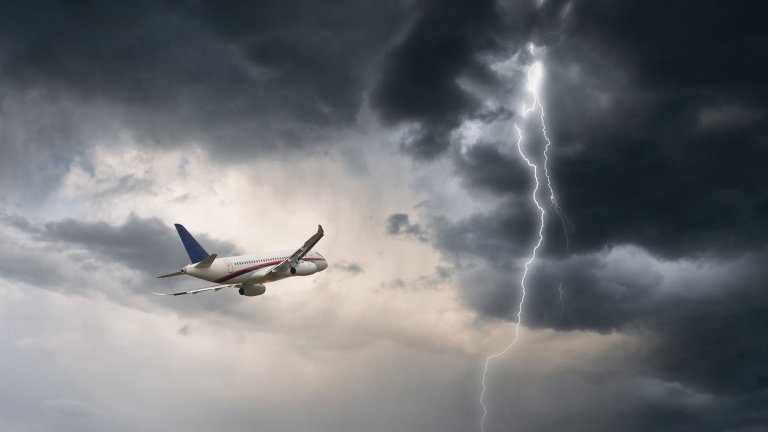
This picture in the article is of "Buzz Lightyear", from Toy Story crash landing trail into a city as he was hit by a laser from that evil Evil Emperor Zurg!
Drat that Zurg! Do not worries, Buzz will recover and fight again another day!
Hurray, Buzz Lightyear!!!!!!!!
.............................
Science sees no further than what it can sense, i.e. facts.
Religion sees beyond the senses, i.e. faith.
Super Conducting Super Capacitor Executive Summary
Link to U.S. Patent Application
No. 12/772,213 U.S. Publication No. US2011/0267011
The tops of wind mills are perfect places for positioning electrodes for accepting lightning strikes, (note that currently existing Lightning Rods on tops of buildings worldwide can be used as electrodes to a super capacitor by simply running the LR to a power line instead of into the ground); and if the Super Capacitor is completes a circuit through a step down transformer to the battery system, a constant positive charge on the electrode some 300 feet in the are which will attract negatively charged lighting; and if the polarity is switched, a negative charge on the electrode will attract positively charged lightning from the upper atmosphere, which is ten times as powerful and lower atmospheric lighting.
A recent documentary, titled: “Raging Planet”, can be downloaded from Netflix. It shows that naturally occurring lighting happens daily in places like Rwanda and DR Congo (equatorial Africa, where I have patents pending currently). This documentary explains that each negative lightning strike approximately one trillion volts, whereas, positive lightning is ten times that.
When we see lightning, all we see from the naturally occurring phenomena is that voltage when a critical mass of potential energy between the clouds and the ground. Imagine depositing a HUGE amount of ionized gas in the atmosphere (not necessarily in the clouds), thus creating a HUGE potential difference over a windmill farm having at least one windmill tip electrode having a charge to attract a lighting strike, trickle charging your battery system or my super capacitor (or both), and getting a surge of a trillion or so volts whenever is rains…etc.
I also have pending patent applications in the following countries:
Argentina, Australia, Canada, China, European Union, India, Pakistan, Israel, Japan, Korea, United States, Rwanda, DR Congo, Taiwan and S. Africa. More countries are planned for next year’s Entry in the Patent Cooperation Treaty’s (PCTs) National Phase.
Further:
Lightning of itself emits Nitrogen into the atmosphere, and Nitrogen is good for trees and plants. So generating lightning by seeding the atmosphere with ionized gas (plasma) actually helps the environment by helping rain forests thrive; as the equator swells due to hyper melting of the ice caps due to global warming, there is more rain now, and we can expect more rain in the future, and hence more naturally occurring lightning near the equator. If we can capture this unlimited energy from the atmosphere and feed it into the electric grids worldwide and for use by electric vehicles so as to replace or supplement fossil fuels, we can reverse the phenomena known as global warming.
Please feel free to pass along to interested parties.
A typical lightning bolt does not contain a whole lot of energy, approximately 2 million joules which is enough to power a 100 watt bulb for 5.5 hours. This amount of energy is explosive when released in microseconds and results in the brilliant flash and thunder of a lightning bolt.
http://en.wikipedia.org/wiki/Lightning