Largest Undersea Cable Ever Could Export Iceland’s Abundant Geothermal Power to the Rest of Europe
Hoping to take advantage of its violent volcanic heritage, Iceland is contemplating building the world’s biggest undersea electric cable, so...
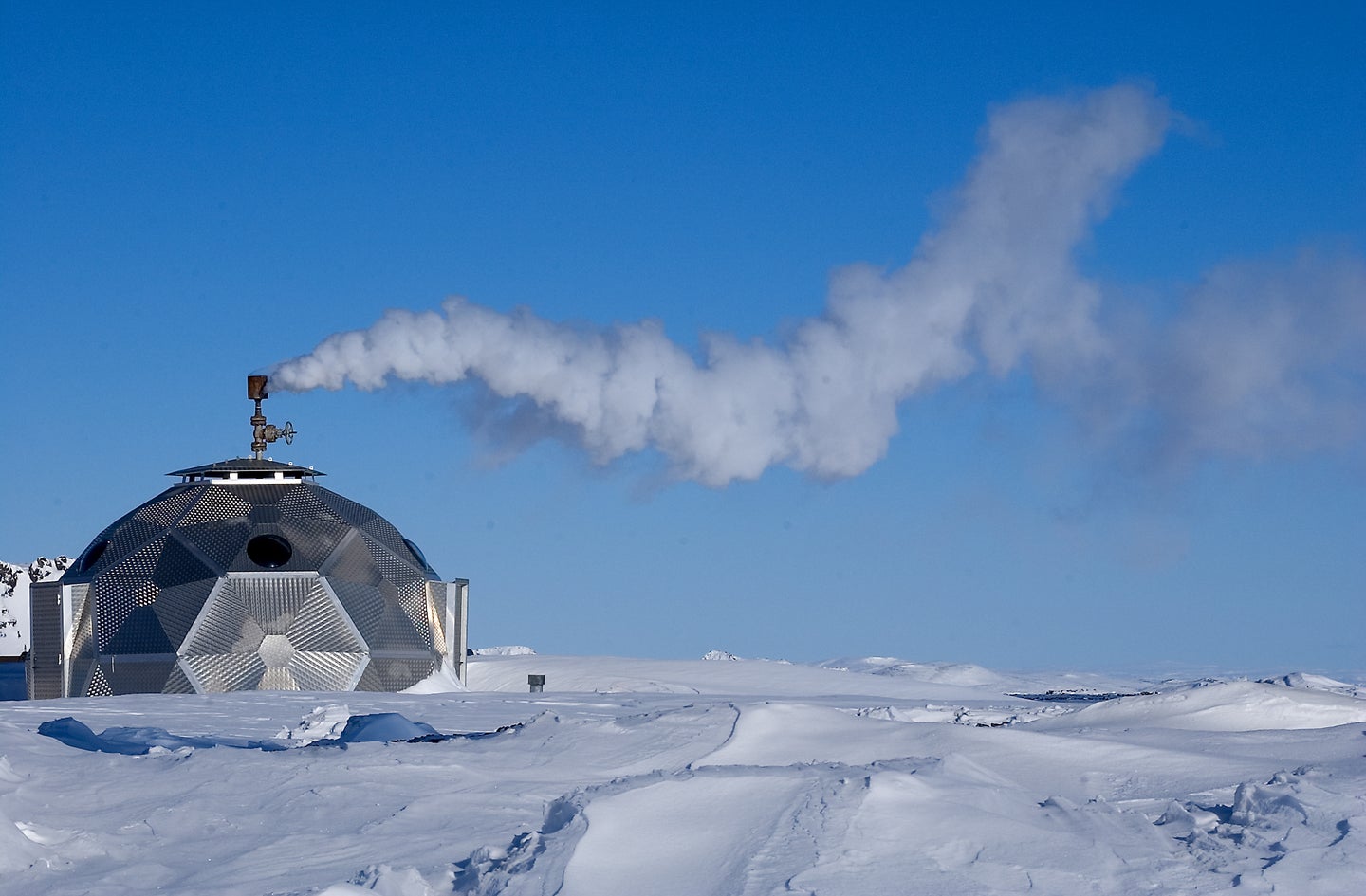
Hoping to take advantage of its violent volcanic heritage, Iceland is contemplating building the world’s biggest undersea electric cable, so it can sell geothermal power to other European nations. If it works, it could export enough electricity to power 1.25 million homes.
Landsvirkjun, Iceland’s state-owned energy company, is studying the feasibility of building a cable to countries like Great Britain, Norway, the Netherlands and Germany, according to AFP. Depending on the recipient country, the cable would be between 745 and 1,180 miles long. Such a plan would help Iceland’s economy recover both from the worldwide financial collapse and from the impacts of last year’s massive eruption of Eyjafjallajökull.
As PopSci explained in 2009, it’s easy to produce geothermal energy in Iceland. The island is essentially a big volcano, its land mass bubbling up from the seafloor over the millennia. Tapping the heated water below the crust is as simple as digging a well and putting a power plant over it. Steam spins a turbine that drives a generator, just like any other power plant — except no coal or natural gas is burned to generate the steam, because it all comes from the ground.
This is different from other geothermal projects in the U.S. and Switzerland, which inject water through cracks in bedrock, where the water can be superheated. That method has been shown to cause earthquakes. The Icelandic version uses water that’s already in the ground, which absorbs rainfall.
In 2009, geologists and engineers were drilling into Krafla, an active volcanic crater, in the hopes of reaching superheated water and turning it into electric power. But when they hit 6,100 feet, they were stymied by magma flowing into the borehole. The drilling stopped, but not to be undone, the scientists used a National Science Foundation grant to study using magma as an energy source. In a study published in this month’s issue of Geology, scientists report the dry steam from magma wells like the one at Krafla could generate 25 megawatts of electricity — enough to power 25,000 to 30,000 homes.
Iceland already derives about a third of its electricity from geothermal plants, and almost all the rest comes from hydropower — the country uses hardly any fossil fuels, according to Landsvirkjun (with Google Translate). Nearly all Icelandic homes are heated with geothermal energy. So extra energy from wells like Krafla could conceivably be exported to other countries that are more dependent on fossil fuels.
The Landsvirkjun study aims to export five terawatt-hours per year, according to AFP. At current energy prices, that could be worth $350 to $448 million every year — a nice infusion of cash for a country that saw all its banks fail back in 2008, and which was hammered by Eyjafjallajökull’s ash clouds last spring.