Balloons on Titan Up and down, up and down ... NASA

NASA's original concept for a balloon scout on Saturn's moon Titan called for using waste heat from a radioisotope power system. But such systems come with the major downside of not providing enough heat for sudden course changes -- a problem that one company plans to solve by using hot air balloon technology, The Register reports.

Titan's atmosphere consists of 4 percent methane, which could help fuel an air-breathing system for a balloon. That would provide an extra heat boost up to 10 times greater than the main heat source in case of sudden looming mountains ... not that NASA would allow for such sloppy steering, right?

Keep in mind that hot-air ballooning on the alien world works in reverse of the usual procedure on Earth. NASA's balloons would burn oxygen by using methane from Titan's clouds, rather than burn a stream of methane and other gases by using oxygen, as a balloon in Earth's atmosphere does.


The nifty concept comes from Aurora Flight Sciences, which received NASA funding through a Small Business Innovative Research (SBIR) Phase 1 proposal. The company will have help from NASA's Jet Propulsion Laboratory in California, according to an Aurora press release.

Aurora's other projects include an unmanned vertical-takeoff aircraft for the U.S. military.

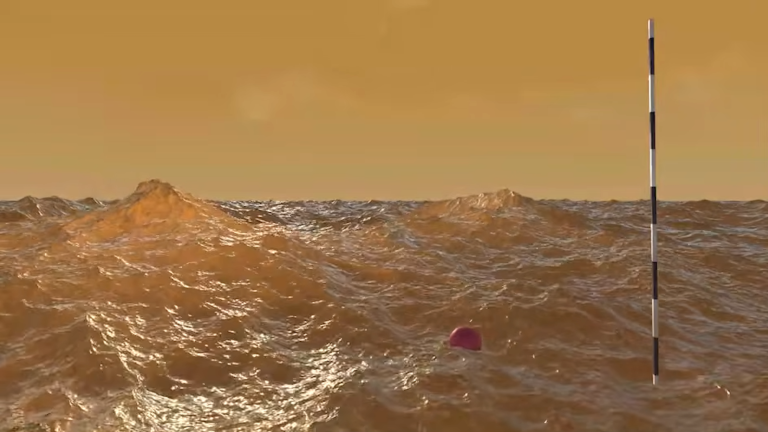
We can already anticipate a busy future for Titan, with all the balloons buzzing mountains and extraterrestrial boats riding the liquid waves of ethane and methane. It almost makes up for the lack of astronaut boots on the ground.

[via The Register]

3 Comments

i can agree with this approach better than that one NASA has about sending a glider to Mars for a one-hour flight (after 5+ years of research).

That's great news Titan is a perfect place for Balloons because the atmosphere is so dense, about 4 times the density of earths. A relatively small balloon can be used.

However, I am troubled by them using that new way to do it. They still have to carry the oxygen to Titan there is no oxygen in Titans atmosphere, liquid oxygen is 8 times heavier than liquid hydrogen. Liquid oxygen requires cryogenic's. Methane, Hydrogen or RTG's that produce heat should be used, with "The Windsurfer."

You wouldn't have to take the lifting gas to Titan, methane could be extracted out of the air on Titan by fractional distillation of the air after a probe lands. This process would be easier to do on Titan then we currently do it on earth because the temperature is low enough there and the density of the air is high enough that it would be a relatively simple process. Methane is a lot lighter than nitrogen which makes up 98.4 percent of Titans atmosphere so it would be a good lifting gas. Using the difference in melting points of Nitrogen 63.2 k vs methane 91 k it could easily be extracted out of the air, in other words you wouldn't have to look for a methane lake to fill up the tank. The RTG's can be used to provide some heat to the inside of the balloon to keep the methane from becoming liquid and to keep the hydrocarbons from building up on the outside of the balloon.

Super-pressure balloons on Titan should be used in place of a hot air balloon like the one mentioned, because of the density of the air on Titan a super pressure-balloon can be much thicker than one on earth therefore much more durable. A multilayered super-pressure balloon can last for years..

"The Windsurfer" is a ground hugging rover attached to a tethered balloon and can hug the terrain climbing up any mountains or descending down any valley while being pulled by the winds current on the balloon and sail/ drag chute.

Therefore no problem crashing into mountains because the ballast, the rover, is making sure it is close to the surface moving over the terrain at all times.

Here is a place to look at "The Windsurfer"

www.shineinnovations.com/5812.html

Here is an animation of "The Windsurfer" moving over the Martian terrain as presented several years ago at the Mars Society Conference to be used to make IMAX HD 3D movies and theater type 3D Disney Land rides:

www.youtube.com/watch?v=Yg9OCyyPi4M


138 years of Popular Science at your fingertips.

Innovation Challenges


Popular Science+ For iPad

Each issue has been completely reimagined for your iPad. See our amazing new vision for magazines that goes far beyond the printed page


Download Our App

Stay up to date on the latest news of the future of science and technology from your iPhone or Android phone with full articles, images and offline viewing


Follow Us On Twitter

Featuring every article from the magazine and website, plus links from around the Web. Also see our PopSci DIY feed


February 2012: The Future of Fun

Science is reinventing play, from extreme sports to gamification to ridiculous roller coasters to the playgrounds of tomorrow, and this issue is chock full of fun. Also, on a less fun note: Did global warming destroy my hometown?


circ-top-header.gif
circ-cover.gif