Man Ray Meets Mr. Wizard in Sugimoto’s “Lightning Fields” Photos
Hiroshi Sugimoto is one of the most interesting photographers working today–his meditative sea- and landscapes, done with long exposures on...
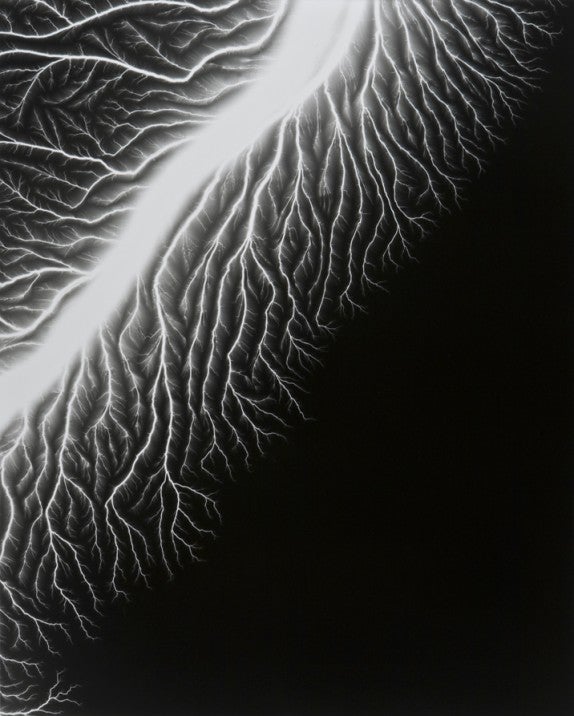
Hiroshi Sugimoto is one of the most interesting photographers working today–his meditative sea- and landscapes, done with long exposures on large-format black and white film, present nature in a austerity that borders on abstraction. Now he’s taken his look at the natural world one step further by enlisting the help of a 40,000 volt Van de Graaff generator to apply voltage directly to the film, capturing electricity’s wild patterns in the process.
There’s some irony involved, too–static electricity has long been the enemy of the darkroom photographer, with a single spark able to scar undeveloped film forever. Sugimoto’s going for the opposite here, and capturing some great work inspired by Man Ray’s famous photograms.
Or maybe Sugimoto was inspired by our own Theodore Gray, who demonstrated how to trap electricity in a block of clear acrylic with Lichtenberg figures. This is a good occasion to bring that video back up from the archives. Beautiful stuff.