Megapixels: A Living, Beating Pig Heart in the Lab, No Pig Necessary
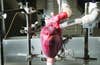
This is a pig heart, procured from a slaughterhouse, beating on a heart-pumping machine called the Heart Cart. Because pig...
Open Heart Surgery
This is a pig heart, procured from a slaughterhouse, beating on a heart-pumping machine called the Heart Cart. Because pig hearts share many anatomical similarities with humans’, scientists often use them to test new medical devices and surgical procedures. Instead of operating on the entire, living hog, which costs about $2,500 for each experiment, the Heart Cart lets researchers work on just the hearts, dropping that cost to $25, by pumping them with a saline solution to make the heart valves move realistically.
The machine has already helped in developing tools to repair damaged valves that could be used in robotic surgery. It could also be used to train human surgeons. “There’s lots of [repetitive] steps that occur during device design,” says the cart’s designer, Andrew Richards, a mechanical-engineering Ph.D. student at North Carolina State University. “I’d say a good chunk [of wasteful animal testing] at the beginning stages is eliminated.”