Scientists create an image of the five-million-atom-large capsid
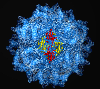
Handle with Care: To protect itself, a virus like the one shown here uses a protein shell to seal off its genetic payload  J. Tao and J. Pan (Take a closer look!)

After three years of piecing together hundreds of individual x-ray images, researchers were able to produce the first high-resolution picture of the five million atoms that make up a virus's protective shell. The yellow- and red-colored ribbons were highlighted to illustrate how four identical proteins join to form the building block of the blue-hued shell, or capsid, of the Ps V-F penicillin fungus-attacking virus.

The virus does not infect humans, but its shape is similar to those that do, making it a valuable model for developing future medical treatments. "If we know how to package a virus, we could apply that information to gene-therapy delivery mechanisms and disease control," says Yizhi Jane Tao, an assistant professor of biochemistry and cell biology at Rice University.

Want to learn more about breakthroughs in electronics, medicine, nanotech, and more?
Subscribe to Popular Science and enter to win $5,000!

0 Comments


Download Our iPhone App

Stay up to date on the latest news of the future of science and technology from your iPhone with full articles, images and offline viewing


Follow Us On Twitter

Featuring every article from the magazine and website, plus links from around the Web. Also see our PopSci DIY feed


Become a Fan On Facebook

Share links with friends, comment on stories and more


December 2009: Best of What's New

In our December issue, Popular Science names the 100 best innovations of the year: bombproof wallpaper, self-parking cars, the fastest helicopter, and 97 more. Plus inventor profiles and videos.

Check out the best of what's new here.

Popular Science Photo Pool


Share your photos in the Pop Sci pool at www.flickr.com!
tags_sprite.png
POP_embeddedForm_cover_May09.jpg