Leggo My Van Gogh
Scientists develop a database that could pinpoint forgeries once and for all
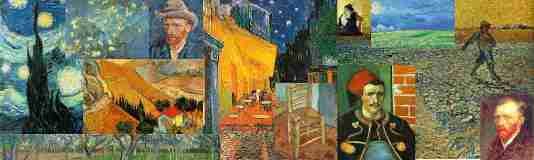
Detecting art forgeries is an inexact science—even some certified masterpieces have a cloud of doubt over their authenticity. But in recent years James Z. Wang and his colleague Jia Li have been putting Van Gogh under the microscope to create a database they hope will eventually thwart art fakers and revolutionize the detection of forgeries. Using 23 high-resolution gray scale images known to be by Van Gogh, the Penn State team broke the images down into 2.5 x 2.5 inch squares, analyzing “wavelet” based texture features and the geometric characteristics of the master’s brushstrokes. In other words, they developed an algorithm that recognizes the artist’s signature “handwriting.”
The team then used the model to analyze 78 other scans from works thought to be by Van Gogh and known copies, correctly weeding out some of the fakes. As their database increases in size and spans works from all periods in the artist’s life, they hope to create a digital fraud detector that will take most of the guess work out of the art historian’s job. “Through tackling these tough problems, we can advance the core technologies at the same time,” says Wang. “I anticipate computer scientists, art historians and mathematicians will collaborate more in the future.”