Let's Do the Time Warp Again

The science and the fiction of time travel are weird. But the science is weirder.
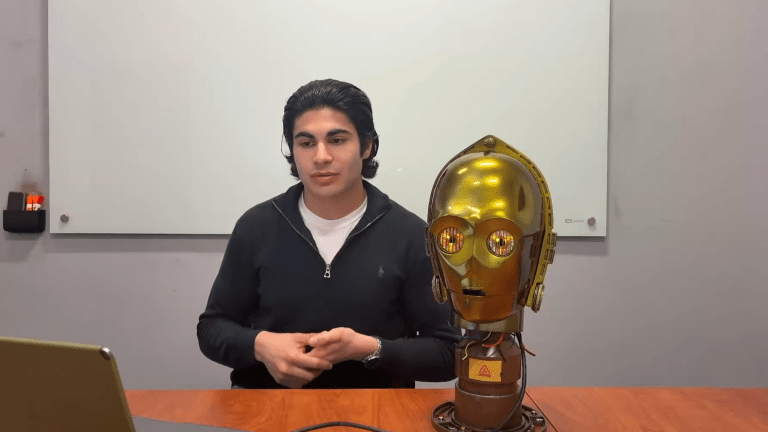
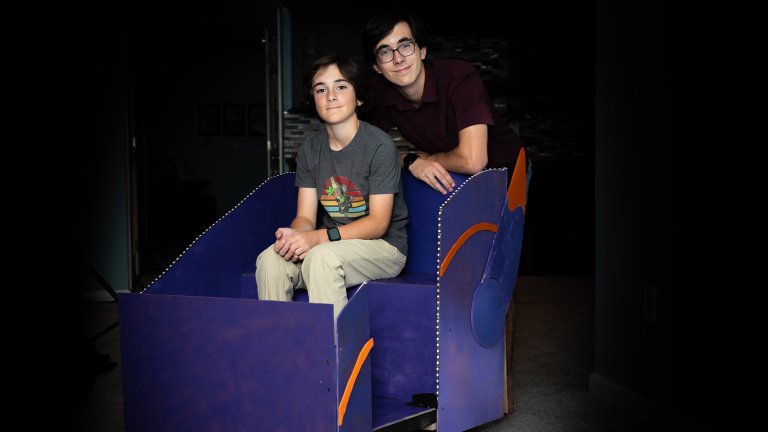
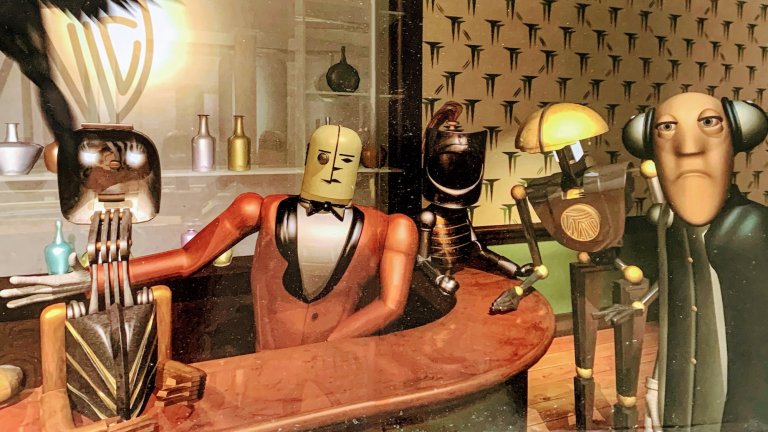
by Courtesy of Dreamworks: Dreamworks' remake of The Time Machine is the latest expression of our fascination with time travel. Photo by Courtesy of Dreamworks

When H.G. Wells sent the hero of The Time Machine into what Wells called "futurity," it was on a grim 30-million-year round-trip to pretty much the end of Earth time, when the last, poorest excuses for life were flopping around like squid under a darkening sun. Wells wasn't the first writer to imagine time travel, but he advanced the idea that a machine, rather than an angel or a bonk on the head, could accomplish it, and he pushed his machine to the limit. It moved through futurity like a bucking bronco: "I have already told you of the sickness and confusion that comes with time travelling," Wells' hero remarks. "And this time I was not seated properly in the saddle ..."


To Wells in 1895, time was a dimension much like forward and back, or up and down, but he gave no clue as to how the machine might move a human being through the fourth dimension into the future: He just wanted to get there. Einstein offered an answer seven years later, in 1905, with his Special Theory of Relativity. Time, by Einstein's equations, was not a fixed property of the universe (moving in one direction at the same rate for everyone, which was Newton's view), but a relative property of things in motion. A clock in motion ticked slower than a stationary clock; a moving clock traveled into the future relative to the clock at rest. It turned out that we'd been time traveling all along, we just didn't have clocks precise enough to show it. (Later we built such clocks, and they did.)


So began a century of strong, almost gravitational, attraction between physics and fiction, as both orbited around an idea that seems fantastic whether tackled by Rod Serling or by Einstein's heirs. The neatest, and certainly the most famous, example of the synergy may be that of Carl Sagan and his novel Contact. In the early 198os, Sagan turned to a physicist friend, Kip Thorne of Caltech, when he needed to jump a character through space. Thorne developed a theory whose byproduct was, essentially, a blueprint for a time machine that would require a "supercivilization" to build. Sagan's book became a movie starring Jodie Foster. Thorne's so-called wormhole theory was published in the eminent journal Physical Review Letters.

Page 1 of 5 12345next ›last »

0 Comments

Popular Tags

Regular Features

PROMOTION

POPSCI'S 21ST ANNUAL BEST OF WHAT'S NEW


Every year, PopSci honors the top 100 innovations in categories such as consumer products, medical tech and engineering.

Learn more and submit your product or technology today at popsci.com/enter.

Share your photos in the Pop Sci pool at www.flickr.com!

PPX: The PopSci Predictions Exchange

RSS Link

SciTech

Ready to bet on the future? Start here!

Subscribe for 2 free issues!

may2008_cover.jpg