When Scientists Do Standup
By Gregory Mone
Posted 01.01.2005 at 6:00 pm
A neutron walks into a bar, orders a beer, and pulls out some cash to pay. But the bartender won’t accept the money. “For you,” he says, “no charge.” If you think that’s funny, wait’ll you hear the one about the muons. On January 13, the tiny New Deal Caf in Greenbelt, Maryland, will resound with such one-liners, as well as physics-themed poetry, music and dramatic readings.
A new study finds that trees are fueling air pollution—with a lot of help from humans
By Joshua Tompkins
Posted 01.01.2005 at 5:00 pm
In 1980, when Ronald Reagan famously said that most air pollution was caused by plants, most people guffawed. Yet he may have been onto something. Scientists have since learned that some flora do produce volatile organic compounds (VOCs) that contribute to smog, and now a study has found that widespread land-management and forest-growing practices are making the problem worse by allowing certain VOC-emitting species to thrive.
Historians haven’t seen scientists this politically engaged since 1964
By Michael Stroh
Posted 01.01.2005 at 3:30 pm
Frustrated by developments in areas as varied as climate change, stem-cell research and Iraqi weapons programs, scientists in 2004 emerged in record numbers to protest what they argued was a calculated Bush administration effort to distort or censor data that didn’t jibe with its political agenda. “This is the first time that I’ve ever felt so strongly,” says Vint Cerf, a computer scientist and one of the Internet’s original architects.
What’s big in what’s small
By JR Minkel
Posted 01.01.2005 at 3:00 pm
A Toxic Glow
In July, researchers at Emory University made tumors in rats glow by injecting the rodents with quantum dots, submicroscopic semiconductors that shine when light is beamed at them. The next step: making the dots glow in the infrared spectrum—those wavelengths are easier to see through body tissues than are visible light waves.
Innovations in battlefield medicine are ensuring that more combatants survive. Often, the technology follows them home
By Dan Ferber
Posted 01.01.2005 at 3:00 pm
As his convoy rode toward Balad, iraq, on a 116-degree day last July, U.S. Army Staff Sergeant Robbie Doughty sat facing out the side of a Humvee, gun in hand, scanning the roadside to head off an ambush. Then: boom, and smoke everywhere. When Doughty looked down, blood was gushing, most of his right leg was gone, and his left leg had taken a dogleg at the shin.
We must intervene to halt these aging processes, says Aubrey De Grey. the rub is, no one has figured out how
By Joseph Hooper
Posted 01.01.2005 at 3:00 pm
1. Cell Loss
Our liver, kidneys and other organs keep a fair number of cells in reserve; still, over time, cell loss may impair their functioning.
De Grey’s fix: Engineer embryonic stem cells to create healthy new versions of every type of body cell. Introduce the stem cells into the body to rejuvenate diseased or flagging tissues. The mechanism to deliver the various cell types to all the right places has yet to be developed.
Some transhumanist Web sites that are worth checking out
Posted 01.01.2005 at 3:00 pm
While most of us science-literate folks are watching the biotech revolution with tentative optimism, hoping for innovations like medicines that have no side effects because they’re tuned to a patient’s genes, or livers and kidneys grown to order for people with organ failure, some intrepid souls are taking much larger leaps. Based on the fledgling promise of stem cells and brain-machine interfaces, they wonder: Why tolerate chronic pain, or suffer irrevocable injury in accidents? Why become forgetful, get sick, or grow old?
Controversial theorist Aubrey de Grey insists
that we are within reach of an engineered cure
for aging. Are you prepared to live forever?
By Joseph Hooper
Posted 01.01.2005 at 3:00 pm
On this glorious spring day in Cambridge, England, the heraldic flags are flying from the stone towers, and I feel like I could be in the 17th century—or, as I pop into the Eagle Pub to meet University of Cambridge longevity theorist Aubrey de Grey, the 1950s. It was in this pub, after all, that James Watson and Francis Crick met regularly for lunch while they were divining the structure of DNA and where, in February 1953, Crick made his breathless announcement that they had succeeded.
Amazing inventions of 2004
By Rena Marie Pacella
Posted 01.01.2005 at 2:55 pm
Smart Smile
“Smile map” software introduced by Stony Brook University researchers in March detects
patterns of muscle movement when a person smiles, and uses the data to identify the person later on. Developers expect it to outperform conventional face-recognition programs, which calculate the
distances between major features.
Print View
In February, MIT student Saul Griffith introduced a
Science headlines in 2004
By Elizabeth Svoboda
Posted 01.01.2005 at 2:15 pm
01.13_PANDEMIC PANIC A flu virus that originated in birds kills three people in Vietnam, raising fears that the potent strain may spread unchecked if it becomes capable of human-to-human transmission.
01.26_MAD-COW IN THE CHOW? After a cow in Washington State tests positive for bovine spongiform encephalo- pathy at the end of 2003, agricultural officials strengthen an existing ban against including cow parts in cattle feed. Bovine tissue is known to harbor disease-causing prions.
A three-foot-tall “hobbit” who lived in Indonesia up to 12,000 years ago is changing the way we think about the human family
By Tabitha M. Powledge
Posted 01.01.2005 at 2:00 pm
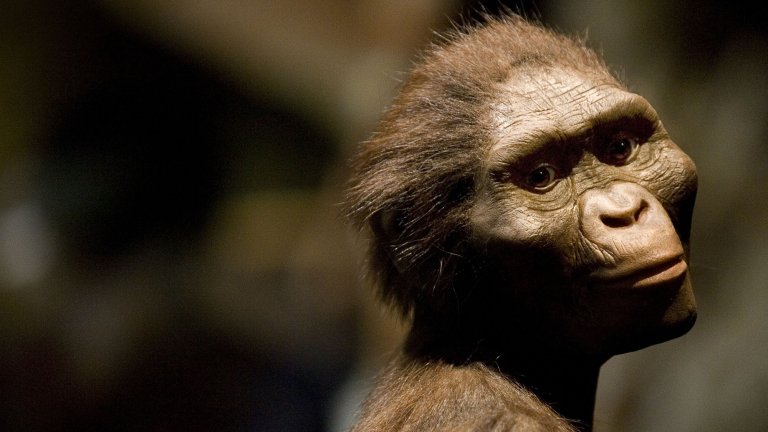
She was only three feet tall, and her brain was smaller than your average chimp’s. Yet she and her relatives apparently lived fully human lives. They seem to have made sophisticated tools, cooperated to find food and cook it, and perhaps even buried their dead with ceremony.
The crazy critters astound us once again
By Elizabeth Svoboda
Posted 01.01.2005 at 2:00 pm
Voluntary Castration To find its perfect mate, the male Tidarren sisyphoides spider routinely amputates one of its two oversize external sex organs, Tulane University researchers found in February. With a reduced weight, it can run faster and longer in pursuit of the female.
A Healthy Glow Hippos secrete a distinctive red-orange fluid from their skin that acts as a two-in-one antibiotic-and-sunscreen combo, Japanese researchers found in May. The highly acidic compounds in hippo sweat could become the basis for a new range of human
pharmaceuticals.
Overwhelming atmospheric evidence supports the reality of global warming—and humans’ role in causing it
By Gretel H. Schueller
Posted 01.01.2005 at 2:00 pm
It was the summer of animals gone weird. Alaskan salmon swam up rivers they weren’t born in, their native streams reduced to trickles. Scores of subtropical species, including seahorses and leatherback turtles, migrated into waters off northern England and Scotland. Polar bears were marooned on a remote Arctic island as large patches of what was normally sea ice melted into water. Hundreds of thousands of seabirds failed to breed. The culprit for all this odd animal behavior? A Northern fever: from Alaska to Norway, meteorologists measured record-setting spring and summer temperatures.
Why antidepressants may exacerbate depression and anxiety in some kids
and teens
By Linda Marsa
Posted 01.01.2005 at 2:00 pm
An estimated 20 million Americans have at one point or another relied on Prozac or one of its chemical siblings, including Paxil and Zoloft, to ease depression or anxiety. For most adults who take them, the drugs, known collectively as selective serotonin reuptake inhibitors, or SSRIs, work as advertised: Mood improves with increased levels of the brain chemical serotonin.
So odd, yet so true
By Aimee Cunningham
Posted 01.01.2005 at 2:00 pm
Cactus Cure
Taking a pill made from prickly pear fruit five hours before boozing cuts the risk of a severe hangover in half, according to the June Archives of Internal Medicine.
Let the Bedbugs Bite
In January the FDA OK’d maggot therapy for chronic wounds. The maggots munch the wound site clean, dissolving dead tissue with their digestive juices and swallowing bacteria.