Silicon Valley Tycoons Bestow Surprise $33 Million Prize On 11 Unsuspecting Cancer Researchers
Because "curing a disease should be worth more than a touchdown."
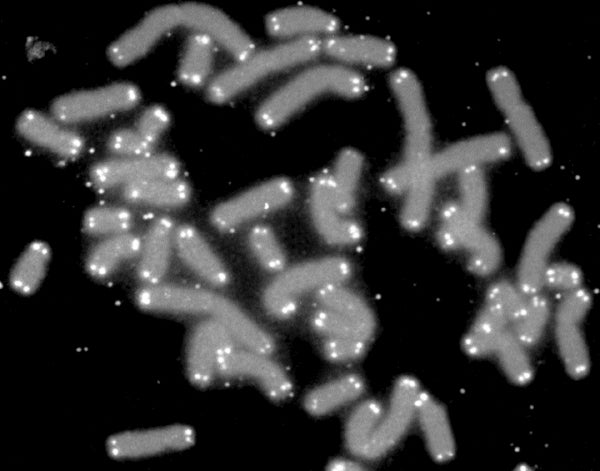
Cori Bargmann’s research at the Rockefeller University has shown nematode worms, one of the simplest lab animals in biology, exhibit surprisingly complex behavior when faced with new challenges. She studies the neural connections that encode those responses. Her Rockefeller colleague Titia de Lange studies mammalian telomeres, the protective caps on the end of our chromosomes whose degradation contributes to aging. She investigates how loss of telomeres can lead to genomic instability in cancer.
Both researchers are incredibly distinguished scientists, recipients of numerous honors and awards in their fields. Now they can add another line to their resumes: They are the only women among 20 people thus far to be honored with a lucrative new science prize. The newest one, the $3 million Breakthrough Prize in Life Sciences, was announced Wednesday. It honors 11 scientists from four countries, each of whom is called out for their work on “curing intractable diseases and extending human life,” the award says.
It’s funded by Facebook’s Mark Zuckerberg, Google’s Sergey Brin, and Russian social media tycoon Yuri Milner, among a few others. Milner started this new trend last year when he launched his Fundamental Physics Prize, which is also worth $3 million.
“These scientists should be household names and heroes in society,” said sponsor Anne Wojcicki, a biotech analyst and cofounder of the personal genetics company 23andMe (and Brin’s wife).
Brin added, “Curing a disease should be worth more than a touchdown.”
The idea apparently came from Milner, who studied theoretical physics while a student in Russia and is reportedly worth $12 billion. For his first Fundamental Physics Prize, announced last August, he personally chose nine male winners from western countries. For the new Breakthrough Prize, a committee including Milner, Brin, Wojcicki, Zuckerberg and his wife Priscilla Chan, and Apple board chairman Art Levinson chose the 11 winners.
The Guardian talked to several scientists yesterday, who pretty much all said they were shocked by the news. De Lange said, “I’m not used to having a lot of money. I don’t really have possessions.” Bargmann said she thought it was fake: “I had to sit down on the floor for a while. I thought it must be a practical joke or a Nigerian scam.”
Also like the physics prize, all the recipients agree to serve on a selection committee for future prize recipients. And the public can nominate deserving scientists for future prizes.
With this prize, science is getting a lot more lucrative. Before the Fundamental Physics Prize, the most a scientist could hope to win was $1 million from the Kavli Prize or Shaw Prize, or of course, the $1.1 million that comes along with the Nobel Prize.
The Breakthrough Prize’s website says it is “dedicated to advancing breakthrough research, celebrating scientists and generating excitement about the pursuit of science as a career.” That $33 million is certainly a heck of a celebration.
Here’s the full list of winners:
- Cornelia I. Bargmann, Torsten N. Wiesel Professor and Head of the Lulu and Anthony Wang Laboratory of Neural Circuits and Behavior at the Rockefeller University, Howard Hughes Medical Institute Investigator; For the genetics of neural circuits and behavior, and synaptic guidepost molecules.
- David Botstein, Director of the Lewis-Sigler Institute for Integrative Genomics and the Anthony B. Evnin Professor of Genomics at Princeton University; For linkage mapping of Mendelian disease in humans using DNA polymorphisms.
- Lewis C. Cantley, Margaret and Herman Sokol Professor and Director of the Cancer Center at Weill Cornell Medical College and NewYork-Presbyterian Hospital; For the discovery of PI 3-Kinase and its role in cancer metabolism.
- Hans Clevers, Professor of Molecular Genetics at Hubrecht Institute; For describing the role of Wnt signaling in tissue stem cells and cancer.
- Titia de Lange, Leon Hess Professor, Head of the Laboratory of Cell Biology and Genetics, and Director of the Anderson Center for Cancer Research at the Rockefeller University; For research on telomeres, illuminating how they protect chromosome ends and their role in genome instability in cancer.
- Napoleone Ferrara, Distinguished Professor of Pathology and Senior Deputy Director for Basic Sciences at Moores Cancer Center at the University of California, San Diego; For discoveries in the mechanisms of angiogenesis that led to therapies for cancer and eye diseases.
- Eric S. Lander, President and Founding Director of the Eli and Edythe L. Broad Institute of Harvard and MIT, Professor of Biology at MIT, Professor of Systems Biology at Harvard Medical School; For the discovery of general principles for identifying human disease genes, and enabling their application to medicine through the creation and analysis of genetic, physical and sequence maps of the human genome.
- Charles L. Sawyers, Chair, Human Oncology and Pathogenesis Program at Memorial Sloan-Kettering Cancer Center, Howard Hughes Medical Institute Investigator; For cancer genes and targeted therapy.
- Bert Vogelstein, Director of the Ludwig Center and Clayton Professor of Oncology and Pathology at the Johns Hopkins Sidney Kimmel Comprehensive Cancer Center, Howard Hughes Medical Institute Investigator; For cancer genomics and tumor suppressor genes.
- Robert A. Weinberg, Daniel K. Ludwig Professor for Cancer Research at MIT and Director of the MIT/Ludwig Center for Molecular Oncology, Member, Whitehead Institute for Biomedical Research; For characterization of human cancer genes.
- Shinya Yamanaka, Director of Center for iPS Cell Research and Application, Kyoto University, Senior Investigator, Gladstone Institutes, San Francisco; For induced pluripotent stem cells.