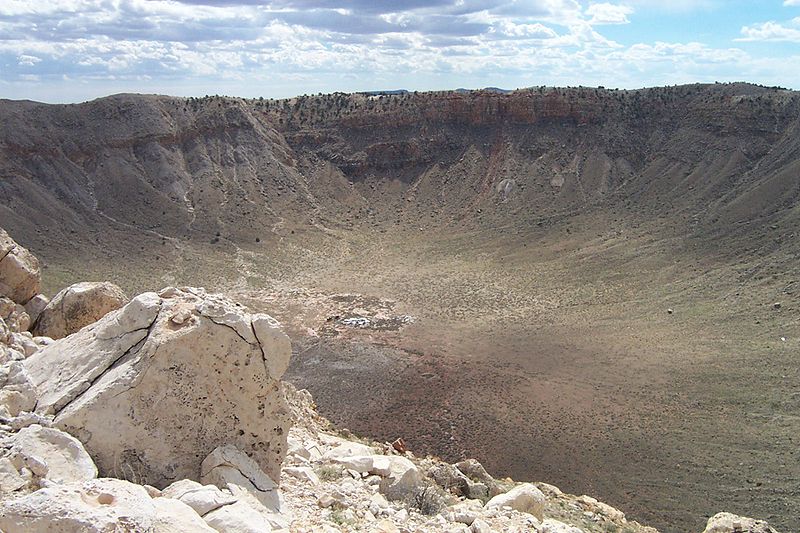
Purdue University has a fun simulator called Impact Earth that shows you what would happen if a particular kind of meteorite smashed down from space. Plug in some info about the meteorite you'd like to simulate--size, composition, angle and speed of impact--and then check out the precise kind of havoc it would wreak. We've written about it before, but it somehow seems more pressing now. Maybe because of this little thing. Try Impact Earth here.
Five amazing, clean technologies that will set us free, in this month's energy-focused issue. Also: how to build a better bomb detector, the robotic toys that are raising your children, a human catapult, the world's smallest arcade, and much more.


Online Content Director: Suzanne LaBarre | Email
Senior Editor: Paul Adams | Email
Associate Editor: Dan Nosowitz | Email
Assistant Editor: Colin Lecher | Email
Assistant Editor: Rose Pastore | Email
Contributing Writers:
Kelsey D. Atherton | Email
Francie Diep | Email
Shaunacy Ferro | Email
I don't really care for it, because there are parameters I can't set the way I really want to set them all myself. All the parameters given are still subject to certain things and are not given to all the possibilities that could exist, like I could choose my own density and weight of the object, diameter, speed, angle, and location anywhere on Earth (maybe using Google Earth) so I can put in my own local community and also adjust my location distance down to feet from the site, like if I saw a 1 pound object fall and hit the ground right in front of me, or like I might be only a few hundred yards from the local lake and a 100 pound rock splashes down right in the middle of our local 27 acre lake. What would the lake look like afterwards?