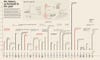
Our science fiction isn't always on the nose. 1984 didn't look exactly like 1984, and 2001 didn't bring us the kind of Space Odysseys we envisioned. So forgive us for being skeptical about predictions pegged to dates that haven't been reached yet--the subject of this terrific visualization by Italian designer Giorgia Lupi.
The infographic, illustrated for Brain Pickings, shows predictions for the future, built around science fiction novels, stories, and comics. It's organized by year of publication on one axis and year of the work's prediction on the other. Predictions start at 2012 and go all the way to 802,701.
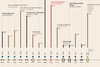
It also marks the author's age at the time of publication and classifies stories by subgenres (is this environmental sci-fi or political sci-fi?). The works are color-coded to show what kind of an impact the prediction had on the fictional world: Brave New World was, you know, bad, so it gets shaded in black; William Gibson's Neuromancer is relatively neutral, so it's represented with a brownish color.
A lot fits into the infographic, so you'll want to take a closer look. See a zoomable version at Brain Pickings.
The incredible innovations, like drone swarms and perpetual flight, bringing aviation into the world of tomorrow. Plus: today's greatest sci-fi writers predict the future, the science behind the summer's biggest blockbusters, a Doctor Who-themed DIY 'bot, the organs you can do without, and much more.


Online Content Director: Suzanne LaBarre | Email
Senior Editor: Paul Adams | Email
Associate Editor: Dan Nosowitz | Email
Assistant Editor: Colin Lecher | Email
Assistant Editor: Rose Pastore | Email
Contributing Writers:
Kelsey D. Atherton | Email
Francie Diep | Email
Shaunacy Ferro | Email
A Brave New World was much more influential than just about any dystopian novel ever written. "Never underestimate the human condition for distraction". -Huxley
We are a media obsessed species, whom take pleasure from our own entertainment, contraceptives are now widespread, and we attend movies for visual stimulation. If you are not born in a hospital, it is considered barbaric (cloning may not be too far off). Human beings are treated like items on an assembly line conveyor belt just about everywhere: School, grocery store, DMV etc.
Most notably is the class system, while apparent and grotesque in A Brave New World, is just as prevalent in our sociology-economic status driven society.
Perhaps more interesting is that many of the devices listed in Fahrenheit 451 were actually listed in your July 2007 edition. Namely the blutooth headset,DARPA's big-dog, blood-cleaning pipe (the detox snake from the book), projection displays, e-books and other consumer technologies. It was a surprising find to see that one issue basically covered the Bradbury line of sci-fi.