When Alessandra Luchini was a girl growing up in Italy, she visited the Museo Galileo in Florence, where she saw the telescope that Galileo Galilei had invented four centuries before, in 1610. She was struck by its simplicity. with a just a couple of pieces of curved glass, anyone could see whole new worlds.
In 2005, Luchini, now an engineer at George Mason University, came to the U.S. on a grant from the Italian National Health Service to study ways to detect molecular signs of cancer. Some diseases, early on, release faint hints of their presence into our bodily fluids. These “biomarkers” are ephemeral—our enzymes chew them up within minutes, so they’re undetectable in most lab tests. If doctors had a way to catch and stabilize those biomarkers, they could detect diseases more quickly and begin treatment at a stage when the chances of recovery were much higher.
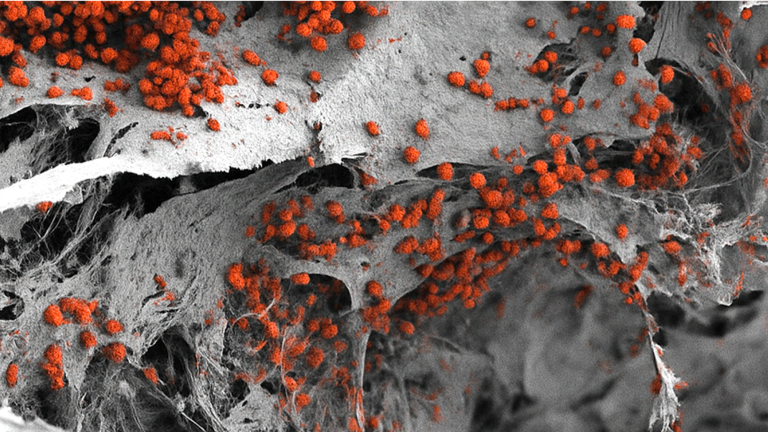
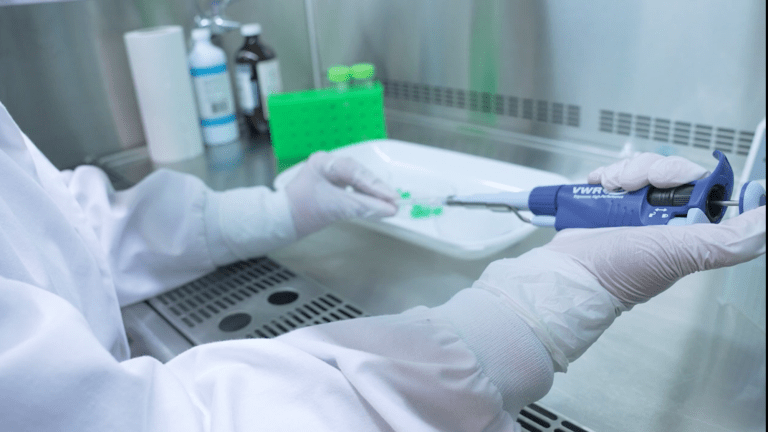
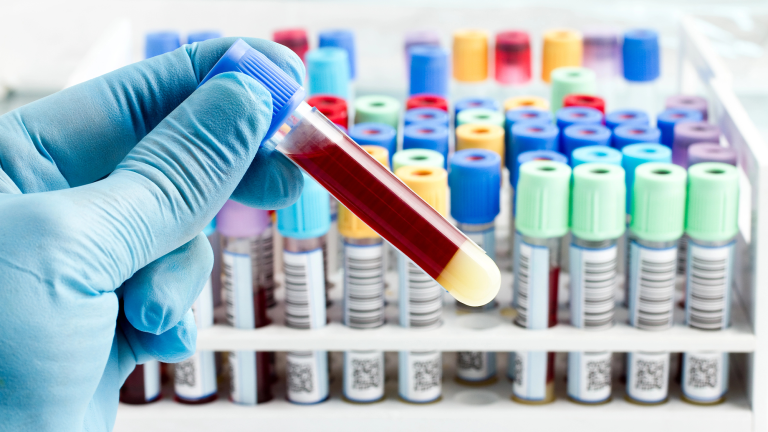
Luchini’s solution was to build a nanoparticle trap. The concept, like Galileo’s telescope, is simple: “It’s like a net for catching very small fishes,” Luchini says. The spherical nanoparticle, which took two years to perfect, uses hydrogel as its backbone. Inside, a crisscrossing polymer net holds bait, such as acid or dye, which chemically attracts various biomarkers. when lab technicians mix the nanoparticle in with a fresh blood sample, it traps the biomarkers and protects them from enzymes. The sample can then be tested at leisure. So far, Luchini has used nanoparticle traps to produce an early diagnosis of infectious diseases such as Lyme disease and tuberculosis. (The traps can also reveal the presence of human growth hormone in urine, and thus offer a novel way to reveal illegal doping by athletes.) She and her team are also working on nanotraps to find the skin-cancer biomarkers that exist in a person’s sweat.
Luchini’s next step is to modify the nanoparticles so they can trap biomarkers in a body, giving doctors a realtime view of what’s going on inside their patients.

Read more about the molecular filmmaker, the butterfly pharmacist, and the rest of our Brilliant 10.
Five amazing, clean technologies that will set us free, in this month's energy-focused issue. Also: how to build a better bomb detector, the robotic toys that are raising your children, a human catapult, the world's smallest arcade, and much more.


Online Content Director: Suzanne LaBarre | Email
Senior Editor: Paul Adams | Email
Associate Editor: Dan Nosowitz | Email
Assistant Editor: Colin Lecher | Email
Assistant Editor: Rose Pastore | Email
Contributing Writers:
Rebecca Boyle | Email
Kelsey D. Atherton | Email
Francie Diep | Email
Shaunacy Ferro | Email
wow shes really hot.
_________________
The people of the world only divide into two kinds, One sort with brains who hold no religion, The other with religion and no brain.
- Abu-al-Ala al-Marri
fact: we now know that Galileo Galilei did NOT invent the telescope, he just stole the idea and took credit for it.
why learn from your own mistakes, when you could learn from the mistakes of others?
he took an idea he heard about and built a much better telescope, it is still up in the air who invented the telescope, it was not galileo, he was just trying to get credit for his observations of the heavens, it doesn't appear he was attempting to discredit others as the telescope was not a secret
Galileo just had better marketing... think Apple of his time.
---
In space, no one can hear a tree fall in the forest.
JediMindset, Wins! YEA!
He at least attempted to focus on the scientist. Sure, he forgot the science, but he did focus a little. Now the rest of you got completely side tracked, lol.
Hot indeed!! From my experience, female biologists/biochemists are the hottest... sometimes, it get really HARD to focus in the lab.
she is cute, better diagnostic tools are always in need, 2 thumbs up for the cuty (umm...scientist), cheers