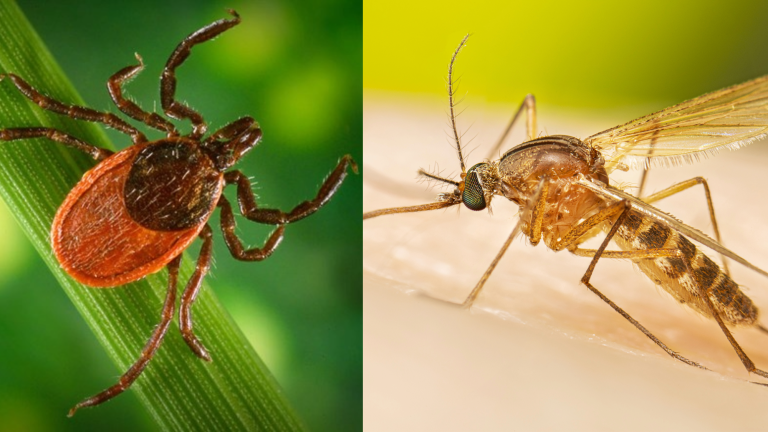
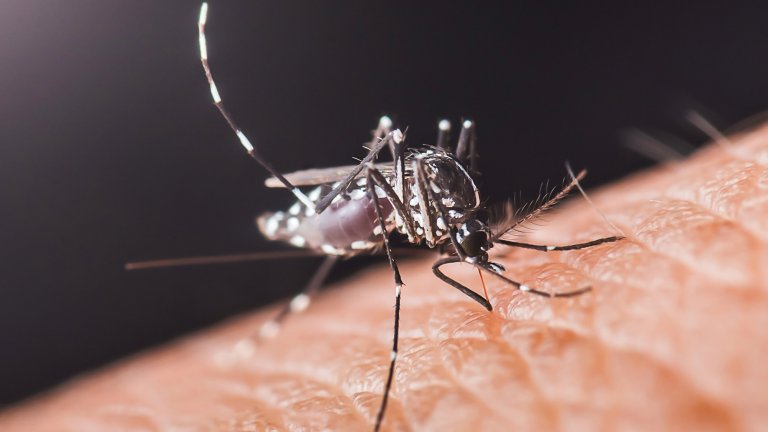
With the recent news that researchers at the University of Queensland are planning on releasing dengue-resistant mosquitoes into Australia and Vietnam, the world again turns its attention to the danger these insects pose--not only with dengue fever, but also malaria, yellow fever, and a host of others.
At a TED talk in 2009, when Bill Gates unleashed a swarm of the insects into a packed auditorium, the aim was to increase awareness of mosquitos and malaria, and indeed the last year and a half has seen a number of advances. Mosquitos infect up to 700 million people annually, leading to more than 2 million deaths. Malaria, dengue fever, yellow fever, and Chikungunya are all potentially lethal, cementing the mosquito's position as the deadliest creature on the planet.
Merely their incessant whine and inevitable bites, let alone the fact that they carry horrible diseases, are enough for most people to call for the eradication of these creatures. But genocide not really being practical, researchers across the globe are working on ways beyond the traditional pesticides, DEET, and mosquito nets to prevent the creatures from spreading viruses and parasites.
While eradication probably isn't on the cards, if only due to the potential side-effects, the same questions must be asked of genetic modification of the insects. If they don't live as long, or half their population can't fly properly, what will arise to assume their niche in the ecosystem? Will anything do so? Is there any chance of mutation and transmission to other species? While the reduction in human suffering associated with the better control of mosquitoes and the diseases they spread will be immense, we need to have a thorough handle on the downstream effects that these changes could cause.
Five amazing, clean technologies that will set us free, in this month's energy-focused issue. Also: how to build a better bomb detector, the robotic toys that are raising your children, a human catapult, the world's smallest arcade, and much more.


Online Content Director: Suzanne LaBarre | Email
Senior Editor: Paul Adams | Email
Associate Editor: Dan Nosowitz | Email
Assistant Editor: Colin Lecher | Email
Assistant Editor: Rose Pastore | Email
Contributing Writers:
Rebecca Boyle | Email
Kelsey D. Atherton | Email
Francie Diep | Email
Shaunacy Ferro | Email
Ya I can see how this is a hot topic. As deadly as mosquitoes are I'm sure they have an important role in the food chain of many ecosystems...
TED seems down atm.. I never heard about the bill gates talk in 2009, gonna have to bookmark and watch that later :).
My health blog: http://vaalion.wordpress.com
Totally agree !
I mean ... Bunnies are considered disease-carrying rodent-pests and are not kosher but MANY predators rely upon them.
Are not mosquitos something like the "plankton" of the insect world ?? Do not Bats and swallows and spiders and mosquito-hawks and preying mantis' and like 40 species of wasps rely upon them, as a major food source?
... Do not many fresh-water fish/fry rely upon water-borne mosquito larvae?
Save the BATS ! (if you want to "control" mosquitos).
If by "TED" you mean that AT&T speaker/lecture series ...
... I think YouTube has many of them posted ... Just watched Wolfram do his thing ... and a few other hep cats.
so there is a natural enemy of the mosquito that is apparently little known. I only found out what it is recently. The hunter of mosquitoes is dragon flies. They fly around with their legs cupped to catch them.
Ok with that little tidbit said let me stretch it a bit. In some year many years ago science determined that we had killed to many flies which meant we didn't have enough of them to break down waste products. Sciences answer was to clone billions of them. ( Not sure of the actual number)
Anyway so with those two thoughts combined why not just clone vast swarms of dragonflies? They may not live very long as they exhaust the food resource, but they could significantly control over population of mosquitoes in defined areas.
I know it's a stretch and has a lot of lack of control. It seams to me however that we forget that nature has built in controls already, we just forget to use those tools or don't know about them yet, or how to apply them.
_________________________________________________________
BIG LIE: "...eradication...potential side-effects..."
FACT: THERE ARE *NO* SIDE EFFECTS TO ERADICATING MOSQUITOES.
PEDDLE YOUR INABILITY-TO-ACT "EVERY ENVIRO KILL HAS A HORRIBLE SIDE EFFECT" TO THE SAME "GREEN" MORONS WHO WANT:
* TINY, CRAPPY, DEATHTRAP CARS;
* SMELLY, UNFLUSHED/UNWASHED HIPPIE LIFESTYLES; AND
* B.S. ECONOMIES OF GASOHOL/ETHANOL AND "CARBON CREDITS."
_________________________________________________________
These pests are very important to the ecosystme. (Birds)
*D Ace Lee*____Domin8or, V3RTIGO ftw____
@Dontbother: You appear to be grossly misinformed. Mosquitoes are a huge part of the ecosystems where they exist. In larval stages they make up more than a substantial portion of the aquatic food chains, and as adults they find themselves prey to a variety of predators. Life as a mosquito isn't as easy as just buzzing around and stopping for a drink.
People are talking about upsetting an entire mosquito ecosystem simply to save a few million people a year from death, and a couple hundred million a year from other illnesses! Are you crazy? We aren't talking about Berkeley, and we definitely aren't talking about WHITE people.
Don't be insane.
"... scientists acknowledge that the ecological scar left by a missing mosquito would heal quickly as the niche was filled by other organisms."
http://www.nature.com/news/2010/100721/full/466432a.html
Rocket Scientists Shoot Down Mosquitoes With Lasers
Humans, Butterflies Remain Unharmed
http://online.wsj.com/article/SB123680870885500701.html
mosquito's are gay. if you dont live in florida dont say anything about the great idea of killing every last 1, i dream of that. ill be dead before any major effects on the ecosystem affect my backyard
http://www.madeshopping.net
you can find many cheap and fas hion stuff
(ni ke jor dan s-h-o-e-s)
(NB A NFL NHL MLB j-e-r-s-e-y)
df
( lv Chanel Guc ci Coach h-a-n-d-b-a-g)
(cha nel w-a-l-l-e-t)
(D&G s-u-n-g-l-a-s-s-e-s)
(ed har dy j-a-c-k-e-t)
(UG G b-o-o-t)
free ship ping
YOU MUST NOT MISS IT!!!
Why are comments on this article written by idiots and people who want to sell something? All you people know nothing about science, or mosquitoes and the diseases they carry? Are all Americans stupid?
It seems some "geniuses" think we are.
The article raises interesting points in an attempt to educate and some idiots (your word) respond in a manner that indicates they sorely need educating.
Mankind's record in attempting to fix percieved ecological health threats to humans is abyssmal at best.
Any attempt to eradicate disease by eliminating the disease vector is going to be incredibly costly at best and at worst a disaster in the making.
Mosquitoes do indeed constitute a major food source for a number of higher level species - including goslings. Eliminating them would likely have a pyramid effect in the food chain - those pesky unintended consequences, which includes the effects on the environment of the pesticides or biocides used to eliminate them.
Devising effective treatments or vaccines to eliminate the diseases is the best option - if the world is willing to dedicate the resources to cure diseases that mostly affect developing countries.
Mosquitoes have relationships with the plant world:
There is a movie poem about that on you tube, and human feelings about mosquitoes:
www.youtube.com/watch?v=UWntdrcba3o
or search on you tube: mosquito poem
Enjoy