95 percent of the existing crop is genetically modified
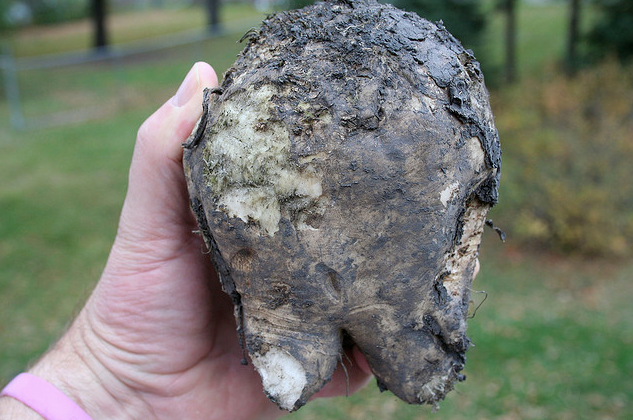
Sugar Beet Half the U.S. sugar supply comes from sugar beets like this one. via Flickr/ elizabeth.mcquiston

Readers with a sweet tooth had better start stockpiling candy -- first Choc Finger started hoarding all the world's chocolate, and now it seems the U.S. sugar supply may be in jeopardy. Farmers cannot plant new genetically modified sugar beets until the U.S. Department of Agriculture finishes a study about their environmental impact, a federal judge said Friday. That could take a couple years, which means sugar beet farmers and sugar processors might have trouble meeting demand after this year's harvest.

Genetically modified sugar beets make up about 95 percent of the American sugar beet crop, according to Monsanto, which manufactures the seeds to resist their proprietary weed-killer, Roundup.

The engineered beets were approved for sale in 2005 and took hold quickly, comprising 95 percent of the crop by the 2008-2009 growing season.

In January 2008, public interest groups sued to challenge the USDA's deregulation of the crop. The Center for Food Safety (CFS), Organic Seed Alliance, Sierra Club and High Mowing Organic Seeds said new seeds should not be planted until the government completes a full environmental assessment, which is required by the National Environmental Policy Act.

Friday's ruling, by Judge Jeffrey S. White of Federal District Court in San Francisco, answers that lawsuit and appears to effectively ban new planting of the genetically modified sugar beets.

This year's crop is not included, however, meaning beets in the ground will still be milled into sugar. The problems could start next year, because the sugar industry has said there are not enough non-genetically modified seeds to make up for the loss of GM ones, according to the New York Times.

The Sugar Industry Biotech Council, an industry group, says sugar beets are planted across 1.2 million acres in 11 states every year. Half the nation's sugar supply comes from beets, which are sliced and boiled into a thick syrup that is then dried. The other half comes from sugar cane.

Next time you bake a pie, savor that sugary crust, because it might be a lot more expensive to make next year. Don't say we didn't warn you.

[AFP]

18 Comments

The Center for Food Safety, Organic Seed Alliance, Sierra Club and High Mowing Organic Seeds; you're all on my list

Nice job, USDoA, trashing 95% of the sugar beet crop. Well done.

Boy, good thing I stopped eating sweets and snacks a few weeks ago. Just in time!

And sugar is bad for you anyway. Think of it as making america healthier.

Why does the government always ban things when they want to do a study?!? I'm all for studying things to make sure they are safe for us and the environment, but don't blithely throw an industry into chaos to make a pack of rabid environmentalists happy!

Shortage? Surely they will revert back to the previous crop source and plant unmodified beets. No big deal unless the reporter here knows something they didn't include in the story.

While I favor the concept of genetically modified crops... Monsanto has got to be one of the most evil companies on the planet.

They have more lawyers on their payroll than scientists. They are buying water rights in countries that allow it in order to monopolize water and extort populations. They vigorously defend their intellectual property (gene sequences), to the point of pursuing farmers whose crops are cross pollinated by insects or wind from neighboring fields of planted GM crops.

A defeat for Monsanto is good for the rest of us.

CONTAMINATION
As Reuters reported last week, GE Canola has been found growing across North Dakota -

HEALTH RISKS
Dr. Pusztai's research showed that the unpredicted side effects from the process of genetic engineering were the likely cause of the damage to his rats in his study on the health risks of genetically engineered potatoes (not on the market). This has been the big sore spot for the biotech industry, which produces its GM seeds for corn, canola, soy, cottonseed and beet sugar using the same process.

Dr. Pusztai warns:
"The problems with GM foods may be irreversible and the true effects may only be seen well in the future. The situation is like the tobacco industry. They knew about it but they suppressed that information. They created misleading evidence that showed that the problem wasn't so serious. And all the time they knew how bad it was. Tobacco is bad enough. But genetic modification, if it is going to be problematic, if it is going to cause us real health problems, then tobacco will be nothing in comparison with this."

FDA
No labeling requirement yet exists for genetically modified foods - in spite of the 87% of Americans who say they want to know if their food has been genetically engineered.

FACT
70% of processed foods contain GE ingredients.

All the King's horses, and all the King's men.....

Yeah, how much do you want to bet that the fear monger author of this article invested in sugar then try to scare people into making the price to go up to make some quick $$! Yeah, they will revert to non-modified sugar beets and it will be business as usual! NO price jump ...

Not sure how I can link to comments (link to comment doesn't work) but ya monsanto is a really pure definition of "evil" company. I remember studying them back in college and could not believe how much damage this company inflicts on a daily basis for so many years all accross the globe. From forcing farmers to use their own genetically modified seeds and their tactics to make farmers completely dependant on monsanto seeds (which is probably why they can't go back to normal seeds now while the ban is working out...) to all the suing they do to farmers.

www.wisemensvitamins.com

"The problems could start next year, because the sugar industry has said there are not enough non-genetically modified seeds to make up for the loss of GM ones, according to the New York Times."

If america does not have enough un-gen modified seeds, then why not import them from other countries? Or am I missing something here?

I think someone at the USDoA owns stock in Truvia. What could possibly go wrong with these beets... I wonder...

After being exposed to highly genetically modified sugar beets Melvin developed the ability to have a nearly constant sugar high. He used his new found energy to defeat evil, and became the Beet Avenger!

This study is kinda late, don't you think? If 95% of all sugar beets are genetically modified it's a little late to "wonder what the environmental impact" will be. It's already happening.

That said, most of the crops we eat are "genetically modified" in one way or another. The pilgrims and Indians weren't eating the same type of corn we have today, just for example.

Beyond food, what about all these premium dog breeds? Those are genetically modified as well.

@TXSam - love it!

www.villanovau.com/online-courses/information-assurance-training.aspx

Nice time to plant sugar cane...

very very nice blog,.thanks for your info sir,.
http://pandawaindonesia.blogspot.com/2010/10/mobil-keluarga-ideal-terbaik-indonesia_17.html
http://pandawaindonesia.blogspot.com/
http://tanamanobatalamiah.blogspot.com

I am happy to find this post very useful for me, essay help as it contains lot of information. I always prefer to read the quality content and this thing I found in you post. Thanks for sharing www.http://pandawaindonesia.blogspot.com/2011/08/top-1-oli-sintetik-mobil-motor.html

I am happy to find this post very useful for me, essay help as it contains lot of information. I always prefer to read the quality content and this thing I found in you post. Thanks for sharing
http://pandawaindonesia.blogspot.com/2011/08/top-1-oli-sintetik-mobil-motor.html


138 years of Popular Science at your fingertips.

Innovation Challenges


Popular Science+ For iPad

Each issue has been completely reimagined for your iPad. See our amazing new vision for magazines that goes far beyond the printed page


Download Our App

Stay up to date on the latest news of the future of science and technology from your iPhone or Android phone with full articles, images and offline viewing


Follow Us On Twitter

Featuring every article from the magazine and website, plus links from around the Web. Also see our PopSci DIY feed


February 2012: The Future of Fun

Science is reinventing play, from extreme sports to gamification to ridiculous roller coasters to the playgrounds of tomorrow, and this issue is chock full of fun. Also, on a less fun note: Did global warming destroy my hometown?


circ-top-header.gif
circ-cover.gif
bmxmag-ps