
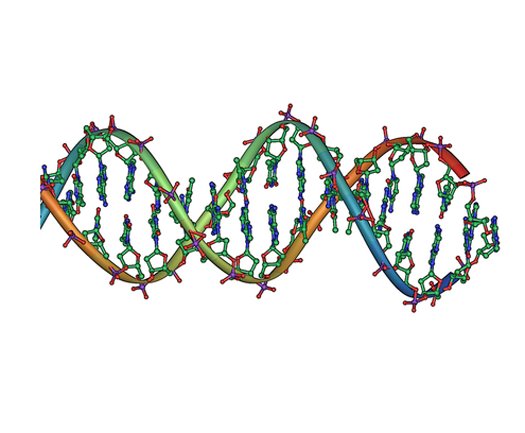
A Better Way To Sequence DNA

DNA genome sequencing has the potential to unlock a lot of secrets of our biology, but the process of DNA amplification -- making billions of molecular copies of a DNA strand in order to create a large enough sample to analyze -- takes a lot of time and money. So a Boston University team came up with a novel solution: avoid amplification altogether. Their new sequencing method analyzes DNA faster and more cheaply, from samples several orders of magnitude smaller than those required by traditional methods.

Current DNA sequencing techniques require a sample that is both large in molecular size and short in length -- less than a thousand base pairs -- and that requires amplification of short segments of a sample. But amplification takes time and, like any rendering of a rendering, can produce imperfect copies. The Boston University team, along with collaborators from New York University and Bar-Ilan University, instead harnessed electrical fields to feed long strands of DNA through four-nanometer-wide pores, analyzing each DNA molecule as it is bottlenecked through the tiny openings.

The electrical fields pull on the negatively charged strands of DNA to coax them through the nanopores, but before they could do that they had to garner an understanding of how DNA behaves at the nano-level. What they found surprised them: the longer the DNA strand, the faster it found its way toward the nano-pore, so the new method not only can analyze strands without first amplifying them, but it is optimized for sequencing longer strands.

As a result, the new method can analyze longer strands of DNA in less time and at less cost, from a sample 10,000 times smaller than that needed for conventional sequencing methods. Not to mention, it does all that while eliminating the errors that generally accompany amplification. Not bad for a four-nanometer-wide hole.

[Eurekalert]

6 Comments

Bigdiscovery84

from Tallahassee, FL

Shouldn't this be front page news? Bring on the Medical explosion in the next decade. And now being from the U.S I might not have to go to Canada for repairs.

Finally, we can sequence T-Rex's DNA and clone him and bring about the REAL Jurassic Park.

I can't wait to go on the rides!

This is huge. Hopefully we will see a computer-age type boom in the field of genetics. Good things to come if we dont try and play god (and bring back t-rex).

SVB (not verified)

WHAT!!! Are you kidding me? I would love it if they brought back the dinosaurs and put them in a Zoo for us all to come and watch!!! It would be awesome to see a real T Rex or a raptor. But seriously for those of you who are afraid that the dinosaurs would break loose and run rampant, no need to fear!!! What happened in Jurassic Park would never happen in real life trust me. As soon as any scary dinosaur broke loose the thing would be Killed immediately!!! Ever heard of an elephant gun? Yeah well I am pretty sure no T-Rex could handle that.

Jesus will not let you unravel his secrets that easily. Prepare to be foiled by another hurdle...........Kazaa !!!

@rpenri, Yes, if we actually had T-rex DNA, which we don't. I know, I know, in Jurassic Park they found some encased in amber. That's a movie. But in reality we have no strands of complete, intact T-rex DNA, much less a full set of chromosomes that have survived 65 million years. We have been able to extract some preserved proteins from T-rex fossils, but not a full suite of usable DNA.


138 years of Popular Science at your fingertips.

Innovation Challenges


Popular Science+ For iPad

Each issue has been completely reimagined for your iPad. See our amazing new vision for magazines that goes far beyond the printed page


Download Our App

Stay up to date on the latest news of the future of science and technology from your iPhone or Android phone with full articles, images and offline viewing


Follow Us On Twitter

Featuring every article from the magazine and website, plus links from around the Web. Also see our PopSci DIY feed


February 2012: The Future of Fun

Science is reinventing play, from extreme sports to gamification to ridiculous roller coasters to the playgrounds of tomorrow, and this issue is chock full of fun. Also, on a less fun note: Did global warming destroy my hometown?


circ-top-header.gif
circ-cover.gif
bmxmag-ps