Rare behemoth star produces antimatter and collapses in a runaway nuclear reaction that leaves nothing behind

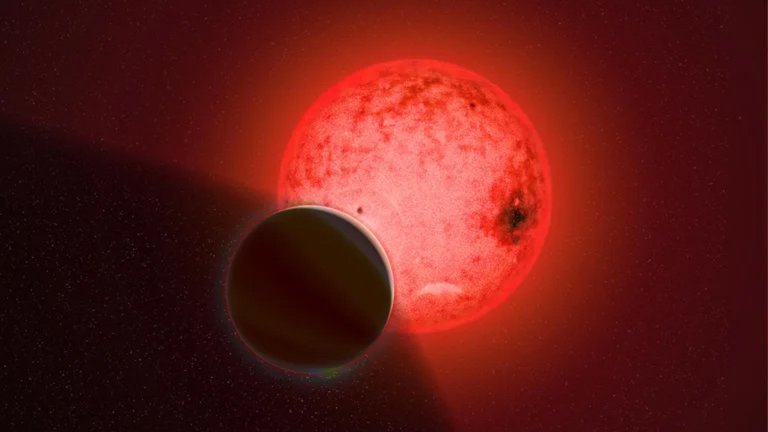
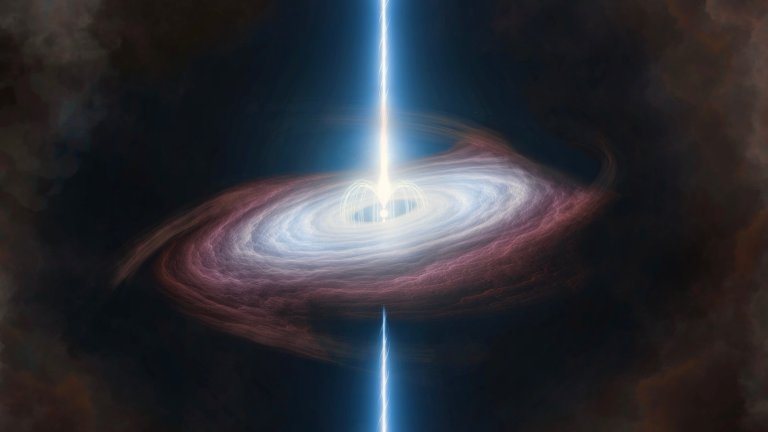
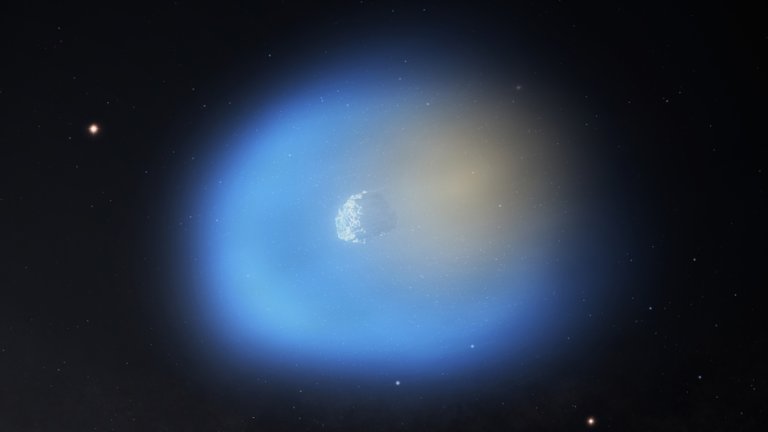
Supernova Go Boom Yep, it's bigger than this explosion (artist's illustration of SN 2006gy) NASA/CXC/M Weiss

Stars don't tend to go quietly, and the most massive of them all create a supernova explosion 50 to 100 times brighter than normal. Now astronomers have confirmed the existence of rare but huge stars that contain 200 times the mass of our sun, after spotting one unusually bright cosmic explosion in 2007.

The supernova, called SN2007bi, remained visible almost two years after its first discovery -- a very unusual bonus for astronomers. A team has since analyzed the star's signature and published their findings in the Dec. 3 issue of the journal Nature.

Turns out that the huge explosion represents a pair-instability supernova, in which a star has mostly run out of hydrogen and helium and only has a core of oxygen. Smaller stars consume that core until only iron remains, and then collapse into a Type II supernova that leaves a black hole or neutron star. Even tinier dwarf stars undergo a Type Ia supernova, which astrophysicists recently modeled in 3-D.


But the behemoth had a much different fate. During the oxygen core phase, it released high-energy photons that created pairs of electrons with their antimatter cousins, known as positrons. The mutual annihilation of matter and antimatter led to a rapid collapse that set off a nuclear chain reaction in the oxygen core, and eventually consumed the entire star.

Astronomers told SPACE.com that the confirmed discovery now puts to rest previous doubts about whether such massive stars could exist. Apologies to the Imperial Death Star, but it's way out of its league.

[via SPACE.com]

5 Comments

This is amazing.
Can any one explain the antimatter theory?

We only have an artist illustration, but not the original screen? Is this top-secret or something? I hate to watch illustrations, I want the original one ._.

the air dissolved the whole star? i wonder if it was yummy.

My take on antimatter is that theoretically, for every king of matter there must be a corresponding kind of antimatter. Whether it must be in equal quantities, I don't know.

The existence of a PET scan makes use of the existence of antimatter in our bodies.

Somehow, if antimatter touches matter, they both disappear and are converted to energy.

Perhaps in reverse direction, energy treated in a certain way produces both matter and antimatter, and they continue if they go their separate ways. Does antimatter have anti-gravity? If it did, could we harness it as rocket fuel?

Was this what was going on in the big bang? If so, what force could get a whole universe's worth of energy together in one place, and then treat it in such a way that it would form matter and anti-matter?

i not sure but the basic idea is that when a high energy photon 3GeV+ comes in contact with a recoiling neucleus the energy of the photon is converted into mass energy and "pair production" takes place. that is basically involves a particle and its anti matter particle being produced through energy conversion. (in this case an electron-positron pair) that positron being anti matter comes in contact with another electron and annihilates. this prosses releases energy in the form of high energy photons ( sounds familiar?)


138 years of Popular Science at your fingertips.

Innovation Challenges


Popular Science+ For iPad

Each issue has been completely reimagined for your iPad. See our amazing new vision for magazines that goes far beyond the printed page


Download Our App

Stay up to date on the latest news of the future of science and technology from your iPhone or Android phone with full articles, images and offline viewing


Follow Us On Twitter

Featuring every article from the magazine and website, plus links from around the Web. Also see our PopSci DIY feed


February 2012: The Future of Fun

Science is reinventing play, from extreme sports to gamification to ridiculous roller coasters to the playgrounds of tomorrow, and this issue is chock full of fun. Also, on a less fun note: Did global warming destroy my hometown?


circ-top-header.gif
circ-cover.gif