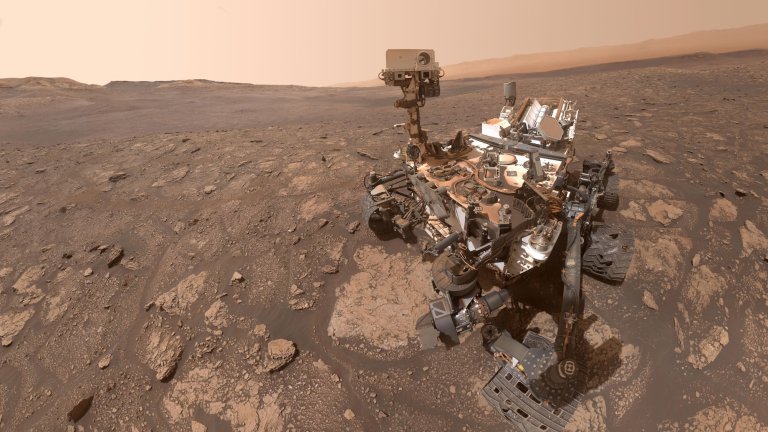
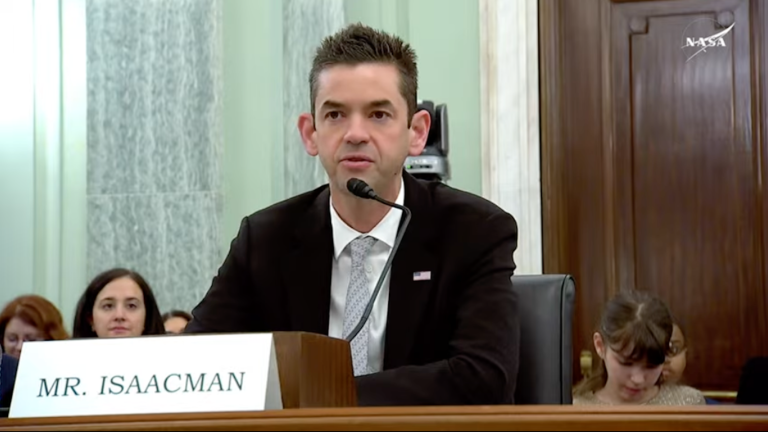
Buzz Aldrin is fondly remembered as the second man to ever step foot on the moon, after his more famous compatriot Neil Armstrong. The former astronaut, now 78, is back in the spotlight after proclaiming that, should the United States space program send a mission to Mars, those astronauts should be prepared to stay there.
Aldrin, speaking to the AFP (Agence France Presse, a global news agency), said the men and women who board the world's first non-stop flight to Mars should establish a long-term colony on the Red Planet. The time and expense required to send them there warrants more than a brief sojourn, he says, so those who are on board should think of themselves as pioneers. Like the Pilgrims who came to the New World or the families who headed to the Wild West, they should not plan on coming back home.
Aldrin's own intergalactic trip took eight days round-trip on the Apollo 11 in the summer of 1969. The moon is a "mere" 238,000 miles from Earth. In comparison, Mars is between 34 million miles and 250 million miles from Earth, depending where you take off and touch down. Scientists estimate that rocketing to Mars and back would take a year and a half. "That's why you [should] send people there permanently," said Aldrin. "If we are not willing to do that, then I don't think we should just go once and have the expense of doing that and then stop."
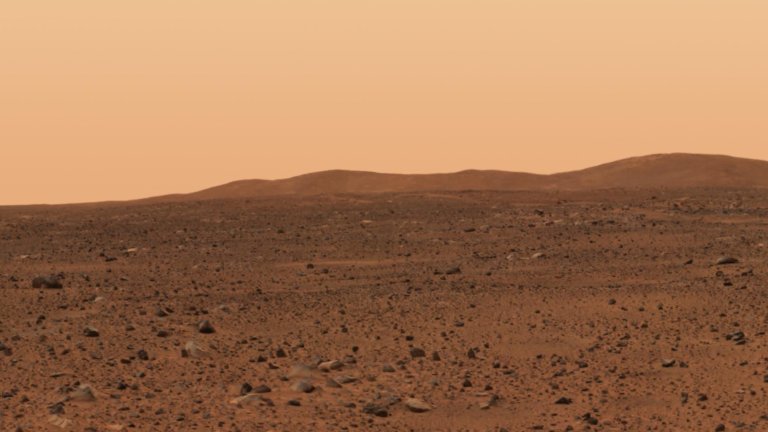
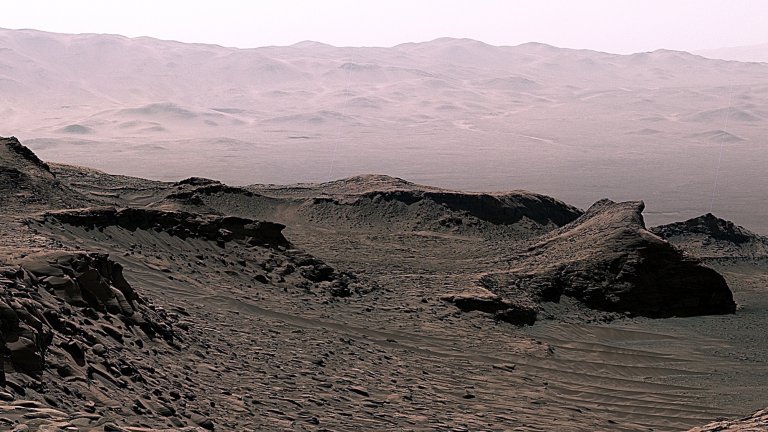
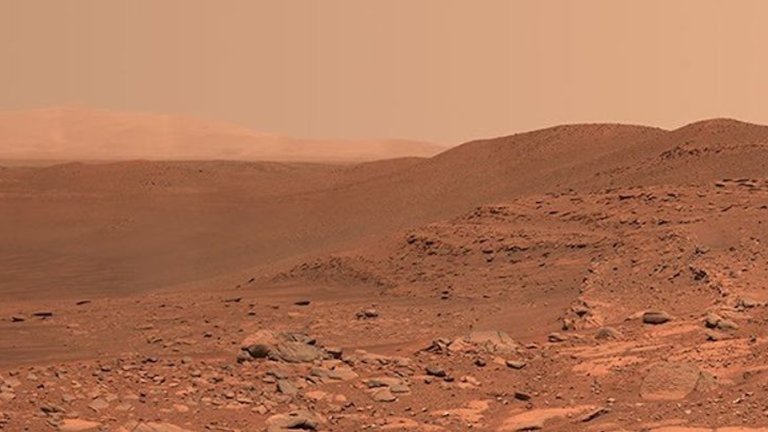
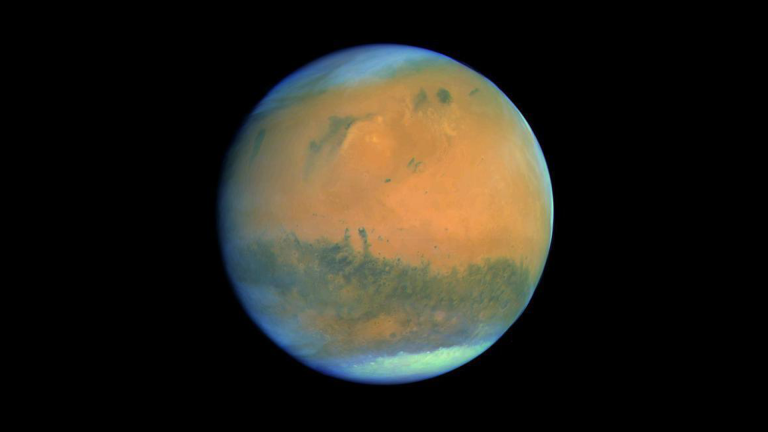
While the Moon is a shorter trip, it offers virtually no potential for life. Studies suggest that Mars, on the other hand, has vast reserves of frozen water, and more closely mimics conditions on Earth. Humans couldn't strap on Carhartts and start building log cabins, but with life-support systems and other proper equipment, researchers say they could survive on Mars.
How realistic is this image of a moon boot-wearing, Martian nouveau colony? NASA and the European Space Agency have tentative plans for a manned mission to Mars that would take place around 2030 or 2040. Those who argue against such manned missions say space exploration without humans at the wheel delivers better scientific results, and eliminates the risks of psychological stress and potential damage to DNA from cosmic rays. Aldrin counters that humans, unlike computers, can act independently, a necessary trait for the unexpected decisions that would arise during exploration.
If they do go to Mars, the mission would sign on about six astronauts, though Aldrin argues for closer to 30, enough to establish a colony. If Aldrin were running the space program, it would look something like this:
Age 30: Offer to help colonize Mars is extended.
Ages 30-35: Training.
Age 35: Blast off!
Age 65: "…who knows what advances have taken place. They can retire there, or maybe we can bring them back."
That would be one pretty huge step for man, and one gigantic leap in sales for Mars bars.
Via: Physorg.com
Stay up to date on the latest news of the future of science and technology from your iPhone with full articles, images and offline viewing
Featuring every article from the magazine and website, plus links from around the Web. Also see our PopSci DIY feed
Share links with friends, comment on stories and more
In our December issue, Popular Science names the 100 best innovations of the year: bombproof wallpaper, self-parking cars, the fastest helicopter, and 97 more. Plus inventor profiles and videos.
Check out the best of what's new here.
A home on Mars??? Nah! A hunting lodge ( www.outofthisworldoutfitters.com/ordercert.asp?itemid=3 or www.ootwo.com/hunting.asp ) To bad I am 34 right now, I would love to go, so if the age limit changes let me know.
from mississippi State, mS
Sign me up. maybe on mars we could get away from all the history and bad culture of earth and start building a better society from scratch.
also, read Kim Stanley Robinson's Mars trilogy. its about this very subject.
Could this account for me?
Im 12 O.o cool!!!!!!!!
And i like science.....a lot....!!
But i still think Mars is still to far away for us to live there i cant imagine how much stuff we will have to take to mars to live there they cant just keep sending supplies...
I can only see this with quantum teleporting like in those comics and video games, but thats not reallity so.....i just cant see us living on mars, sad eh?
Anyone have ideas?
-THE KID
Hey, as long as there's satellite TV, access to the Internet and an ample amount of food - sign me up hahaha.
I was just joking, wait.... have they taken into account how many years it would take to travel to Mars. By the time that the "colonists" arrive there they would have aged considerably. I don't think that teenagers or even kids would be willing or are qualified for space exploration...unless they would be solely just for this "colonial expedition".
Besides it would take a huge ship, with a huge amount of food, water and oxygen at the least for the single trip. How huge a ship that would be...
My suggestion is, don't use people as your first "colonizers" there... use semi-intelligent robots. Let them make a small area habitable first ("biosphere"). Then when all's going well... humans could then hopefully come in to settle. With advances in robot-technology, I believe that this could be done easily. However, I dunno if this kind of robot technology is already available.
I hope that I would still be around to witness that time when us humans get to spread to Mars. If only a matter-mitter (Beam me up Scotty) would be successfully invented, then they could install that there so that the "journey" would not take so long.
Hmm... Mars...chocolate... "craves for chocolates"... (^_^)
chipper smoltz
it wouldn't take more than one year, i know we won't be traveling as fast as say one of the land rovers we sent, but we could still travel fairly fast, the last one that they sent that landed successfully only took about 6+ months, even if we travel half that speed it would only be 1 year and maybe another six months.
as for getting the people there we could send multiple people in different rockets at the same time. so instead of there being one big rocket sending a mass of people there, it would be a dozen or so smaller rockets that would travel at the same speed and ultimately land within the same general area of the red planet.
also as an added bonus each ship could carry it's designated load, like one ship may carry portable houses while another would carry food, another water, and on and on, until the landing party has everything it would need.
some few things i would want to be sent are wind turbines and solar panels, lights, and basic materials, a super computer complete with the worlds history, science, and blueprints so that we could teach either along the way or when we got there. a laser signal transceiver so that data could be sent from earth to mars through lasers. then fill up a half dozen shuttles with food, water, seeds and plants.
i don't know if we should bring pets or animals, if we did they would probably take up valuable space in the first part of the trip there, then what good would they be once we actually got there, unless maybe we got pack animals or something...
Hi Ghost... thanks for replying and clarifying things up, I thought that it would really take a long time to travel there... 6 months is not a long time. But up to how many Gs could a human withstand for a very long amount of time. I'm assuming that maybe the constant acceleration producing G-force would put a lot of stress for us humans. Or am I wrong in assuming this since once we're there in space it would only take gentle (is it really "gentle"?) nudges of delta-V so that we could easily travel to Mars in the shortest possible time?!...
But like I said, once we get there... how are we supposed to set things up... with no breathable air, I'm assuming that we have to set an enclosed area first then dig and melt the frozen ice so that we would have a supply of water, turn that to water vapor so we could have a supply of air?! Or cultivate plants in that enclosed "biosphere" for food and then for air. I doubt if we could erect one easily given that these things (food, water and air) for us humans, should we actually do the labor for this, would be alot to cover the time that we would travel there and the time that we would spend there up to the point in time that everything's stable enough for the colonists to be self sufficient. Like you said, we could send many rockets or ships there for the supplies, so on the logistics side this might not be a problem.
Although am still not convinced of the idea to send humans first. I still believe that we could send robots first to do the work.. that is - setting up a biosphere or a "Shelter" wherein us humans would have all the necessities we need and then when we go there it would be easier and more convenient. They're robots right, so no need for food, oxygen or water... so less space that would be required in a single ship or less ships to be launched in the first place. Let them do the work of setting up the "biosphere" or they could do advance terra-forming for us. Although, like I said, I dunno if we have sophisticated robot-technology that could do this. Besides, alot of things could go wrong with multiple ships travelling and landing there.
"waits enthusiastically for any further developments..."
I find Mars colonization very interesting. I think sending robots to Mars first is the simplest and most efficient way to colonize another planet. The biggest chalenge would be the lifesupport system oxygen could posubly be refined from materials on Mars. The most dificult problem is water for growing plants for food.
I have read the Mars series of books (awsome series)
and I think terraforming mars is a great idea. It would take a very long time but it would give the human race a chance to start over and give us a stronger foothold in the universe (if something ever happened on earth the human race would not be doomed). I agree with the article that we need to take one big step to Mars. We have the basic technology to get there and set up a colony all we need is the will and a ludicrous ammount of money.
chipper smoltz
the g force that a human could withstand is something around 9 positive g's but we can withstand far more negative g's, if the rockets had to change direction then the astronaut colonist would have to strap themselves to the plane to minimize risk, however i believe that we should have nothing to worry about while maneuvering in space. however the g's that you would experience entering the atmosphere would be very great and even though they would be negative g's they still might be enough to harm a normal guy.
the only problem i see with transforming the planet first is that it would take quite literally a thousand years. so i suggest we use the shuttles as a makeshift shelter until we can make some homes for ourselves. and any shelter would either have to be extremely resistant, probably made out of the haul of the shuttle, or be built in a dug out place. personally i like that last option, dwarf fortress ftw.
also if we really need to we could even bring mobile miniature biospheres with us from earth, it would shorten the time needed to get settled in.
my only question is where would be a good site to land the shuttles and start the colonization.
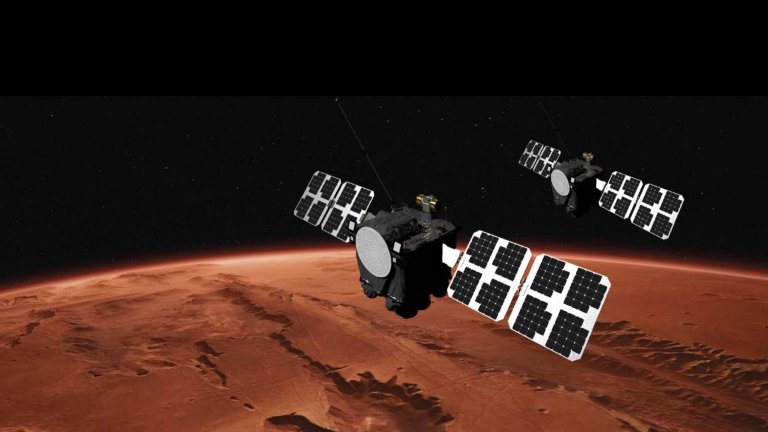
First off, we have 2 satalights on mars, 2 rovers and lander. In 2009 we are sending another rover.
Also i dont know why you keep saying shuttles, we will no longer be using shuttles after 2010.. They are building 2 types of rockets. Ares and Ares V. The Constellation Project
Ares, who is identified with the Roman god Mars.
The Ares will transport people in to space, using a capsule because they are more able to land safe.
The larger, unmanned Ares V, it will be the cargo launch vehicle for Project Constellation. Also some designs i have seen have living pods that are being designed would be the package, able to live 6 to 8 and with supplies.
So send 1 ares and 2 ares v and that should be enough to last them the year and a half.
AND i would like to point out that it only takes 6 to 9 months to get there BUT because of the orbits and one landing on mars would have to stay atleast a year and a half before the window of 6 to 9 months opens up.. As otherwise you have to fly through the sun. :)
from St. Louis, MA
That would mean the people going to mars would just be born now if it isn't being planned for another 30 or so years. Also, it would be more efficient to use the vehicles we use to get there as houses or look at how the ancients built houses than to bring housing materials. I would expect them to look like pueblos and earthen houses. I don't think it would be wise to put essentials in separate vehicles because of the risk of one of those vehicles failing in some way, then the colonists not having any food. I would expect a vegetarian diet for sustainability (don't need to haul cows up there). Also, for staying up there that long I would look at chances of reproducing the human race and I'm guessing because of environmental factors, their offspring might not be able to come to earth. I would suggest preparing a variety of people to go. Such as a doctor, an agriculture specialist, and so on to make a community that would be self sustaining.
from Winnipeg, Manitoba
Since Mars Takes Longer to go around The Sun, Wouldnt that Mean Longer Years? So Technically I would be stay Younger Longer, And I would have more time to Do what I want Each Day? Would I adapt? PLEASE I want to Be a Martianadian! Give me a Place to Live, Smart people to Work With, Oxygen to breath. Ill work my ass off and i dont care how long it takes. First Campbell to expand on Mars I see it now.. I could help maintain Plants! As long as I have the Internet, All is Well.
-You fall somewhere in the Balanced Frequency of Nature. Someone Along the Infinite Spectrum of Life.
1) Triple redundancy. Remember those Pilgrims? Most of them died the first winter. A handful survived, in part due to the locals giving them a hand. There are no locals on Mars to give a hand. If a critical system fails, everyone dies. That means that EVERYTHING needs at least a triple redundancy for safty. (1) to use, (2) a backup for the things that WILL breakdown, (3) a backup to use while repairing anything that is already using redundancy (2).
This adds massive amounts of cost.
2) Robotic prepwork. John Smith and the Jamestown colony taught us that. You can't build a pallisade, houses, and dig a well at the same time. You would not spend billions to send people to the moon to set up habitat tents. Habitats, biospheres, O2 refinement, emergency supplies, transport, etc would already have to be sent to the planet and set up remotely. Survival starts from day one, and you need to be preped beforehand. I know I would not get on a ship headed to certain death without knowing that I had a place to live when I got there.
3) A Long-term Commitment to Back-up. The Pilgrims barely survived the first winter. They would have gone the way of Roanoke had it not been for the fact that they were merely the first ship load of hundreds of loads of Puritans, each bringing freash supplies from Europe.
Hubble tanks? We abondon it. ISS goes bad? We pull out and abondon it. People on Mars? We are morally obligated to continue sending them supplies, at MASSIVE cost, to support them until we bring them home. The idea that a Mars colony will not need a constant supply line from the Earth for hundreds of years is a dream.
Think of the path that goes from sand to computerchip, ore to alluminium, or plant to plastic. Until you have mines, factories, farms, and mechanical workshops on Mars, they will need replacements for all but the most basic physical needs.
So, colonizing Mars is the kind of long term commitment that it would take all of humanity to acomplish: teams of 30 setting up colonies all across the planet, thousands of tons of equipment and supplies being sent, years of robotic prepwork, and more imagination than the world has given more basic immediate needs.
4) So, when Buzz says 30 to stay, he means more people for a longer time, until we bring them home. He also means that the people going there should EXPECT to die during the mission (as they likely would).
from Los Angeles, CA
I have my own fond memories of Buzz Aldrin: my girlfriend and I were guests at a Christmas party in 1973, when he had a company called Science Consultants, Inc., as I recall, and Buzz happened to be the next-door-neighbor of the host. At one point, Buzz sat down next to me and began challenging me with brain teasers with me-- as it happened, he offered me one puzzle based on a deceptively simple mechanical drawing. After a few minutes, I not only managed to give him the solution he was after, but several other solutions as well. Although that impressed him, he impressed me as well.
I posed a puzzle to him that had to do with the motion of the hands on a wristwatch, one which I had created myself when I was in high school; before I met him, very few people I knew ever gave the correct answer, and none of them ever did so before giving several incorrect answers. As soon as I gave Buzz the puzzle he looked up at the wall for a second or so, squinted, and calmly gave me the correct answer. That blew me away.
I lost contact with Buzz a few weeks after the party... he was going through some serious personal crises at the time... and I have periodically tried to contact him ever since, but without success. I often have ideas I wish I could have shared with him.
Colonising mars will eventually be scientifically possible, as there is ice that could be melted for water, and oxygen could be easily creating by running electric currrent through water, separating it into hydrogen and oxygen. Food could then be grown on mars (on a vegetarian diet of course), and when there were enough plants to produce sufficient oxygen through photosynthesis, we could stop splitting water. However having a colony of only 30 people for several years would almost certainly lead to intense cabin fever, as the people on mars would have little contact with earth. Then people would start killing people, and we would have to either bring them home or leave them all to die a lonely death. For a mission that would take a few years, and then return to earth, i would sign up (im 16 now, would turn 38 in 2030, and by then 40 will be the new 30, so it should be ok). But for a one way ticket, im not willing to pay the price of insanity.
I think a larger group should be sent. The people sent to Mars would not have to worry about cabin fever beacuse they would be so busy doing science experiments and exploring. If they had long range rovers there would be more than enough planet to explore for almost ever. (if I where going to Mars I would bring videogames)I think a number closer to 100 would be better so there would be less chance of lonlieness and more people to work on science.
ok.... where to start. first of all for the people who say we could change the wrongs we did on earth. wow... keep dreaming. you know that the first nation to land on mars would claim it as there own, and that will be the u.s. and the only thing they care about is money. the only thing they would look forward to is some how making money. nothing would change as far as treating people with respect as human beings like we should be. we would have no rights there just like now. it would be ran by corrupt officals.
second.... getting water, food, oxegon would not take six months to get there like it would take us . like they said in a earlier comment. we can not travel at the g's we can send supplys. like what was also commented about. you would have to send enough supplys to last a year and a half cause that is the only time we would have open to get supplys in. first things first though. we have not sent humans cause we can not last that long in space without some sort of human feelings getting in the way. first it was sexual tension, than it was losing a grip on reality, and just the normal feeling of getting home sick. they are doing testing now on just trying to match peoples personalities so they can just stand the ride there.
third...... they have been doing testing for decades on creating a bio-dome that can hold in oxegon, food, and water. ever seen bio-dome. that is real. not that one but that idea, and they have made a self sustaining habitat.
About that g-force, that only lasts for a short period of time, ships, rockets, shuttles or whatever they will send cant carry enough fuel to accelerate all the way to Mars, when a certain speed is reached the engine stops to accelerate and since there is no friction in space the speed would be maintained all the way.If we presume that the flight would take 1 year the "ship" would need to travel at a constant speed of 6296 km\h which is manageable since the fastest aircraft was the X-15 with the speed of 7,274 km/h in the atmosphere!. And life on mars will probably never be outdoors, because Mars is "small" the gravity isn't big enough to maintain a thick atmosphere therefor the pressure on mars is only one-hundredth of that on Earth, that means that one breath on Earth would be the same of hundred on Mars. I believe most of you think there would be electricity on mars, sure we would bring solar cells but like on Earth there are clouds and storms of great magnitude and that blocks the sunlight which is already weak because Mars is far from the Sun, I'm not sure but probably it would take a great amount of solar cells to maintain a biosphere, that is if they haven't found a way to minimize the cost of electricity for the air circulation, temp. regulation,water pumps or air or whatever they would use for toilets and so on. I don't know if they found a solution to all of these problems but I'm sure that there are a lot of problems that need to be solved before we can go to\live on Mars.
Nothing relevant:
http://www.TakeTheGlobe.com/index.php?page=register&r=gringo13