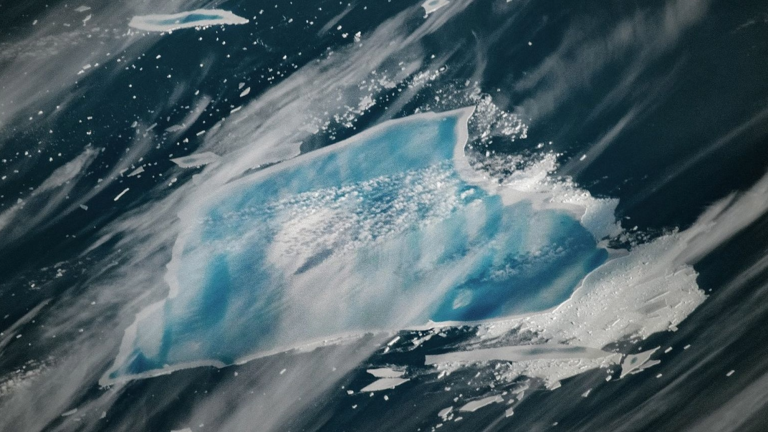
One hundred thirty miles north of Nome, a small coastal village on Sarichef Island is feeling the effects of climate change. Shishmaref, Alaska, is falling into the sea. Rising temperatures are melting the permafrost, the layer of frozen ground beneath the surface. Without this firm base, waves have eroded the land on which Shishmaref’s villagers make their home. They must relocate their houses inland or start all over somewhere else.
Nowhere is global warming having as obvious an impact as in the Arctic, and people living in Alaska, northern Canada, northern Scandinavia and Siberia have front-row seats. Some experts say that temperatures in these regions have risen by 3˚ to 5˚F over the past 30 years. And the temperature in the Arctic has warmed at twice the global average rate in the past century, according to the 2007 Intergovernmental Panel on Climate Change (IPCC) report. Permafrost is ground that maintains a temperature below freezing for at least two years. In some areas, that frozen layer is thawing, causing roads to collapse, runways to crack, and homes to sink, split apart, or even fall into the sea. But inside that icy ground is a threat more dangerous than crumbling infrastructure: massive amounts of greenhouse gases that, if released into the atmosphere, have the potential to quickly intensify climate change.
The soil, rock and sediment that make up permafrost are divided into two layers. The top, known as the active layer, runs slightly less than one foot to several feet deep and thaws every summer. The bottom layer remains solid year-round. Thickening of an area’s active layer indicates that the frozen ground beneath it is melting.
single page140 years of Popular Science at your fingertips.
Each issue has been completely reimagined for your iPad. See our amazing new vision for magazines that goes far beyond the printed page
Stay up to date on the latest news of the future of science and technology from your iPhone or Android phone with full articles, images and offline viewing
Featuring every article from the magazine and website, plus links from around the Web. Also see our PopSci DIY feed
Engineers are racing to build robots that can take the place of rescuers. That story, plus a city that storms can't break and how having fun could lead to breakthrough science.
Also! A leech detective, the solution to America's train-crash problems, the world's fastest baby carriage, and more.


Online Content Director: Suzanne LaBarre | Email
Senior Editor: Paul Adams | Email
Associate Editor: Dan Nosowitz | Email
Contributing Writers:
Clay Dillow | Email
Rebecca Boyle | Email
Colin Lecher | Email
Emily Elert | Email
Intern:
Shaunacy Ferro | Email
from Plymouth, WI
If all of these "positive feedback loops" such as permafrost melting exist in our ecosystem, how has our planet continued to remain in equilibrium for such a long time. I can only conclude that their must be some sort of negative feedback that kicks in once climate reaches a drastic state. The only question is how severe is the negative feedback and what consequence will it have on humanity.
I've Been Told By My Daddy Since I Was A Kid That Weather Is A Random Natural Event.
from piscataway, NJ
Hopefully and with a little luck, these predictions will be underestimating the emmisions just like the last predictions were. This way by the time I retire I won't have to move to Florida to enjoy the beach.
Actually I'm pretty sure that 650 climatologists (many current and former UN IPCC scientists) recently called Global Warming(tm) bogus and that the earth is coming out of a long heating phase and is entering a 100,000 year ice age. The past ten years has seen temperatures decline to early 1980s levels. Maybe in 100 years the Appalachian Trail will be overtaken by the popular New York-London transatlantic trail. But that won't stop failed politicians (who are not real scientists, like Al Gore) from convincing many governments to waste many millions of dollars in attempting to prevent climate change.
Global warming or not, I think the only thing mankind should do is to ... pollute less! After all, we have only one planet.
I just hope that, if one day a bunch of scientists says that global warming is a completely natural phenomenon, we will feel free to pollute because "it's not our fault if the oceans are rising".
@ Eruantalon27
Also 31,000 scientist signed this against manmade global warming.
http://www.petitionproject.org/
@ m13
Less polution is a great thing, but calling CO2 a pollutant is incorrect. CO2 follows temperature rise. Humans only churn out about 5% of the CO2 that is out there. The rest is done naturally by the planet.
I think that global future humanity is in doubt, and that we need to make changes to preserve what we can in this changing world.
I'm not certain that we can prevent what's happening to climate, nor that, in the end, it'll be worthwhile to try. I only hope that my daughter has a chance to grow old, and see her grandchildren survive into a peaceful, global, life which is worth living.
These thoughts apply to my, and my offspring's future; but they should also apply to families currently living in sub-saharan Africa, the mid-East, and parts of Asia NOW....and they don't......so lets worry less about what you think may not happen, and try to deal with what IS HAPPENING !
By the time one finishes reading the article with all of its uncertainties the headline for this article should read: "The Big Thaw???".
A very interesting article. It brings up more questions/comments that are enjoyable to ponder:
- Of the carbon content in the perma frost, how much becomes carbon dioxide, how much becomes methane and how much stays as peat and eventually coal/oil/natural gas?
- This seems to be an explanation for why atmospheric CO2 content trails temperature change historically (pre industrial). What caused the trend to reverse in the past (more CO2 absorbed than exhausted)?
- As a structural engineer, I question the wisdom of placing a house so close to the shoreline knowing that beach erosion in the area has been severe for several hundred years and then claiming it is due to permafrost thawing (it is but it thawed because of beach erosion)
- What is the actual impact of doubling the CO2 content in the atmosphere? (how can estimates vary from 1 to 5 degrees celsius?)
stoatsngroats - What IS HAPPENING? Given the choice for your grandkids, would you focus on their economic opportunities or (mutually exclusive) potential environmental health? Given that the increase in fossil fuel use was drastically reduced during the Great Depression would that be a good solution?
The thawing of permafrost is actually a boon to much of life. Yes there are tree species that depend on it for support, but not many HAVE to have it. There are a few animals that need the snowpack permafrost allows, but there are not many that HAVE to have it. Even so, biodiversity decreases at the poles where climatic shift is most noticable.
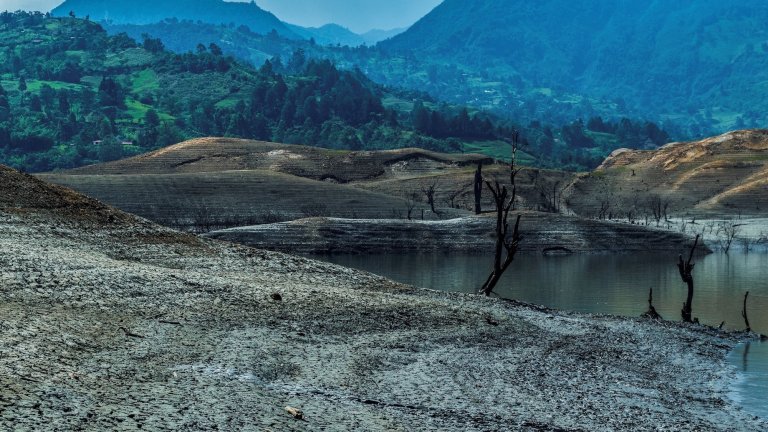
Retreating permafrost, as seen in the speculatice picture, however, opens up a breadbasket of ariable land for both Asia and N America. So long as steps are taken to reduce desertification at the equator, this trend would be benifical to man. It seem ridiculous to worry about a few dozen species that global warming would destroy given the millions spared by moving more development away from the tropics.
Derive Pi,
My very limited understanding of what's happening, is drought, famine, starvation, war, and selfish gain to the detriment of others, assisted by political inaction at a global level.
In MOST industrialised nations there is, it seems, no 'pro bono' ethic towards our fellow man. I'm hijacking this comment thread, so I'll stop there, but thanks for the chance to comment!
All these "scientists" with their computer models, degrees and whatnot, can't seem to accuratly forcast tomorrow's weather. Now they expect us to take them seriously when they predict the weather a century from now.
I personally just find it ironic that the author in this article uses photos from 2006 and quotes the 2007 IPCC report, while on the day the article was published, the high temperature was -17F in Nome, AK...And, there was exactly TWO days during the whole month of January where the high temps went above freezing while at no time did the lows go above freezing.
Hey, but what can I say, I like to see the irony in things like this!
I still think that James Lovelock's GAIA HYPOTHESIS is on target: his and LynnMargulis' view of the Earth and its biosphere as a living organism capable of self-regulation.
The basics here: http://en.wikipedia.org/wiki/Gaia_hypothesis
Additional information on GOOGLE Search page: http://www.google.com/search?source=ig&hl=en&rlz=&q=James+Lovelock+the+Gaia+Hypothesis&btnG=Google+Search&aq=o
Don't close doors before opening them. Too much GROUP THINK within the scientific community has abandoned ideas like this for all the wrong reasons.
from Kent, WA
Heck, in today's morning newspaper there is an AP photo of ice divers in Maine, where the ice is 16 inches thick and the air temp is minus 20.
I once taught in a little village schools system (the Bering Strait School District.) I don't remember if I visited Shishmaref or not, but most villages right next to the ocean are built on sand dunes and gravel, not tundra proper. Eskimos always used to think convenience, not long-term, so it is not like these were planned to be permanent villages. The villages just grew up where it was convenient for fishing in the summer and the arrival of the supply barges. Barrels of fuel oil would be rolled off the barges and into the villages, and boxes of stuff unloaded on the beach where they would remain until needed.
idratherbegolfing_413 asked if the planet has a mechanism that kicks in once the planet reaches a drastic state. I believe the answer is yes, but it is possible we are destroying it.
The theory behind global warming is that increased CO2 emissions will increase temperature. An increase in temperature will change the plant life that can survive. We would likely move to more tropical plants, ferns etc. There would likely be an overall increase in plant life as the colder areas become more hospitable. The result would be that these plants would begin to extract CO2 at a higher rate. This would reduce CO2 and balance out the temperature.
Now assuming that any of this is true, deforestation will destroy the Earths ability to heal itself. So the problem for us may not be increased emissions but rather decreased plant life.
To Eggman002's point about the decreased plant life...
Did you know that the total biomass on Earth has increased by 16% for the last 20 years due to ... increased CO2 content. Here is the link to Nature's website (http://blogs.nature.com/news/thegreatbeyond/2008/06/biomass_boosting.html)
To equalizer.
1) Biomass increase is not the same as increase in plant life. Certainly a portion of that biomass (probably a large portion) is plant life but it could also include animal life (or non-photosynthetic plant life). The type of biomass is as important (or more important) than the volume.
2) A 16% increase in biomass may not be enough to offset the increase in CO2. If it wasn't for deforestation, perhaps this increase would be 25%.
3) When I mentioned a decrease in plant life I was referring specifically to deforestation (which is a fact, not a theory). I was not referring to ocean algae or other types of plant life.
I am not an advocate of the idea of Global Warming. I think there is too much we don't understand to conclusively confirm or deny the idea. But deforestation is a fact. It is happening, it is a problem, and if Global Warming is in fact caused by CO2 in the atmosphere, deforestation is certainly a large contributor and will damage the Earth's natural defense against CO2.
from Corvallis, Montana
From what I've seen this “global warming” threat is real, however its not caused by man. If one were to look at the history of the Earth one would see that there has been natural warming and cooling in global climate, sometimes it is more drastic but the point is that is is natural. Bud the Chud said that humanity is only responsible for about 5% of the Co2 in our atmosphere, the rest in natural. The answer to our problems is easy; nothing, that is nothing we can do to stop it however we can prepare. Humanity is very adept, we will have to make changes and thats what ever one is “afraid” of, change is hard but necessary. To quote stoatsngroats “drought, famine, starvation, war, and selfish gain to the detriment of others, assisted by political inaction at a global level” must be stopped for the greater good (how though is a different story) to survive.
After watch several The Learning Channel about the permafrost melting, how the Eskimo are not able to store food in the permafrost freezers, that have been used for generations, because ground has thawed. Walking upon the ground that used to be permafrost is dangerous, suddenly giving way. So if the Eskimo believe in Global Warming, so do I.
Ellen