Melinda Wenner

Feature

Instant Expert: the Return of Swine Flu

The Big Question: How many people will it infect this year?

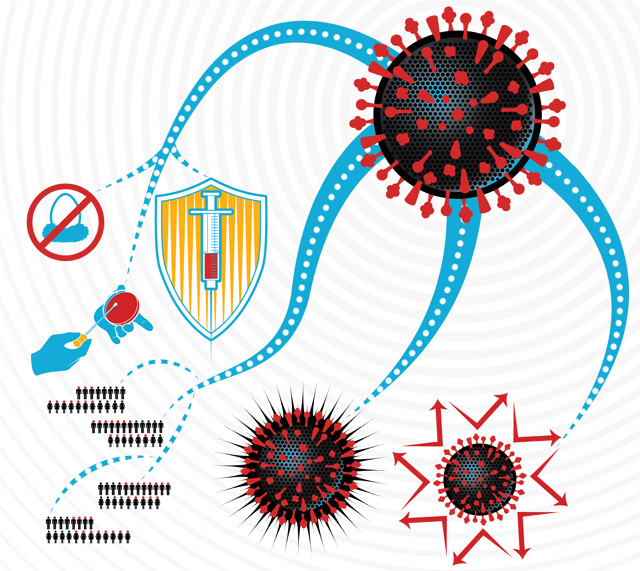
Flu season in the Southern Hemisphere is almost over—and now it’s heading back our way. At the time this issue went to press, there were more than 162,000 confirmed cases and 1,154 deaths worldwide from “novel H1N1,” a.k.a. swine flu, but the Centers for Disease Control and Prevention believes this figure is a gross underestimate, especially since only a fraction of people who have the flu go to the hospital.

[ Read Full Story ]

Freezing the Heart to Save the Life

Two Philadelphia doctors are championing an unconventional new treatment for keeping cardiac-arrest victims alive, with as little brain damage as possible: just give them hypothermia

At 3 p.m. last June 22, Pam Barco’s heart stopped. The 46-year-old ER clerk at the Children’s Hospital of Philadelphia was near the end of her shift when she felt dizzy, put her head down on her desk, and suddenly stopped breathing. A nearby co-worker saw Barco slump over and shouted, “Staff emergency!” Minutes later, a dozen doctors and nurses surrounded Barco’s body. They shocked her with a defibrillator. No response. They shocked her twice more. Nothing. Then: Beep. Beep. Beep.

[ Read Full Story ]

Beyond Earth

This year’s most popular destinations for unmanned landers

Mars Science Laboratory
Launching in the fall, this research rover will collect and examine Martian soil and rock samples for traces of carbon, life’s most common building block. To find that carbon, ChemCam will fire lasers at the ground and analyze the vapor produced by the impact.

Lunar Reconnaissance Orbiter
NASA is going back to the moon—after the LRO finds astronauts a good place to land. Launching on April 24, the LRO will map out the moon’s surface and home in on the poles, where scientists believe there could be water.

[ Read Full Story ]

Cosmic House-Hunting

New orbiting observatory will search for Earth-like planets

Earth’s twin could be waiting for us hundreds of light-years away. In fact, thousands of Earth doppelgängers may be lurking in the cosmic distance, orbiting stars just like our sun and maybe, just maybe, harboring life of their own. Although telescopes have identified more than 300 planets outside our solar system, most of them are too harsh to host life. One notable exception to the typical “hot Jupiter” model is a rocky Earth-like planet discovered in 2007, dubbed Gliese 581 c.

[ Read Full Story ]

Last Call?

The most definitive study yet could finally determine whether cellphone use causes cancer

Nearly five decades ago, Americans learned that one of their most treasured habits—smoking—was lethal. This year, we could get more scary news, when scientists announce the results from Interphone, the largest-ever study to investigate whether cellphones cause cancer.

[ Read Full Story ]

Heavy Lifter

NASA test-drives a new rocket

NASA will fire up its latest rocket this April for its first test flight. Ares 1 is designed to haul a 25-ton payload, making it capable of ferrying either six astronauts to the International Space Station or four astronauts to low-Earth orbit, where they can transfer to another vehicle and head to the moon. The rocket contains two stages: a reusable solid rocket booster and an engine powered by liquid oxygen and liquid hydrogen. If all goes well with Orion, NASA’s planned crew vehicle, Ares 1 will be whisking the first crews into space by 2015.

[ Read Full Story ]

The Bond Breaker

She’s invented a way to build exactly the right molecule for the job

Why are there so many diseases and so few cures? It’s not just that medicine moves slowly; chemistry holds us back, too. To build drugs, chemists start with a base molecule, then add and subtract atoms from it one by one in a sequence of reactions. The process is tedious and wasteful—a 10-step reaction might convert only 8 percent of the starting material into the right end product. And that’s if chemists can make the drug at all.

[ Read Full Story ]

The Drug Pumper

He builds under-the-skin chips that deliver drugs straight into the blood

When he was 12, John Santini's ankle swelled up to the size of a grapefruit. Several hospital visits later, he was diagnosed with lupus, a chronic disease marked by the immune system's attacks on healthy parts of the body. He learned he'd have to take medication indefinitely. But he has used his condition as inspiration, and has spent his life devising a completely new way to deliver drugs.

[ Read Full Story ]

The Infant's Philosopher

She studies how our brains create accurate representations of the world

In a small room on the second floor of the Boston Children's Museum, six-month-old Hasan Helal is watching a short video. Underneath the screen, an infrared device tracks his eye movements, which appear as small red dots superimposed on a second video screen behind a curtain a few feet away. Most infants fixate on bright objects, but Hasan is unusual: He already prefers faces, his eyes tracing the characteristic triangle shape -- left eye, right eye, mouth, left eye again -- that older kids and adults make when they examine a new face.

[ Read Full Story ]

The Five Diseases You Should Worry About

A primer to the next population-threatening pandemic

Last May, scientists met in Geneva, Switzerland, to update the World Health Organization’s plans for pandemic preparedness. It looks like a crisis could arrive sooner rather than later. Thanks to climate change and drug resistance, a handful of deadly organisms are spreading across the globe; some are poised to make a comeback in the U.S. after decades of absence.

[ Read Full Story ]
Page 1 of 2 12next ›last »


Download Our iPhone App

Stay up to date on the latest news of the future of science and technology from your iPhone with full articles, images and offline viewing


Follow Us On Twitter

Featuring every article from the magazine and website, plus links from around the Web. Also see our PopSci DIY feed


Become a Fan On Facebook

Share links with friends, comment on stories and more


December 2009: Best of What's New

In our December issue, Popular Science names the 100 best innovations of the year: bombproof wallpaper, self-parking cars, the fastest helicopter, and 97 more. Plus inventor profiles and videos.

Check out the best of what's new here.

Popular Science Photo Pool


Share your photos in the Pop Sci pool at www.flickr.com!
tags_sprite.png
POP_embeddedForm_cover_May09.jpg