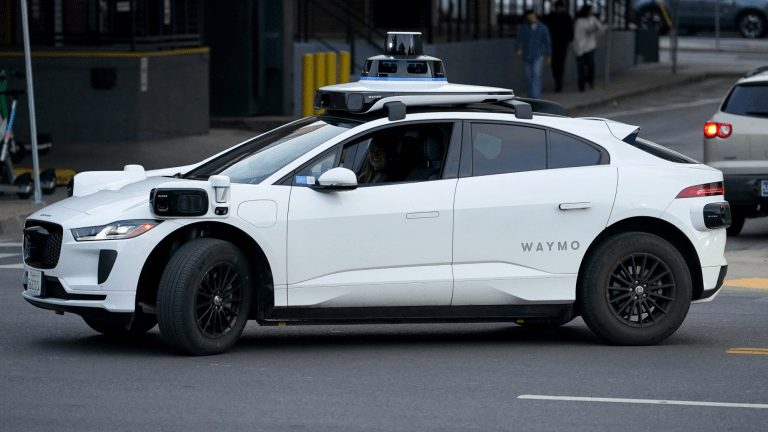
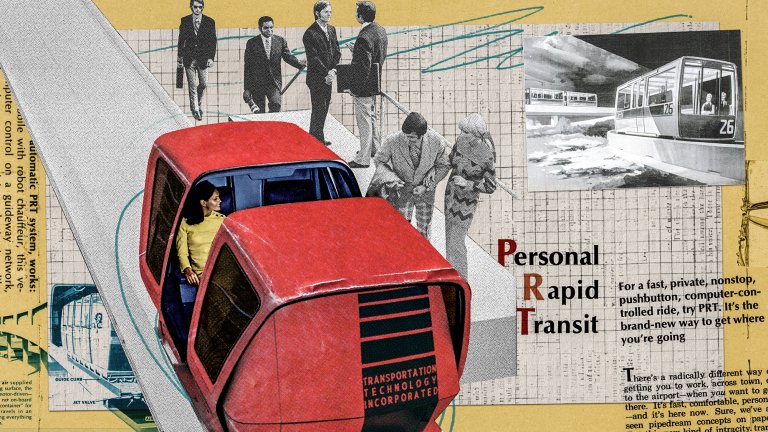
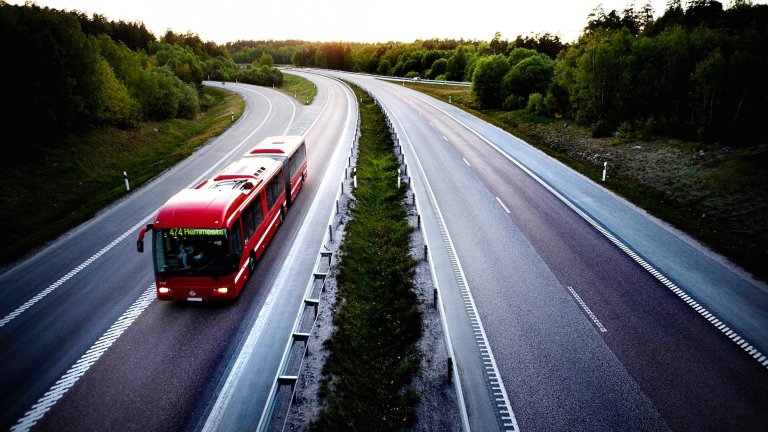
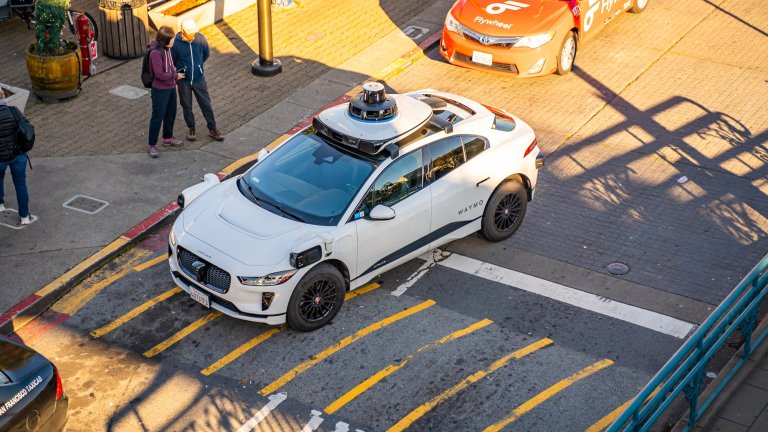
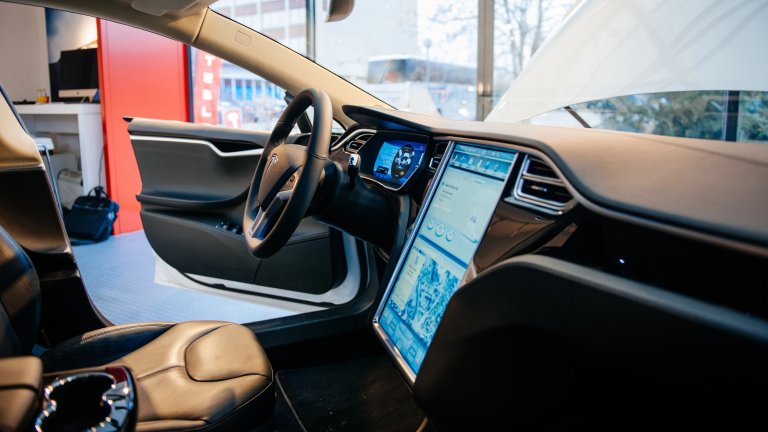
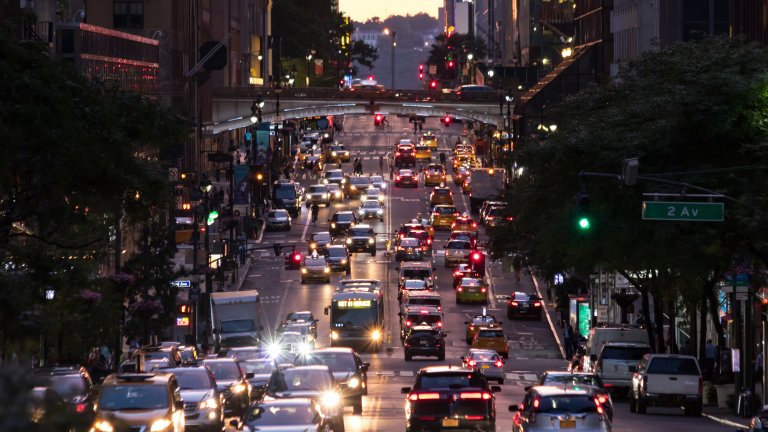
In the future, says car designer Chris Bangle, self-driving cars will be invisible and have bus-like seating. In another future – the one that engineer William Bertelsen predicted in 1961 – self-driving cars will slide around on cushions of air and cross the U.S. in just two hours. Cities will be linked by grassy, eight-lane "airways" instead of interstates, and the 8-foot-wide "ground-effect machines" will change lanes at hundreds of miles per hour as their riders leisurely read magazines and smoke pipes, PopSci reported in August 1961.

The pumping stations that keep air flowing through the nationwide system of Aeromobile tubes would be nuclear-powered. Passengers would only need to input direction at junction points. And, with the mobility of a helicopter, Aeromobiles could perform pivot turns in driveways and parellel park by moving sideways.

According to Bertelsen, every bit of technology needed to implement his system was already available in 1961. So what happened to his dream? In June 2008, Bertelsen contacted PopSci to catch up. Basically, he said, Americans lost interest in hovercraft as the space race took off. (But don't call his Aeromobiles "hovercraft": "It's not meant to hover, it's meant to get places!" he told our reporter.) Bertelsen, who was also a practicing physician in Illinois for more than 50 years, died July 16, 2009.

Read the full story in our August 1961 issue: 1,500-m.p.h Family Cars?.
140 years of Popular Science at your fingertips.
Each issue has been completely reimagined for your iPad. See our amazing new vision for magazines that goes far beyond the printed page
Stay up to date on the latest news of the future of science and technology from your iPhone or Android phone with full articles, images and offline viewing
Featuring every article from the magazine and website, plus links from around the Web. Also see our PopSci DIY feed
Engineers are racing to build robots that can take the place of rescuers. That story, plus a city that storms can't break and how having fun could lead to breakthrough science.
Also! A leech detective, the solution to America's train-crash problems, the world's fastest baby carriage, and more.


Online Content Director: Suzanne LaBarre | Email
Senior Editor: Paul Adams | Email
Associate Editor: Dan Nosowitz | Email
Contributing Writers:
Clay Dillow | Email
Rebecca Boyle | Email
Colin Lecher | Email
Emily Elert | Email
Intern:
Shaunacy Ferro | Email
Si.....
I want a future, where we all drive Batman cars!;)
Si.....
I want a future, where we all drive Batman cars!;)
And all we have today are excuses like "anti gravity hasn't been invented yet"
If the Moon mission hadn't happened when it did we would still be waiting on that too.
Because "It makes no sense to send humans" right?
Dreams are realities unto dreams alone. We should have spent our several trillion dollar debt on furthering science instead of war.
Now don't get me wrong, I am planning on heading in and fly UAV's (duh), but we should already have these groove-mobiles (that sounded very hippie, I apologize) and be able to hover to work. Sad fact that we just lose interst and money... ANd we need Mars. I don't care, we need a Martian space race.
Get your facts first, then you can distort them as you please.
Mark Twain
The best car for the future is a DeLorean equipped with a flux capacitor.
I want a future car that uses (http://en.wikipedia.org/wiki/Lightcraft) technology. Cept figure out how to keep laser power on board the craft. By use of a theory I have the Bose–Einstein condensate conduit. The capability of storing photons by slowing light down to only meters per second. in a looping conduit that acts as the vehicles gas tank so to speak. Flight by laser light very sci-fi. Stop at a laser station ground based casting powerful laser beam into the conduit. Though I don't think laser power is quite up to snuff yet. They did come out with the solid state maser recently it is supposed to have a higher bandwidth using same power levels. Wouldn't it be a cool transport though.